Wisdom teeth Removal

Wisdom teeth

Wisdom teeth can often be a source of pain for most people. Gum infection, decay to the adjacent teeth, pain, swelling and infection and bone loss are commonly related to wisdom teeth. Hence, wisdom teeth removal is usually recommended to prevent wisdom teeth pain.

Do I have to remove my wisdom teeth?

Sometimes, when there is evidence of decay, gum infection, crowding and for orthodontic reason, wisdom teeth then are justified for removal. As it is the last teeth in the mouth, generally, patients cannot reach the back of the mouth, hence, all the gum disease, infection and decay are often seen to wisdom teeth. If the wisdom teeth do not pose any symptoms, are functional to bite and are easily cleanable, or pose more risks to remove it then, the consideration of wisdom teeth removal is nullified.

Wisdom teeth Pain

How do I manage wisdom teeth pain? Generally, if the tooth is infected, having over the counter painkillers will not suffice. A visit to the dentist is critical as infection can spread. If left on its own, the spread of infection can cause airway obstruction and septicaemia.

Wisdom teeth removal cost 

How much will this cost? The cost will depend on the complexity and difficulty of the removal. It can range from $500- $1000 per tooth. If Sleep dentistry is required additional cost will be incurred as per the session cost by the anesthetist.

If hospitalization is required, additional cost will be added in addition to the cost of removal of these wisdom teeth.

Wisdom teeth removal price per tooth can be costly. It is best to pay for a qualified dentist to ensure, the surgery is done properly and safely.

Wisdom teeth Aftercare

After removal of your wisdom teeth there are certain do’s and don’ts for recovery time.

Don’t

·         First 24 hr. is the important time to take care of your teeth

·         No pressure should be applied to the wound.

·         don’t eat any hard stuffs to chew

·         avoid hot food/drinks

·         No alcohol

·         No smoking

·         Strenuous Physical activity

Do’s

·         you can rinse your mouth gently

·         Stick to soft diet

·         Brush teeth gently

After all these there are always a chance of few complexion it’s not much common but one should always take precautions

After wisdom teeth removal complications

·  Bleeding excessive

·      Fever

·      Blood in nasal discharge

·      Pus in nasal discharge

·      Severe pain

·      If Swelling got worsen after few days

·      Numbness

·      Bad taste in mouth

How to handle pain after wisdom teeth removal?

To handle the pain after wisdom teeth removal always use ice on the outside , and if provided take the pain medicine prescribed by your dentist only.

Some people might be instructed to take the antibiotics while they recover. Due to incision  your mouth can be vulnerable to germs so dentist might provide antibiotics and be sure to take full course as per your dentist recommendation.

At Recovery time from wisdom teeth removal takes always around a week, so take a week leave from your work, make a full recovery and set back to work.


Cosmetic Dentistry, Teeth Whitening, Veneer, Crowns and Dental Implants

Cosmetic dentistry refers to the dental treatment that improves the teeth, gums, bite or even smile. Many treatments can improve appearance, but not all treatments are suitable for all patients. Dr Lisa will be able to provide you with the most appropriate choices regarding your current concerns, expected results and budget.

If you want to improve your teeth and smile, Dr Lisa at Pain Free Dentist Sydney may recommend one or more of the following dental treatments.

Types of dental procedures

TEETH WHITENING

Tooth whitening is a cosmetic procedure that lightens the color of teeth. It is safe for the dentist to do the operation. For more information on tooth whitening, please click here.

VENEERS

The veneer includes a dental cosmetic procedure in which a thin tooth enamel or composite resin surface is bonded to the front of one or more teeth. Veneers are more conservative than crowns and are good cosmetic options for patients with the following dental problems

•           Gaps between teeth

•           Stained or discoloured teeth

•           Broken or chipped teeth

•           Crowded teeth

•           Crooked, oddly shaped or misaligned teeth

DENTAL IMPLANT

Dental implants provide patients with the opportunity to replace missing teeth, greatly enhancing appearance and function. The implant can be thought of as an artificial root that attaches to the lower jaw. They are cylindrical devices made of medical titanium and placed on missing teeth or on teeth that have been attached to skeletal organisms. A ceramic crown that matches the existing tooth is then attached to the secure implant.

CROWN

Custom crowns can be placed over prepared natural teeth to replace natural crowns, which are visible above the teeth 'gums. Crowns not only improve a person's smile, but also increase strength, durability, and stability.

If you would like to know more about cosmetic dentistry that is suitable for you, please contact us for more information or an appointment.

All you need to know about Root Canal

What is a Root Canal?

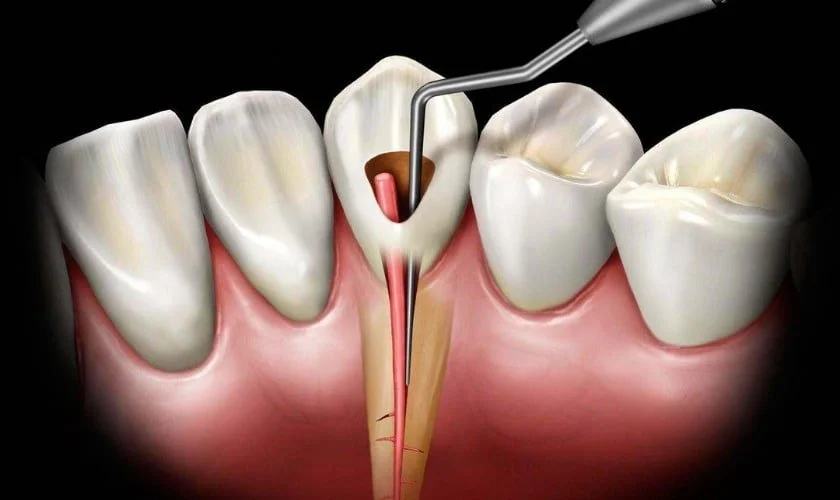
Root canal treatment is designed to eliminate bacteria from the infected root canal, prevent reinfection of the tooth and save the natural tooth. When one undergoes a root canal, the inflamed or infected pulp is removed and the inside of the tooth is carefully cleaned and disinfected, then filled and sealed.

What happens during root canal treatment?

There’s no need to be worried if your dentist or endodontist prescribes a root canal procedure to treat a damaged or diseased tooth. Millions of teeth are treated and saved this way each year, relieving pain and making teeth healthy again.

Inside your tooth, beneath the white enamel and a hard layer called dentin, is a soft tissue called pulp. This tissue contains blood vessels, nerves and connective tissue, which help grow the root of your tooth during its development. A fully developed tooth can survive without the pulp because the tooth continues to be nourished by the tissues surrounding it.

A modern root canal treatment is nothing like those old sayings! It’s very similar to a routine filling and can usually be completed in one or two appointments, depending on the condition of your tooth and your personal circumstances. Getting a root canal is relatively painless and extremely effective. You’ll be back to smiling, biting and chewing with ease in no time.

Saving the natural tooth with root canal treatment has many advantages:

  • Efficient chewing

  • Normal biting force and sensation

  • Natural appearance

  • Protects other teeth from excessive wear or strain

All About Root Canals

A root canal (also known as an endodontic treatment) is a serious procedure, but one that specialists handle every day. Before engaging in any type of dental work, it’s important to know the facts about root canals.

Does a root canal hurt?

Since patients are given anesthesia, a root canal isn’t more painful than a regular dental procedure, such as a filling or getting a wisdom tooth removed. However, a root canal is generally a bit sore or numb after the procedure, and can even cause mild discomfort for a few days.

How do you know if you need a root canal?

Root canals are needed for a cracked tooth from injury or genetics, a deep cavity, or issues from a previous filling. Patients generally need a root canal when they notice their teeth are sensitive, particularly to hot and cold sensations.

There are a few symptoms that mean you might need a root canal:

  • Severe pain while chewing or biting

  • Pimples on the gums

  • A chipped or cracked tooth

  • Lingering sensitivity to hot or cold, even after the sensation has been removed

  • Swollen or tender gums

  • Deep decay or darkening of the gums

Can I go to school or work after getting a root canal?

Although you will most likely be numb for 2-4 hours following the procedure, most patients are able to return to school or work directly following a root canal. However, it is advised against eating until the numbness is completely gone.

How much does a root canal cost?

The cost varies depending on how complex the problem is and which tooth is affected. Molars are more difficult to treat; the fee is usually more. Most dental insurance policies provide some coverage for endodontic treatment.

Generally, endodontic treatment and restoration of the natural tooth are less expensive than the alternative of having the tooth extracted. An extracted tooth must be replaced with an implant or bridge to restore chewing function and prevent adjacent teeth from shifting. These procedures tend to cost more than endodontic treatment and appropriate restoration.


Need more information? Call us today at 95588988!