DENTAL CROWN FOR CRACKED TOOTH

Treating a cracked tooth with a dental crown

The severity of the crack that forms on your tooth will be determined by the dentist, who will decide if a crown is necessary. The visible part of a person’s tooth has multiple layers, such as the outer chamber called the enamel and the innermost layer called the pulp chamber. The pulp chamber contains the nerves and blood vessels that supply the tooth with nutrients. The middle layer of a tooth’s crown is called the dentin and it makes up most of the tooth.

A crack that only affects the enamel and dentin is classified as mild to moderate. A dentist might be able to address it with more affordable treatments like composite bonding. A crack that reaches the pulp chamber typically needs root canal therapy and a crown.

Treating a cracked tooth with a dental crown


Process of dental crown

A cracked tooth never heals on its own, it only widens and deepens over time, causing more damage to the tooth’s structures. Covering a tooth prevents acids in the mouth from getting into the crack and expanding it. It also protects the tooth so it does not fall apart due to bite forces inflicted by chewing.

If the damage to the tooth reaches the pulp chamber, the dentist might recommend a root canal to clean out the soft tissues there. A crack leaving the pulp chamber open means bacteria in the mouth can now reach the soft tissues there and infect them. A root canal helps to protect against such issues and a crown is placed on the tooth afterward to preserve and restore it.

Local anesthetics are typically used during root canals to prevent the patient from feeling pain. A dental drill is used to make a hole into the pulp chamber and files are used to pull out the soft tissues. Medication is applied to the area before the dentist seals it with a material called gutta-percha.


Types of dental crowns

When you need a crown,  you immediately start thinking about the types of dental crowns and cost. This is because today there are many different types of crowns that vary depending on materials, cost, procedures, and patients’ needs.

The main types of crowns used in dentistry include:

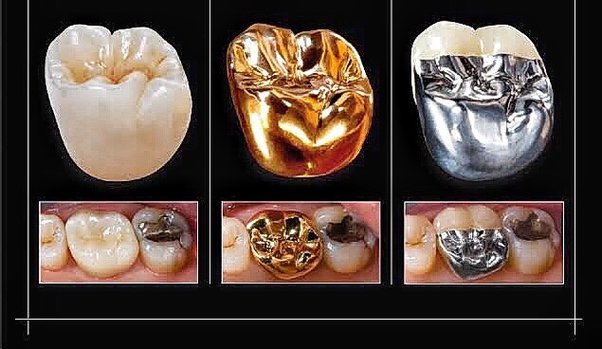
1. Gold crowns

Gold crowns are in fact a combination of copper and other metals, such as nickel or chromium. The main advantage of gold crowns is their strength and durability.

For back restorations -and depending on each patient’s needs- some dentists may suggest a gold crown as the preferred option. However, gold crowns don’t make a very popular choice today due to their color and aesthetics.

Main ADVANTAGES of gold crowns:

  • They are strong and highly resistant

  • They last a long time if properly cared for

  • Less proportion of your natural tooth needs to be removed

  • They wear down quite slowly, just like natural enamel

  • They are ideal for posterior restorations (back teeth), especially second molars

Main DISADVANTAGES of gold crowns:

  • Poor aesthetics: They obviously don’t look like a natural tooth

  • Gold alloy crowns can affect some people and produce some side effects such as allergic reactions or swelling

2. ALL PORCELAIN CROWNS

This is definitely the most popular type of crown used nowadays. They are entirely made of porcelain material.

Some ADVANTAGES are:

  • Porcelain or ceramic crowns provide the best and most natural look.  They match your surrounding teeth in shape, size, and color.

  • The best option for front teeth restorations.

  • They are biocompatible: that means no metal is used, so they are toxic-free.

However, the main DISADVANTAGES of porcelain crowns are:

  • They are not as strong as metal crowns. Porcelain crowns can last a long time, but they have to be well taken care of.

  • Patients who suffer from bruxism should opt for gold of PFM

  • They may be more costly than other types of crowns, such as metal crowns.

3. Porcelain Fused-to-Metal Crowns (PFM)

Porcelain fused-to-metal (PFM) crowns are another widely used type of dental crowns. They provide both strength (due to their metal structure) and aesthetics (due to the porcelain coat that covers the cap).

The main ADVANTAGES of PFM crowns are:

  • They provide great aesthetics and durability

  • They’ve been around for over 50 years. We know they work well.

  • They are less costly than all porcelain crowns

However, the DISADVANTAGES of PFMs include:

  • The metal in these crowns may cause a grey line at the gumline. This may not give the 100% aesthetic look that all porcelain crowns provide.

  • For people who clench their teeth, this type of crown may wear down more easily against the opposing teeth.

4. Zirconia Crowns

Zirconium is a relatively new material that combines the strength of metal with the aesthetics of porcelain crowns.  High translucent zirconia and layered zirconia crowns have become a more popular choice lately.

The main ADVANTAGES of zirconia crowns are:

  • They provide great aesthetics

  • They are strong and long-lasting (less possibilities of chipping or breaking).

  • The process can be less time consuming because zirconia can be cut and shaped at the same dental office. There’s no need to send them over to a dental lab.

  • Zirconia Crowns are less likely to wear down due to their strength.

  • They are biocompatible: as metal free crowns, they are not likely to cause allergic reactions.

The main DISADVANTAGES of Zirconia Crowns include:

  • Their strength can make the teeth they bite against wear down easily.

  • Solid Zirconia can be difficult to adjust

Want to get a crown done?

Call us now at 02 9558 8988 or email us at info@painfreedentistsydney.com.au to organise your appointment today!
Dental Crown
Why is my uvula swollen?

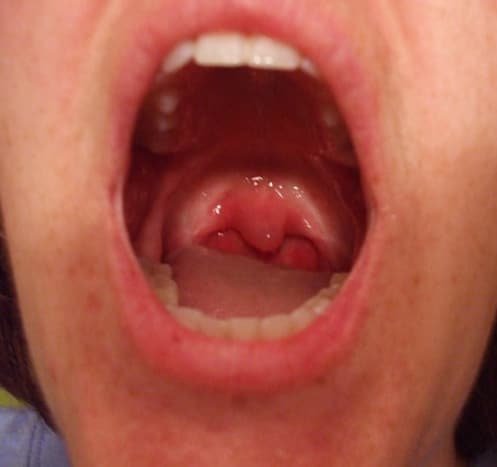
Uvulitis is a medical condition where the uvula (the teardrop flesh hanging on top of your soft palate) is inflamed. The purpose of the uvula is to secret saliva to keep your mouth moist and lubricated. It also prevents food and liquids from entering the area behind your nose.

There are many causes leading to uvulitis, such as infection, allergies or trauma. Fortunately, uvulitis is only temporary and can be entirely treated.

Patient with a swollen uvula

What causes swollen uvula?

Causes of swollen uvula

1. Infection

Infections such as a common cold may cause you to have a swollen uvula. Alongside this, your throat may be sore and red for more than a week.

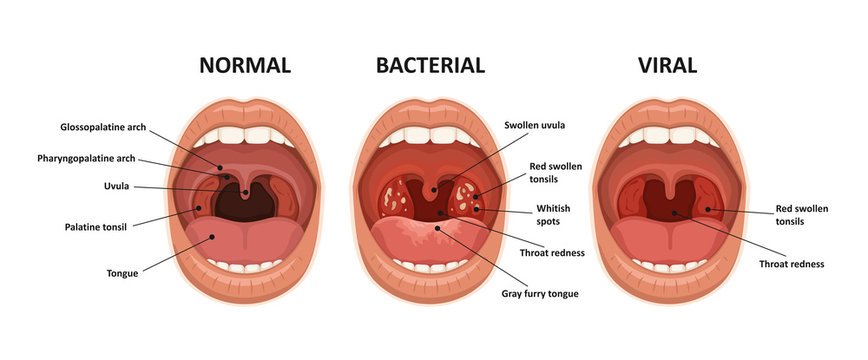
There are two types of uvula infections, bacterial or viral. Most infections caused by a virus do not have a treatment. Hence, you will need to wait until it completely clears up. Infections caused by bacteria can be treated with a doctor’s prescribed antibiotics.

We can easily distinguish a bacterial uvula infection from a viral uvula infection through the white bumps or spots on the tonsils, a trait seen when your uvula is infected with bacteria only.

2. Allergies

Some environmental irritants or allergens such as dust, pollen, hair, fur, and certain chemical substances such as tobacco or smoke can trigger uvula inflammation. Similarly, food allergies can also aggravate the symptoms of uvulitis.

A qualified medical doctor may be able to diagnose the causes of your allergies. It is best to consult a doctor for your allergy issues to prevent severe symptoms in the future.

3. Injury/trauma

Friction of uvula against any other external materials may exacerbate or initiate symptoms of uvulitis. Similarly, swallowing large food particles or objects can cause injury to the uvula, leading to uvula inflammation.

Concerned about your uvula?

Call us now at 02 9558 8988 or email us at info@painfreedentistsydney.com.au to organise an appointment to have it checked out today.

Benefits of Lip Injections or Lip Fillers

Lip fillers are among the most popular and common types of dermal filler. They can increase the volume of your lips, giving them a more natural, younger and more attractive look.

Before and After

What are lip fillers?

Lip fillers are classified as dermal fillers, which are injections that allow the wrinkles to smoothen and become plumper. Common areas requiring lip fillers can include the eyes, mouth and nose.

Lip fillers are usually made up of synthetic hyaluronic acid (HA), also known as hyaluronan or hyaluronate. Hyaluronic acid is found scattered across your body, especially in the eyes, joints and skin. Commonly used in moisturising creams, lotions, ointments and serums, hyaluronic acid helps skin stretch, flex and reduces skin wrinkles and lines. Similarly, hyaluronic acid is proven to help wounds heal faster and reduce scarring.

Who should get lip fillers?

There are many reasons why patients wish to receive lip filler treatment. This can include:

  • Smoothing wrinkles and increasing the size of the lips.

  • Restoring the previous size of your lips. Lip thinning can occur as you age. Hence people who wish to reshape their lips to their original size can choose to receive lip filler.

  • Correcting the shape of your lips. It is common for the lips to become asymmetrical. Hence, lip fillers are a great choice to sculpt the lips to your desired shape.

  • Boosting confidence and improving the overall facial image. Lip fillers can enhance your facial appearance to a more attractive side.

Before and After

Who should not get lip fillers?

There are certain risks associated with lip fillers. You should not receive lip filler treatment if:

  • You are allergic to many substances or chemicals. Some patients have been recorded to be allergic to lidocaine (lignocaine), a local anaesthetic of the amino amide type. It is best to consult with a qualified practitioner regarding all of your medical concerns to avoid possible risks.

  • You are pregnant or breastfeeding.

  • You have any bacterial, viral or fungal infection. Similarly, if you are on antibiotics, you should not receive HA lip filler injections. HA fillers should also not be used on patients with active autoimmune diseases including lupus, rheumatoid arthritis, mixed connective tissue disease and Hashimoto’s thyroiditis.

What are the pros and cons of lip fillers?

There are many pros and cons to lip filler treatments. Most customers choose to have lip augmentation due to its many benefits including:

PROS:

  • Safe non-surgical procedure (lip lifts are more invasive and typically less desired than lip fillers)

  • Stimulate collagen production around the lip area

  • Fully reversible procedure

  • Enhance physical appearance, which might also boost self-confidence and improve social interactions

  • Gives a natural fullness to the lips

  • Ingredients are made up of naturally occurring hyaluronic acid

  • Fewer bruises and lips can recover much faster

  • Little to no side effects

However, some patients can experience negative side effects from lip fillers. These include:

CONS:

  • Temporary results requiring regular visits

  • Rashes, swelling or potential infection

  • Fillers might move away from the desired area, or form lumps

  • Expensive. Hyaluronic acid fillers can be more expensive than botox and the price might fluctuate based on the location, or the expertise of the health professional

How long do lip fillers last?

Lip fillers tend to last anywhere between 12 to 18 months. However, it is dependent on the amount of filler placed and the area placed, your age and how fast your body metabolises substances. Younger people tend to burn calories faster, hence their lip fillers might not last longer.

How painful is lip filler?

Under numbing cream and a skilled injector, patients may experience little to no discomfort. In short, you won’t be experiencing noticeable pain during the procedure.

Are lip fillers safe?

Lip fillers are generally safe and carry a very low risk of complications, or side effects. To increase volumes, your lips will require some stretching. However, excessive use of lip fillers can cause the area to sag long term.

Do your lips go lumpy after fillers?

Lumps are a common side effect after undergoing dermal fillers or lip enhancement procedures. Often, they are short-term problems that can correct themselves sometimes after the treatments. However, the process is entirely reversible as you can dissolve hyaluronic acid fillers using a substance called hyaluronidase, a naturally-occurring enzyme in the body. Hyaluronidase can only be prescribed by a medical professional, so you should have lip fillers done in a regulated clinical environment should something ever goes wrong.

Where to get lip fillers?

At Pain Free Dentist Sydney, we offer hyaluronic acid fillers for facial areas. Dr. Chong, a beauty enthusiast, has over 30 years of expertise in cosmetic dentistry and can perform filler procedures under fully safe conditions.

If you wish to consult about your dental or any cosmetic concerns, please do not hesitate to contact us on 9558 8988. Alternatively, you can reach us via our email info@painfreedentistsydney.com.au.