

A tongue tie, or also called ankyloglossia, is a condition caused when the frenulum limits the movement of the tongue around the mouth surfaces.

A tongue tie can be caused by the length of the frenulum preventing the tongue from moving upwards and sideways.
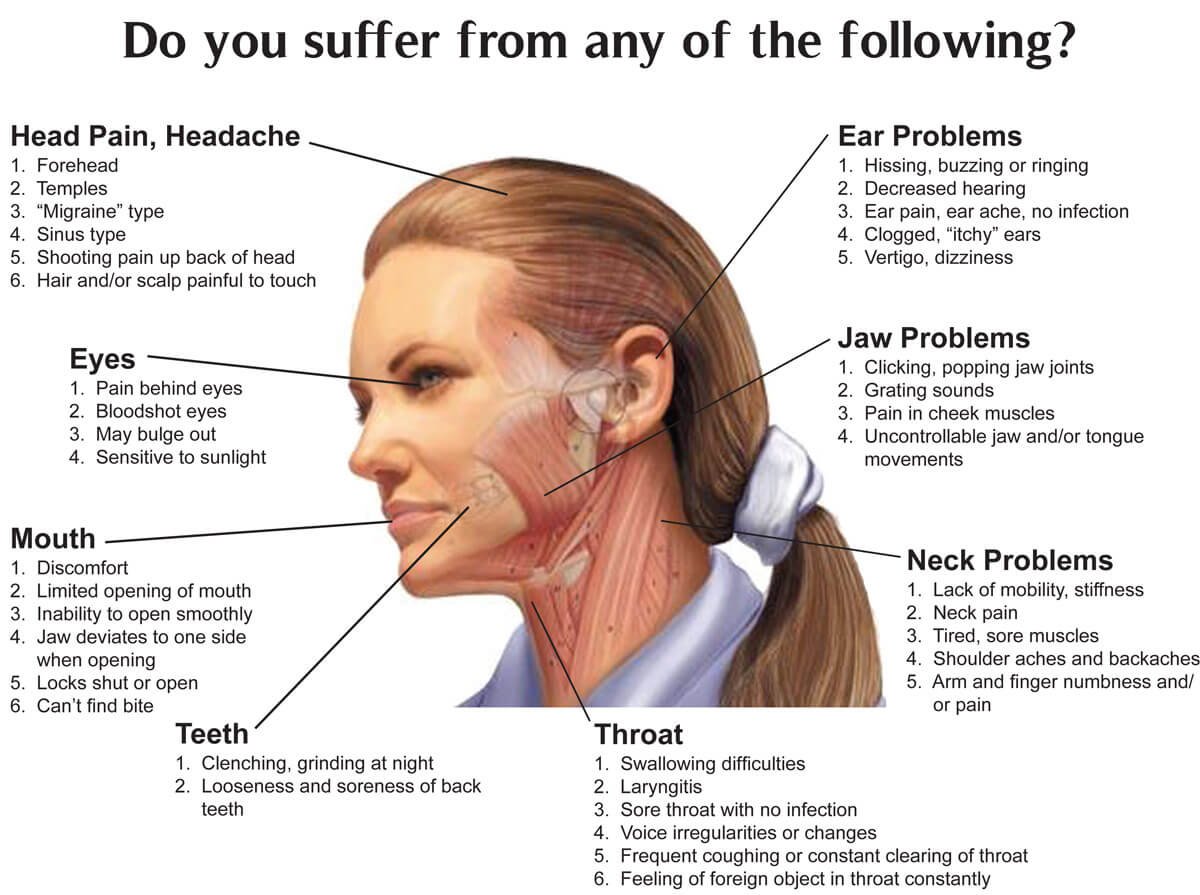
Tongue tie and TMJ dysfunction are interrelated. This means that a tongue tie is a highly likely factor that can cause TMJ pain, jaw pain and more conditions, which can cause severe discomfort to the patient if left untreated. You may have a tongue tie if you have symptoms such as:
Waking up multiple times at night
Waking up gasping for air
Waking up feeling unrested and lethargic for the whole day
Breathing more through your mouth instead of your nose
Having head, ear, neck and jaw pain
Having jaw joint noises, jaw clicking, popping or jaw locking
Vertigo, dizziness or mild to severe headaches
Due to the frenulum attachment becoming too tight or too restrictive, a tongue tie can occur. This would not allow the tongue to have the freedom of mobility that it needs to rest in the proper position - which is against the roof of your mouth with light suction.
Incorrect position of the tongue is when the tongue is rested on the floor of the mouth. This will discourage the roof of the mouth (or the palate) to not grow to its full genetic potential, particularly in children where the bones are soft and mouldable and are still growing.
Below is a photo of a normal mouth palate, characterised by the nice, wide and shallow shape, with healthy mucosa and some signs of suction/pressure.

A normal mouth palate
When the palate is nice, wide and shallow, it can accommodate all of the teeth without crowding.
However, when the tongue is rested against the floor of the mouth, it is not putting pressure on the roof, causing the mouth to become arched and narrow.

Arched and narrow mouth
The arched, narrow and vaulted palate would not provide enough room to accommodate the teeth, leading to teeth crowding.
Not only that, the roof of the mouth is also the floor of your nose. So essentially if the palate is arched upwards, it puts pressure up on the nasal septum causing it to deviate. When this happens, it is much harder to breath through the nose that if the septum is not deviated, and hence the patient would breath through the mouth instead.

Shape of the nasal septum is deviated due to arched palate, causing Deviated Nasal Septum (DNS).
Nasal (nose) breathing is much more superior to mouth breathing because the nose acts as a filtration system that filters the oxygen more efficiently. Breathing through the mouth would reduce oxygen uptake, causing a forward head posture, an inward jaw, tired, baggy eyes, a crooked nose and a constantly opened mouth. Patients suffering from mouth breathing will regularly feel tired, lethargic and restlessness from lack of sleep.

Nose breather vs. Mouth breather
A lower tongue posture also means that the lower jaw (or the mandible), retracts inwards. Forward growth of the mandible can also not happen if either jaw arch is too narrow. An inward mandible leads to the condyle disc becoming more displaced, causing jaw pain and hence, TMJ disorder.
What treatments are available for tongue tie and/or TMJD?
For tongue tie, the best course of action is to undergo surgery. After placing the patient into local anaesthesia, the dentist will snip the frenulum and expand the tissues surrounding the tongue to release the tongue tie. When the surgical procedure is finished, patients must perform oral exercises related to tongue tie issues. These oral exercises are called myofunctional therapy, which are the exercises that allow the tongue to move around freely. Patients can choose to perform these exercises at home or schedule an appointment with a speech therapist.
Exercises post-surgery should be done regularly to avoid the tongue tissues from reattaching, and overall to train the tongue to be placed against the palatal.

Myofunctional therapy
For TMJ treatment, it is in the patient’s best interest to seek help as soon as possible, since TMJ pain can become chronic if left untreated. Patients can book an appointment with a dentist or a TMJ specialist for a consultation and treatment plan.
At Pain Free Dentist Sydney, we are proud to offer the best course of TMJ treatment, with our leading dentist and TMJ specialist, Dr. Lisa Chong. Dr. Chong has over 25 years of experience with various dental and myofascial-related conditions and has successfully cured many patients with TMJ pain permanently. During her career, Dr. Chong personally developed a unique 3D mouth guard structure, called a “splint”, that helps expand the upper arch of the patient and allows the joint to be placed back in its original place.
If you have any inquiries or questions, please do not hesitate to reach us via phone number 9558 8988. Alternatively, you can email us at info@painfreedentistsydney.com.au to book an appointment and we will get back to you ASAP!