Dental Crowns And Veneers For Bulimia Nervosa

A patient suffering from bulimia nervosa usually has a yellow shade of teeth that is very sensitive. This is because the acid reflux from excessive vomiting will erode the tooth enamel, meaning your gastric acid eats away the minerals that form your enamel.

This process can negatively damage the health of your gum line and teeth, similarly reducing your confidence when smiling. Hence, full-mouth dental crowns and dental veneers are great solutions to improve your physical appearance. They not only reduce the sensitivity of your tooth enamel but also resemble your real teeth, boosting your confidence greatly and allowing you to smile brightly again.


Dental Crowns

What are Dental crowns?

Dental crowns are man-made caps that are placed over your worn down, cracked or broken tooth. They are used to prevent the damaged area from spreading further and to restore your aesthetics. There are many types of dental crowns, however the most preferred material is porcelain due to its natural white and patients can customise the colour according to their teeth. For patients with bulimia, the full mouth crown can completely replace the already eroded yellow teeth. Your teeth will no longer feel sensitive and you can confidently show off your new smile.

Before every dental crowns procedure, the dentist will take an X-ray of your tooth to ensure the tooth itself, and the surrounding bone areas, do not pose any infections (such as a root canal) and destroy the crown in the future.

During the procedure, the patient is put under local anaesthesia, the temporary crown is replaced by the porcelain crown. Your doctor will ensure the bite after placing the crown is correct to remove any discomfort.

After the procedure, you might feel odd biting on your new tooth. This is perfectly normal and after a while, you will be able to adjust to it. It is essential that you take care good of your teeth to avoid further decay. This can include brushing with fluoride toothpaste and flossing twice a day, drinking fluoridated water and ensuring you get a regular checkup at your local dentist’s place.

Dental Veneers

What are dental veneers?

Many people will be more inclined to choose dental veneers due to their affordability and the process is minimally invasive in comparison to porcelain crowns (the original teeth is not shaved down).

This can be a great option for bulimia patients if they prefer preserving their original teeth and/or if they have dental anxiety and cannot handle the drilling sound. However, porcelain veneers will not last as long as the cement wears out over time and won’t be as adhesive. Similarly, your bulimia teeth can become brittle, translucent, and weak, which is not ideal for long-term maintenance. Furthermore, the veneered tooth can crack due to it being more fragile than a porcelain crown.

The before, during and after processes of dental veneers are relatively similar to dental crowns. The only differences are the time taken for each procedure (veneers are much faster), the number of anaesthetics used, and the veneers would involve fewer drillings.

Where to find a good dentist in Sydney?

At Pain Free Dentist Sydney, Dr. Lisa Chong is a highly qualified dental practitioner who has over 30 years of experience. During her career, she has been trained by an excellent Maxillofacial oral surgeon in various procedures, including tongue tie surgeries, TMJ pain issues and overall cosmetic dentistry.

Give a call now at 9558 8988, or via email info@painfreedentistsydney.com.au to inquire about any of your dental issues.

TMJ symptoms and treatments

Overview

The temporomandibular joint (TMJ) is a sliding hinge that connects your jawbone to your skull. There is a joint on each side of the jaw. TMJ disorders are disorders in the temporomandibular joint that cause pain in the jaw joint and the muscles that control jaw movement.

The exact cause of a person's TMJ disorder is often difficult to determine. Your pain may be the result of a combination of factors, such as genetics, arthritis or a jaw injury. Some people with mandibular pain also tend to clench or grind their teeth (bruxism), although many people habitually clench or grind their teeth and never develop TMJ disorders.

In some cases, the pain and discomfort associated with TMJ disorders are temporary and can be relieved by self-managed care or non-surgical treatment. Surgery is often the last resort after conservative treatment has failed, but some patients with TMJ disorders may benefit from surgery.

Symptoms

Symptoms and signs of TMJ disorders may include:

  • Pain or tenderness in the jaw

  • Pain in the temporomandibular joint

  • Pain in and around the ears

  • Difficulty or pain in chewing

  • Facial pain

  • Locking the joints, difficult to open or close your mouth

TMJ disorders can also cause a clicking or jarring sensation when you open your mouth or chew.

Causes

The temporomandibular joint combines hinge movement and sliding motion. The bones that interact within the joint are partly covered with cartilage and separated by a small shock absorber, which usually keeps the motion steady.

TMJ disorder could happen if:

  • Disk erodes or moves out of its proper alignment

  • Articular cartilage is damaged by arthritis

  • The joint is damaged by a blow or other impact

However, in many cases, the causes of TMJ disorders are unclear.

Risks

Factors that may increase the risk of TMJ disorders include:

  • Various types of arthritis, such as rheumatoid arthritis and osteoarthritis

  • Jaw injury

  • Permanent (chronic) grinding or clenching of teeth

Certain connective tissue diseases may affect the temporomandibular joint

Treatment

Common self-care treatments include medication, bite guards and physiotherapy. Patients experiencing TMJ could also exhibit stress symptoms. Hence, relaxation techniques such as deep breathing, meditation and yoga may help to improve their mental wellbeing.

For most TMJ cases, patients require medical attention or the help of the dentist, who would be able to correct the jawline and prevent ongoing aches.

At Pain Free Dentist Sydney, we are proud to introduce a unique solution that guarantees desirable results. With years of experience and specialisation in TMJ, Dr. Lisa Chong has personally designed a mouth guard structure - called a “splint”, which can align both upper (maxillary), and lower (mandibular) jaws to permanently treat TMJ dysfunction.

Call us now at 02 9558 8988 or email us at info@painfreedentistsydney.com.au for a consultation today!


DENTAL CROWN FOR CRACKED TOOTH

Treating a cracked tooth with a dental crown

The severity of the crack that forms on your tooth will be determined by the dentist, who will decide if a crown is necessary. The visible part of a person’s tooth has multiple layers, such as the outer chamber called the enamel and the innermost layer called the pulp chamber. The pulp chamber contains the nerves and blood vessels that supply the tooth with nutrients. The middle layer of a tooth’s crown is called the dentin and it makes up most of the tooth.

A crack that only affects the enamel and dentin is classified as mild to moderate. A dentist might be able to address it with more affordable treatments like composite bonding. A crack that reaches the pulp chamber typically needs root canal therapy and a crown.

Treating a cracked tooth with a dental crown


Process of dental crown

A cracked tooth never heals on its own, it only widens and deepens over time, causing more damage to the tooth’s structures. Covering a tooth prevents acids in the mouth from getting into the crack and expanding it. It also protects the tooth so it does not fall apart due to bite forces inflicted by chewing.

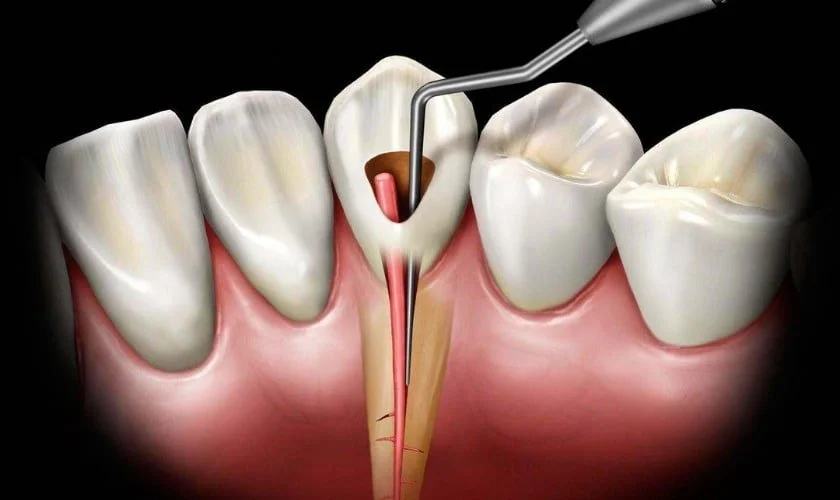
If the damage to the tooth reaches the pulp chamber, the dentist might recommend a root canal to clean out the soft tissues there. A crack leaving the pulp chamber open means bacteria in the mouth can now reach the soft tissues there and infect them. A root canal helps to protect against such issues and a crown is placed on the tooth afterward to preserve and restore it.

Local anesthetics are typically used during root canals to prevent the patient from feeling pain. A dental drill is used to make a hole into the pulp chamber and files are used to pull out the soft tissues. Medication is applied to the area before the dentist seals it with a material called gutta-percha.


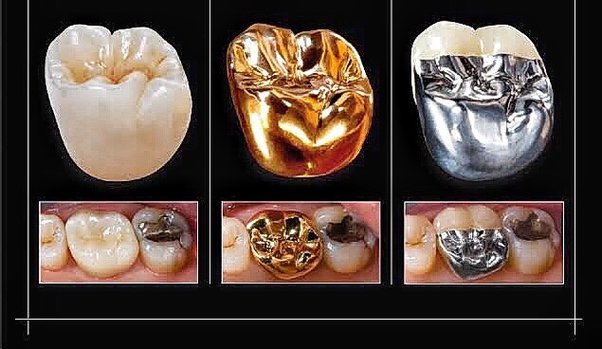
Types of dental crowns

When you need a crown,  you immediately start thinking about the types of dental crowns and cost. This is because today there are many different types of crowns that vary depending on materials, cost, procedures, and patients’ needs.

The main types of crowns used in dentistry include:

1. Gold crowns

Gold crowns are in fact a combination of copper and other metals, such as nickel or chromium. The main advantage of gold crowns is their strength and durability.

For back restorations -and depending on each patient’s needs- some dentists may suggest a gold crown as the preferred option. However, gold crowns don’t make a very popular choice today due to their color and aesthetics.

Main ADVANTAGES of gold crowns:

  • They are strong and highly resistant

  • They last a long time if properly cared for

  • Less proportion of your natural tooth needs to be removed

  • They wear down quite slowly, just like natural enamel

  • They are ideal for posterior restorations (back teeth), especially second molars

Main DISADVANTAGES of gold crowns:

  • Poor aesthetics: They obviously don’t look like a natural tooth

  • Gold alloy crowns can affect some people and produce some side effects such as allergic reactions or swelling

2. ALL PORCELAIN CROWNS

This is definitely the most popular type of crown used nowadays. They are entirely made of porcelain material.

Some ADVANTAGES are:

  • Porcelain or ceramic crowns provide the best and most natural look.  They match your surrounding teeth in shape, size, and color.

  • The best option for front teeth restorations.

  • They are biocompatible: that means no metal is used, so they are toxic-free.

However, the main DISADVANTAGES of porcelain crowns are:

  • They are not as strong as metal crowns. Porcelain crowns can last a long time, but they have to be well taken care of.

  • Patients who suffer from bruxism should opt for gold of PFM

  • They may be more costly than other types of crowns, such as metal crowns.

3. Porcelain Fused-to-Metal Crowns (PFM)

Porcelain fused-to-metal (PFM) crowns are another widely used type of dental crowns. They provide both strength (due to their metal structure) and aesthetics (due to the porcelain coat that covers the cap).

The main ADVANTAGES of PFM crowns are:

  • They provide great aesthetics and durability

  • They’ve been around for over 50 years. We know they work well.

  • They are less costly than all porcelain crowns

However, the DISADVANTAGES of PFMs include:

  • The metal in these crowns may cause a grey line at the gumline. This may not give the 100% aesthetic look that all porcelain crowns provide.

  • For people who clench their teeth, this type of crown may wear down more easily against the opposing teeth.

4. Zirconia Crowns

Zirconium is a relatively new material that combines the strength of metal with the aesthetics of porcelain crowns.  High translucent zirconia and layered zirconia crowns have become a more popular choice lately.

The main ADVANTAGES of zirconia crowns are:

  • They provide great aesthetics

  • They are strong and long-lasting (less possibilities of chipping or breaking).

  • The process can be less time consuming because zirconia can be cut and shaped at the same dental office. There’s no need to send them over to a dental lab.

  • Zirconia Crowns are less likely to wear down due to their strength.

  • They are biocompatible: as metal free crowns, they are not likely to cause allergic reactions.

The main DISADVANTAGES of Zirconia Crowns include:

  • Their strength can make the teeth they bite against wear down easily.

  • Solid Zirconia can be difficult to adjust

Want to get a crown done?

Call us now at 02 9558 8988 or email us at info@painfreedentistsydney.com.au to organise your appointment today!

Dental Crown