
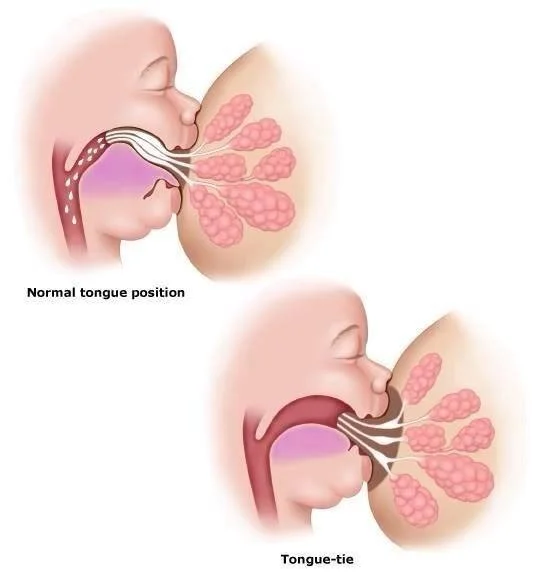
Lip-tie and tongue-tie are common conditions in newborns where the tissue connecting the upper lip or tongue to the gum or floor of the mouth is unusually tight. These restrictions can affect a baby’s ability to latch properly during breastfeeding, leading to feeding difficulties and potential oral issues later in life.
Understanding these conditions is crucial for parents and caregivers to ensure successful feeding and healthy oral development.
What Are Lip-Tie and Tongue-Tie?
Tongue-Tie (Ankyloglossia)
Tongue-tie occurs when the lingual frenulum (the tissue under the tongue) is short, tight, or restrictive. This can limit tongue movement, making it difficult for the baby to suckle effectively.
Lip-Tie
Lip-tie happens when the upper labial frenulum (the tissue connecting the upper lip to the gum) is unusually tight, preventing the lip from flanging outward during breastfeeding.
Both conditions can occur separately or together and vary in severity.
How Lip and Tongue Tie Affect Latching
Proper latching is essential for efficient breastfeeding. A poor latch can result in:
Inadequate milk transfer, leading to poor weight gain
Nipple pain, cracking, or bleeding for the mother
Prolonged or inefficient feeding sessions
Fussiness and frequent feeding attempts due to frustration or hunger
Lip and tongue restrictions prevent the baby from fully opening the mouth and achieving a deep latch, which is necessary for effective milk extraction.
Long-Term Oral and Feeding Implications
If left untreated, lip and tongue ties can contribute to:
Speech difficulties as the child grows
Dental issues such as gaps, misaligned teeth, or increased risk of cavities
Swallowing difficulties and abnormal chewing patterns
Breastfeeding challenges leading to early weaning or supplementation
Early detection and treatment are key to minimizing these issues.
Diagnosis and Treatment
Diagnosis
A pediatric dentist, lactation consultant, or pediatrician can assess the baby’s frenulum and feeding ability. Tools like the Hazelbaker Assessment Tool for Lingual Frenulum Function (HATLFF) help determine the severity.
Treatment Options
Frenotomy: A simple procedure to release the restrictive tissue
Frenuloplasty: A more comprehensive surgical correction if needed
Feeding support: Guidance from lactation consultants to improve latch post-procedure
These procedures are typically quick, minimally invasive, and promote immediate improvement in breastfeeding.
Supporting Successful Feeding
After treatment, it’s important to:
Practice proper latch techniques recommended by a lactation consultant
Monitor the baby’s weight gain and feeding efficiency
Attend follow-up appointments to ensure healing and effective oral function
Early intervention helps babies feed comfortably and develop healthy oral habits.
Final Thoughts: Early Detection Makes a Difference
Lip-tie and tongue-tie can significantly impact breastfeeding and oral development. Recognizing the signs early and seeking professional assessment ensures your baby can feed effectively, grow healthily, and avoid long-term complications.
Ensure your baby’s feeding success today.
Call 9558 8988, email info@painfreedentistsydney.com.au, or book online to schedule an assessment and discuss treatment options for lip and tongue tie.