Breathing through the mouth may seem harmless, but chronic mouth breathing can have far-reaching effects on oral health, facial development, sleep quality, and overall wellbeing. Understanding the causes and consequences is essential for prevention and correction.
What Is Mouth Breathing?
Mouth breathing occurs when a person primarily breathes through the mouth instead of the nose. It may be habitual or caused by:
Nasal obstruction due to allergies, congestion, or deviated septum
Enlarged tonsils or adenoids in children
Structural issues such as narrow nasal passages
Effects of Mouth Breathing on Health
1. Oral Health Issues
Dry mouth: Reduced saliva flow can lead to increased risk of cavities and gum disease
Bad breath (halitosis): Often caused by bacterial overgrowth in a dry mouth
Gum inflammation: Mouth breathing can contribute to gingivitis and other periodontal problems
2. Facial and Dental Development
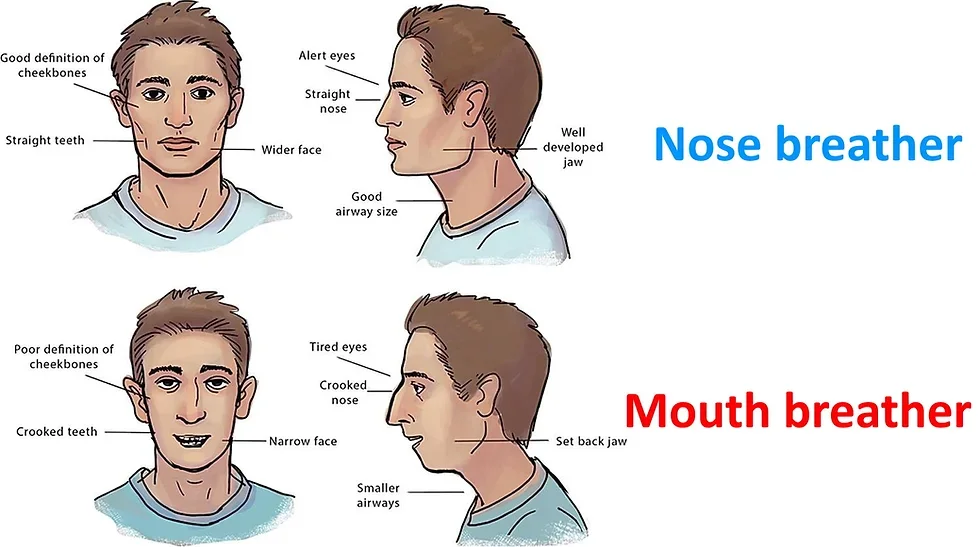
In children, chronic mouth breathing can lead to:
Long, narrow facial structure (“adenoid face”)
Misaligned teeth and crowding
Underdeveloped jaw and improper bite
3. Sleep Disturbances
Mouth breathing can interfere with proper airway function, leading to:
Snoring and sleep apnea
Poor oxygenation during sleep
Daytime fatigue and reduced cognitive performance
4. Speech and Swallowing Issues
Mouth breathing may affect oral muscle function, contributing to:
Speech impediments
Improper swallowing patterns
Tongue posture problems
5. Overall Health Impact
Chronic mouth breathing may also contribute to:
Reduced immune function due to less efficient nasal filtration
Increased risk of respiratory infections
Poor exercise tolerance
Causes and Contributing Factors
Nasal congestion or allergies
Enlarged tonsils/adenoids
Tongue-tie restricting proper tongue posture
Chronic sinus problems
Habitual breathing patterns established in childhood
Correcting Mouth Breathing
1. Medical Intervention
Address nasal obstructions (surgery, medications, or allergy treatment)
ENT consultation for enlarged tonsils or adenoids
2. Dental and Orthodontic Approaches
Correcting bite and jaw alignment
Tongue posture training and exercises
Myofunctional therapy to retrain oral muscles
3. Lifestyle Adjustments
Encouraging nasal breathing during the day
Practicing breathing exercises
Maintaining hydration to reduce dry mouth
Final Thoughts: Breathe Through the Nose, Live Healthier
Mouth breathing may seem minor, but its long-term effects on oral health, facial development, sleep, and overall wellbeing can be significant. Early identification and intervention can prevent complications and promote healthier growth, better sleep, and improved quality of life.
Improve your breathing and oral health today.
Call 9558 8988, email info@painfreedentistsydney.com.au, or book online to schedule an assessment and explore solutions for mouth breathing and related issues.