
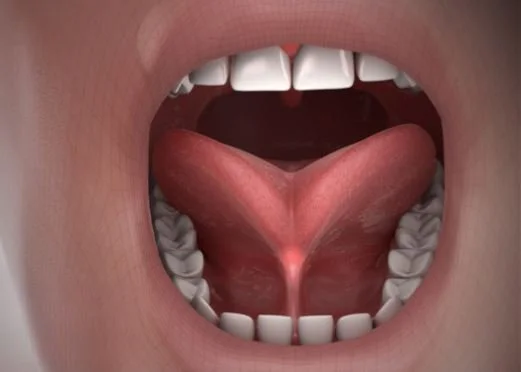
Tongue-tie (ankyloglossia) is a condition where the tongue’s movement is restricted due to a tight or short lingual frenulum. While often identified in infants, undiagnosed tongue-tie in teens and adults can contribute to a wide range of oral, muscular, and postural issues that may go unnoticed for years.
Because the tongue plays a major role in posture, breathing, and jaw function, restriction can affect more than just speech.
👅 What Is Tongue-Tie?
Tongue-tie occurs when the tissue under the tongue is too tight, limiting movement. This can affect:
Tongue elevation
Tongue resting posture
Swallowing patterns
Oral muscle balance
In some cases, mild tongue-tie may go undiagnosed until later in life when symptoms develop.
🦷 How Tongue-Tie Affects Jaw and TMJ Function
Restricted tongue movement can influence how the jaw and surrounding muscles function.
This may contribute to:
Jaw tension or tightness
TMJ discomfort or clicking
Teeth grinding (bruxism)
Overuse of facial and jaw muscles
Uneven bite pressure
When the tongue cannot rest properly against the palate, other muscles may compensate, increasing strain on the jaw system.
🧍♂️ Tongue-Tie and Poor Posture (Hidden Connection)
One of the lesser-known effects of tongue-tie is its potential link to postural imbalance.
When tongue mobility is restricted, the body may adapt in subtle ways:
Forward head posture
Neck and shoulder tightness
Upper back strain
Muscle compensation patterns
Why this happens:
The tongue is connected to deep muscle chains in the neck and floor of the mouth. When it cannot function optimally, surrounding muscles may overcompensate, influencing head and neck alignment over time.
😴 Tongue-Tie and Sleep Issues
Tongue-tie may also influence breathing patterns and sleep quality in some individuals.
Possible associations include:
Mouth breathing during sleep
Snoring
Dry mouth on waking
Restless sleep
Reduced airway support due to low tongue posture
While not a direct cause of sleep apnea, tongue posture can be a contributing factor in airway function.
🤕 Headaches, Facial Tension & TMJ-Like Symptoms
Chronic muscle compensation from tongue restriction may lead to:
Tension headaches
Facial muscle fatigue
Jaw soreness
Ear pressure sensations
TMJ-like symptoms
These symptoms often overlap with stress or bite-related issues, making diagnosis more complex.
🗣️ Speech, Swallowing & Oral Function
Tongue-tie can also affect:
Speech clarity (especially “L,” “R,” and “S” sounds)
Swallowing mechanics
Tongue thrusting patterns
Dental spacing or crowding over time
These functional issues may become more noticeable in adolescence or adulthood.
🧪 Why Tongue-Tie Is Often Missed
In adults, tongue-tie can be overlooked because:
Symptoms develop gradually
Compensation masks restriction
Focus is often placed on teeth or jaw, not tongue function
It may be mild but still functionally significant
A proper functional assessment is often needed for diagnosis.
🦷 Treatment Options for Tongue-Tie-Related Issues
Management depends on severity and symptoms and may include:
👅 Frenectomy (Tongue-Tie Release)
A minor procedure to improve tongue mobility.
🧘 Myofunctional Therapy
Exercises to retrain tongue posture and muscle balance.
🦷 TMJ & Bite Assessment
Evaluates how jaw function has adapted.
💉 Adjunct TMJ Treatments (if needed)
Such as splints or Botox for muscle overactivity.
🧍 Postural & Breathing Re-Education
Helps correct compensatory patterns in the neck and airway.
📍 Tongue-Tie Assessment in Sydney
At Pain Free Dentist Sydney, we assess tongue function in relation to jaw pain, posture, breathing, and overall oral health. A multidisciplinary approach is often needed to understand the full impact of restriction.
📞 Book a Consultation
If you suspect undiagnosed tongue-tie may be contributing to jaw pain, posture issues, or breathing concerns, professional assessment is recommended.
👉 Pain Free Dentist Sydney
📞 Call us: (02) 9558 8988
📧 Email: info@painfreedentistsydney.com.au
💻 Or book online today
❓ FAQs
Can tongue-tie cause TMJ pain?
It may contribute to jaw muscle imbalance and tension in some individuals.
Can tongue-tie affect posture?
Yes, restricted tongue function may contribute to compensatory neck and head posture changes.
Is tongue-tie treatable in adults?
Yes, treatment may include frenectomy and myofunctional therapy.