
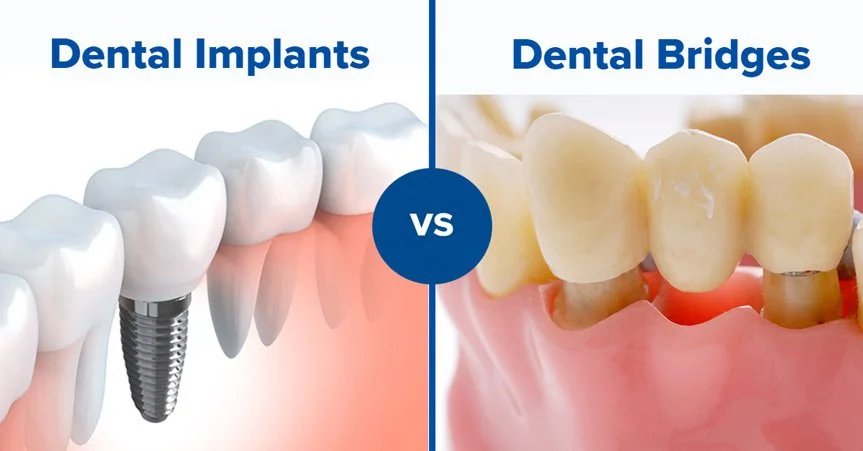
When it comes to replacing missing teeth, two of the most common treatments are dental implants and dental bridges. Both restore your smile, but they work in very different ways and offer different long-term benefits.
If you are deciding between a tooth implant and a dental bridge, understanding the differences can help you choose the best solution for your oral health and lifestyle.
What Is a Dental Implant?
A dental implant is a permanent tooth replacement option that involves placing a titanium post into the jawbone. This post acts as an artificial tooth root and supports a custom-made crown.
Dental implants are designed to look, feel, and function like natural teeth. They are widely considered the gold standard in implant dentistry for replacing missing teeth.
What Is a Dental Bridge?
A dental bridge is a fixed restoration that replaces one or more missing teeth by anchoring an artificial tooth between two adjacent natural teeth.
The supporting teeth are usually shaped and fitted with crowns to hold the bridge in place. A dental bridge restores appearance and function but relies on surrounding teeth for support.
Dental Implants vs Dental Bridge: Key Differences
When comparing dental implants vs dental bridge, the biggest difference is how they are supported. Implants are anchored directly into the jawbone, while bridges depend on neighbouring teeth.
Dental implants help preserve jawbone health by stimulating the bone, whereas bridges do not provide this stimulation, which may lead to gradual bone loss over time in the missing tooth area.
In terms of durability, dental implants typically last much longer. With proper care, implants can last decades or even a lifetime, while dental bridges may need replacement after several years.
Aesthetically, both options can look natural, but implants often provide a more realistic appearance because they emerge directly from the gum like a natural tooth.
Benefits of Dental Implants
Dental implants offer a long-term, stable solution for missing teeth replacement. They allow normal chewing and speaking without movement or discomfort.
Because they are fixed into the jawbone, implants do not rely on other teeth for support, helping preserve the health of surrounding natural teeth.
They also help maintain facial structure and prevent the sunken appearance that can occur after tooth loss.
For many patients, implants are considered the most natural and long-lasting option in tooth replacement treatment.
Benefits of Dental Bridges
A dental bridge is often chosen because it is a quicker and more affordable option compared to implants.
The procedure typically requires fewer visits and does not involve surgery, making it suitable for patients who want faster results.
Dental bridges can effectively restore appearance and basic chewing function, especially when surrounding teeth are already strong and healthy.
For some patients, a bridge may be a practical short to medium-term missing teeth solution.
Which Lasts Longer?
One of the biggest differences between dental implants and dental bridges is longevity.
Dental implants are designed for long-term use and can last many years with good oral hygiene. Dental bridges generally have a shorter lifespan and may need to be replaced over time due to wear or changes in supporting teeth.
Which Feels More Natural?
Dental implants feel more like natural teeth because they are anchored directly into the jawbone. This provides better stability and chewing strength.
Dental bridges also restore function, but because they rely on adjacent teeth, they may not feel as independent or strong as implants in the long term.
Which Option Is Right for You?
The choice between a dental implant and dental bridge depends on several factors, including oral health, number of missing teeth, budget, and long-term goals.
If you are looking for a permanent, low-maintenance solution, dental implants are often the preferred choice in modern implant dentistry.
If you need a faster and more affordable solution, a dental bridge may be suitable depending on your situation.
A professional dental consultation is the best way to determine the right tooth replacement option for you.
Conclusion
Both dental implants and dental bridges are effective ways to replace missing teeth, but they serve different needs.
Dental implants offer long-term durability, bone support, and a natural feel, making them the leading solution in modern dentistry. Dental bridges provide a quicker and more affordable alternative for restoring your smile.
Understanding the differences helps you make the best decision for your oral health and long-term confidence.