If you suffer from jaw pain, headaches or teeth grinding, you may have heard that Botox can help relax the jaw muscles.
But can Botox really help with jaw pain and bruxism?
For some patients, Botox may be a treatment option for excessive jaw muscle activity. It may help reduce muscle contraction and tension in selected cases of teeth grinding and clenching.
However, Botox is not suitable for everyone and does not treat every cause of jaw pain.
A proper assessment is important before deciding whether Botox may be appropriate.
What Is Teeth Grinding?
Teeth grinding, also known as bruxism, occurs when a person clenches or grinds their teeth.
It can occur:
During sleep
During the day
When concentrating
During periods of stress
Without the person realising it
Some people grind their teeth loudly at night, while others primarily clench their jaw.
Over time, excessive clenching and grinding may place significant pressure on the teeth, jaw muscles and temporomandibular joints.
What Problems Can Teeth Grinding Cause?
Long-term teeth grinding may contribute to:
Jaw pain
Headaches
Facial pain
Ear pain
Tooth sensitivity
Worn teeth
Cracked teeth
Broken fillings
Muscle tension
Jaw clicking
Difficulty opening the mouth
Some patients may wake up with a sore or tired jaw.
Others may experience headaches, particularly around the temples, after sleeping.
How Can Botox Help Jaw Pain?
Botox works by temporarily reducing the activity of specific muscles.
When injected into selected muscles, it may reduce excessive muscle contraction.
For patients with significant jaw muscle overactivity, Botox may help reduce:
Muscle tension
Excessive clenching
Jaw muscle pain
Facial muscle discomfort
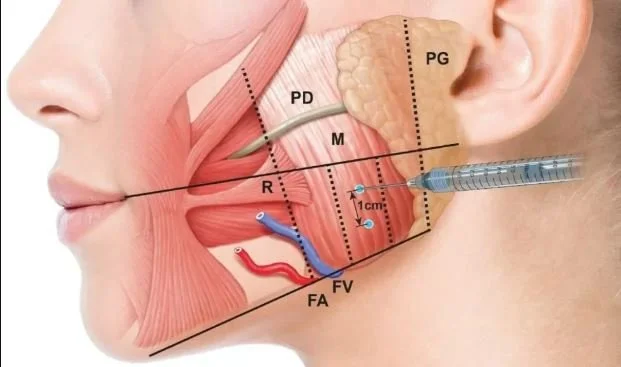
The treatment is generally focused on specific muscles involved in jaw movement and clenching.
The muscles treated depend on the individual patient's symptoms and clinical assessment.
Which Muscles May Be Treated?
Depending on the individual circumstances, treatment may involve muscles such as:
The masseter muscles
The temporalis muscles
Other muscles contributing to excessive jaw tension
The treatment plan should be personalised.
Not every patient requires treatment in the same muscles or the same amount of Botox.
Can Botox Stop Teeth Grinding?
Botox may help reduce the strength of muscle contractions associated with clenching and grinding.
However, it does not necessarily eliminate the underlying reason why a person grinds their teeth.
Teeth grinding may be associated with factors such as:
Stress
Anxiety
Sleep disorders
Bite-related factors
Jaw problems
Certain medications
Other health conditions
For this reason, Botox may be one part of a broader treatment plan rather than a complete solution for every patient.
How Long Does Botox for Jaw Pain Last?
The effects of Botox are temporary.
The duration of the effect varies between individuals and depends on factors such as:
The muscles treated
The amount administered
The patient's metabolism
The severity of muscle activity
Individual response to treatment
Some patients may require further treatment over time.
Your dentist can discuss an appropriate treatment plan based on your symptoms and response.
Is Botox for Jaw Pain the Same as Cosmetic Botox?
Botox can be used for both cosmetic and therapeutic purposes.
When used for jaw pain and teeth grinding, the treatment focuses on reducing excessive muscle activity rather than primarily changing facial appearance.
The treatment may be considered for patients experiencing:
Jaw muscle tension
Excessive clenching
Teeth grinding
Facial pain
Headaches associated with muscle tension
A qualified practitioner should assess whether treatment is clinically appropriate.
Can Botox Treat TMJ Disorder?
Botox may help selected patients with TMJ-related muscle pain or excessive muscle activity.
However, TMJ disorder can have many different causes.
TMD may involve:
The jaw joint
The jaw muscles
The bite
Teeth grinding
Trauma
Functional factors
Botox may help with muscle-related symptoms but does not correct every possible structural or functional problem affecting the jaw joint.
A comprehensive TMJ assessment is important.
Should I Have a TMJ Assessment Before Botox?
Yes.
Before considering Botox for jaw pain or teeth grinding, your dentist should assess the possible causes of your symptoms.
An assessment may include:
Discussion of your symptoms
Examination of the jaw joints
Assessment of the jaw muscles
Evaluation of your bite
Examination of your teeth
Assessment of tooth wear
Evaluation of clenching and grinding
In some cases, dental imaging may also be recommended.
Understanding the underlying cause can help determine whether Botox is an appropriate option.
What Other Treatments May Help Teeth Grinding?
Depending on the cause of your symptoms, treatment may include:
Custom Dental Splint Therapy
A custom dental appliance may help protect the teeth from excessive forces.
It may also be used as part of a broader approach to managing jaw symptoms and bruxism.
The design of the appliance should be based on the patient's individual needs.
Stress Management
Stress may contribute to increased clenching and grinding.
Strategies to improve stress management and relaxation may be beneficial for some patients.
Sleep Assessment
Some patients who grind their teeth may also have sleep-related issues.
If there are symptoms such as snoring, poor sleep or daytime fatigue, further assessment may be appropriate.
Myofunctional Therapy
Selected patients may benefit from therapy focusing on:
Tongue posture
Breathing
Swallowing
Oral muscle function
Physiotherapy
Some patients may benefit from treatment focused on the jaw, neck and surrounding muscles.
A coordinated approach may be appropriate depending on the symptoms.
Can Botox Help Headaches Caused by Jaw Clenching?
Jaw muscle tension may contribute to headaches in some patients.
If excessive clenching causes tension in the jaw and temple muscles, reducing excessive muscle activity may help reduce associated discomfort.
However, headaches have many possible causes.
It is important to determine whether the headaches are related to jaw muscle activity before assuming that Botox is the appropriate treatment.
Is Botox for Jaw Pain Safe?
Botox treatment should only be performed following an appropriate clinical assessment.
As with any medical or dental treatment, potential risks and side effects should be discussed before treatment.
The treatment should be tailored to the individual patient.
Your dentist should consider:
Your medical history
Your current medications
Your symptoms
The muscles involved
The treatment goals
Can Botox Prevent Tooth Damage From Grinding?
Botox may reduce the strength of muscle contractions in selected patients.
However, it should not be considered the only way to protect teeth from grinding.
A comprehensive treatment plan may also include:
A custom dental appliance
Treatment of existing dental damage
Monitoring tooth wear
Addressing contributing factors
Protecting the teeth and managing the underlying causes of bruxism are important parts of treatment.
What Happens During a Botox for Jaw Pain Consultation?
During your consultation, your dentist may:
Discuss your symptoms and concerns.
Ask about teeth grinding and clenching.
Examine your teeth for signs of wear or damage.
Assess your jaw muscles.
Examine your jaw joints.
Evaluate your bite.
Discuss possible contributing factors.
Explain suitable treatment options.
If Botox is considered appropriate, your dentist can discuss the expected benefits, limitations and potential risks.
Frequently Asked Questions
Can Botox help with jaw pain?
Botox may help selected patients with jaw pain associated with excessive muscle activity or tension.
Can Botox stop teeth grinding?
Botox may reduce the strength of muscle contractions associated with clenching and grinding. However, it does not necessarily remove the underlying cause of bruxism.
How long does Botox for TMJ last?
The effects are temporary and vary between individuals. Some patients may require further treatment over time.
Is Botox better than a dental splint for teeth grinding?
There is no single treatment that is best for every patient. A custom splint, Botox or a combination of treatments may be appropriate depending on the cause and severity of the symptoms.
Can Botox treat jaw clicking?
Jaw clicking may be caused by different problems involving the jaw joint. Botox may help muscle-related symptoms but may not resolve the underlying cause of joint clicking.
Can Botox help headaches caused by jaw clenching?
If headaches are related to excessive jaw muscle activity, reducing muscle tension may help some patients. However, headaches can have many causes and require appropriate assessment.
Botox for Jaw Pain and Teeth Grinding in Sydney
If you suffer from jaw pain, headaches, facial tension or teeth grinding, Botox may be one treatment option to consider.
However, the most appropriate treatment depends on the underlying cause of your symptoms.
At Pain Free Dentist Sydney, we assess patients experiencing TMJ symptoms, jaw muscle tension, teeth grinding and clenching.
Depending on your individual needs, treatment may include custom TMJ splint therapy, Botox for selected cases of excessive muscle activity, myofunctional therapy and other approaches.
If you are experiencing jaw pain or teeth grinding and would like to know whether Botox may be suitable for you, contact us to arrange a consultation.
📞 Call Pain Free Dentist Sydney on 9558 8988.
Serving patients in Dulwich Hill, Hurlstone Park and Sydney's Inner West.