Snoring is extremely common, but it is not always harmless.
For some people, snoring is simply an occasional annoyance. For others, it may be a sign of restricted airflow or an underlying sleep-related breathing disorder.
If you are wondering “How can I stop snoring?”, you may also be asking:
Can a dentist help with snoring?
In some cases, a dentist with training and experience in dental sleep medicine may be able to help assess your airway and discuss appropriate treatment options.
What Causes Snoring?
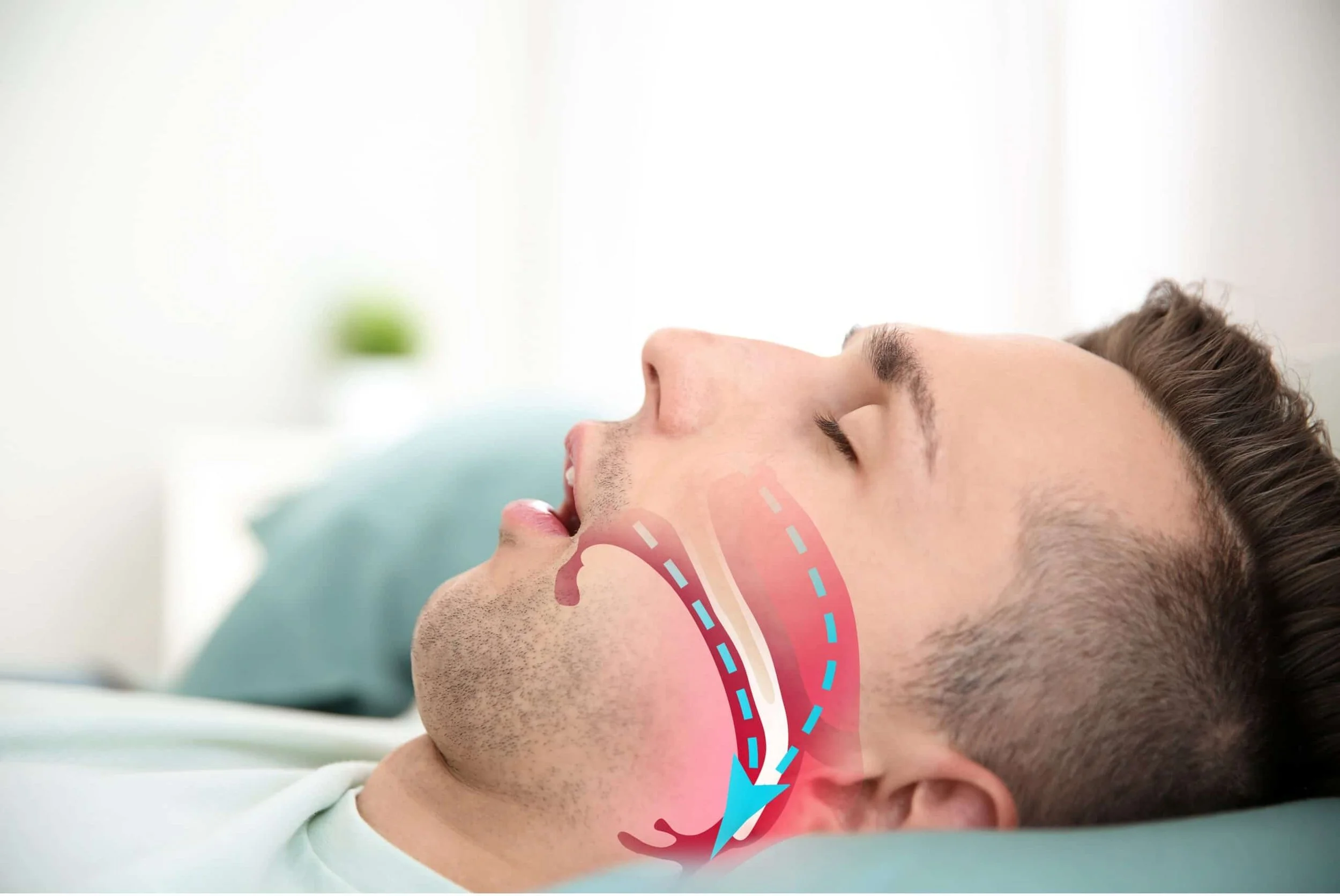
Snoring occurs when airflow through the nose and throat becomes partially restricted during sleep.
As air passes through narrowed tissues, the surrounding tissues may vibrate and create the sound of snoring.
Possible contributing factors include:
A blocked or congested nose
Sleeping on your back
Relaxation of the throat muscles during sleep
Excess soft tissue in the airway
A narrow upper jaw or palate
Jaw position
Mouth breathing
Enlarged tonsils or other anatomical factors
Alcohol or sedative use before sleep
Being overweight
Sleep apnoea
The cause of snoring can vary significantly between individuals.
Is Snoring Normal?
Occasional snoring is common.
However, frequent or loud snoring may require further assessment, particularly if it is associated with symptoms such as:
Gasping during sleep
Choking during sleep
Pauses in breathing
Waking with headaches
Excessive daytime tiredness
Poor concentration
Dry mouth in the morning
These symptoms may indicate a possible sleep-related breathing disorder.
Can Snoring Be a Sign of Sleep Apnoea?
Yes.
Snoring is one of the most common symptoms associated with obstructive sleep apnoea.
Obstructive sleep apnoea occurs when the airway becomes repeatedly narrowed or blocked during sleep.
This can cause interruptions to normal breathing.
Possible symptoms include:
Loud snoring
Pauses in breathing during sleep
Gasping or choking
Morning headaches
Daytime fatigue
Poor concentration
Waking with a dry mouth
Not everyone who snores has sleep apnoea, and not everyone with sleep apnoea snores loudly.
If you have symptoms suggestive of sleep apnoea, appropriate medical assessment is important.
Can a Dentist Help With Snoring?
Yes, a dentist with experience in sleep dentistry may be able to help assess certain factors that contribute to snoring and sleep-related breathing problems.
A dental sleep assessment may consider:
The jaw
The teeth
The bite
The palate
The tongue
The airway
Oral anatomy
Depending on your symptoms, a dentist may also recommend a sleep study or referral to another healthcare professional.
How Can a Dental Appliance Help With Snoring?
For selected patients, a custom oral appliance may help improve airflow during sleep.
A mandibular advancement device is designed to hold the lower jaw and associated tissues in a position that may help reduce airway narrowing.
This may help reduce snoring for some suitable patients.
The effectiveness of an oral appliance depends on factors such as:
The cause of the snoring
The anatomy of the airway
The severity of the condition
The position of the jaw
The patient's individual response
A custom appliance should be assessed and fitted appropriately.
Can a Dentist Help If I Have Sleep Apnoea?
In some cases, yes.
Treatment for obstructive sleep apnoea depends on the severity and individual circumstances.
Possible treatment options may include:
CPAP therapy
A custom oral appliance
Lifestyle changes
Medical treatment
Surgery in selected cases
A dentist may be involved in providing a custom oral appliance for suitable patients.
Patients with suspected or diagnosed sleep apnoea should receive appropriate assessment and treatment recommendations.
What Is a Mandibular Advancement Device?
A mandibular advancement device is a custom dental appliance worn during sleep.
It is designed to help position the lower jaw forward.
This may help increase the space available for airflow in some patients.
A custom device is generally designed according to the patient's individual dental and jaw anatomy.
Your dentist will assess whether an oral appliance is suitable for you.
Can Snoring Be Caused by Mouth Breathing?
Mouth breathing may be associated with snoring in some individuals.
During sleep, breathing through the mouth may contribute to dryness and changes in the position of the tongue and jaw.
Possible causes of mouth breathing may include:
Nasal congestion
Allergies
Nasal obstruction
Airway problems
Habitual mouth breathing
If you regularly breathe through your mouth during sleep, the underlying cause may require assessment.
Can Jaw Position Affect Snoring?
The position of the jaw may influence the size and shape of the airway.
In some patients, a lower jaw that sits further back may contribute to narrowing of the airway during sleep.
A dental and airway assessment may help identify whether jaw position may be a contributing factor.
Can a Narrow Palate Contribute to Snoring?
A narrow upper jaw or palate may be associated with restricted nasal breathing and other airway-related problems in some patients.
The relationship between the palate, nasal airway, tongue and jaw can be complex.
A comprehensive assessment may help determine whether these factors are relevant to your symptoms.
What Can I Do to Stop Snoring?
Depending on the cause, strategies that may help include:
Sleep on Your Side
Some people snore more when sleeping on their back.
Sleeping on your side may help reduce snoring for some individuals.
Manage Nasal Congestion
If nasal congestion contributes to difficulty breathing, addressing the underlying cause may help.
Medical assessment may be appropriate for persistent nasal obstruction.
Avoid Alcohol Before Sleep
Alcohol may relax the muscles of the upper airway and may worsen snoring in some people.
Maintain a Healthy Weight
For some individuals, weight management may help reduce snoring and improve sleep-related breathing.
Seek Assessment for Sleep Apnoea
If you experience loud snoring, gasping, choking or breathing pauses during sleep, seek appropriate assessment.
Consider a Custom Oral Appliance
A custom dental appliance may be an option for selected patients after an appropriate assessment.
How Is Snoring Assessed?
A sleep and airway assessment may involve:
Discussion of your symptoms
Sleep history
Assessment of snoring patterns
Examination of the teeth and jaw
Evaluation of the airway
Assessment of the tongue and palate
Review of previous sleep studies
A sleep study may be recommended where clinically appropriate.
Can Children Snore?
Yes.
Children may snore for a variety of reasons.
Persistent snoring in children should not be ignored, particularly if it is associated with:
Mouth breathing
Restless sleep
Pauses in breathing
Daytime tiredness
Behavioural changes
Children with persistent snoring may require appropriate medical and dental assessment.
Frequently Asked Questions
How can I stop snoring naturally?
The most effective approach depends on the cause. Sleeping position, addressing nasal congestion, maintaining a healthy weight and avoiding alcohol before sleep may help some people.
Can a dentist really help with snoring?
Yes. A dentist trained in sleep dentistry may assess dental, jaw and airway factors and may provide a custom oral appliance for suitable patients.
Can a dental appliance stop snoring?
A custom oral appliance may help reduce snoring in selected patients. Its effectiveness depends on the underlying cause and individual anatomy.
Is snoring always sleep apnoea?
No. However, loud or persistent snoring combined with gasping, choking or breathing pauses may indicate possible sleep apnoea and should be assessed.
Can I use a mouthguard for snoring?
A regular sports mouthguard is not designed to treat snoring. A custom oral appliance designed for sleep-related breathing problems may be more appropriate for selected patients.
Should I see a dentist or doctor for snoring?
This depends on your symptoms. A dentist with experience in sleep dentistry may assess dental and airway factors. If sleep apnoea is suspected, medical assessment and appropriate sleep testing may also be required.
Snoring and Sleep Dentistry in Sydney
If you are asking “How can I stop snoring?”, the first step is understanding why you snore.
For some patients, snoring may be associated with the jaw, teeth, tongue, palate or airway.
At Pain Free Dentist Sydney, we assess patients experiencing snoring, mouth breathing and sleep-related concerns.
Depending on your symptoms, assessment may include evaluation of your dental and airway anatomy and discussion of appropriate treatment options.
For suitable patients, a custom oral appliance may help manage snoring or certain sleep-related breathing conditions.
If you snore regularly or are concerned about your sleep and breathing, contact us to arrange an assessment.
📞 Call Pain Free Dentist Sydney on 9558 8988.
Serving patients in Dulwich Hill, Hurlstone Park and Sydney's Inner West.