
Let us address the elephant in the room. You have heard the horror stories. Your aunt's friend's cousin apparently had a root canal that was the most painful experience of her life. Or maybe you saw it depicted on a TV show as something from a nightmare.
So when your dentist tells you that you need a root canal, your stomach drops.
Here is the honest truth that your nervous system needs to hear: Modern root canal treatment is typically no more painful than getting a filling. In fact, most patients rate the discomfort between 1 and 3 out of 10. The pain that people associate with root canals almost always comes from the infected tooth itself—not the treatment.
The procedure is designed to eliminate pain, not cause it.
Why Root Canals Got Such a Bad Reputation
The fear is understandable. Root canals have a terrible reputation, and it is not entirely undeserved—if you are thinking about dentistry fifty years ago.
Years ago, before modern anaesthetics and advanced techniques, root canals were genuinely uncomfortable. The myths, childhood experiences, and that one relative who can vividly recall a procedure from 1961 all drive this fear.
But here is what has changed:
Modern local anaesthetics are highly effective at numbing the tooth and surrounding area completely
Digital imaging allows for precise diagnosis and treatment planning
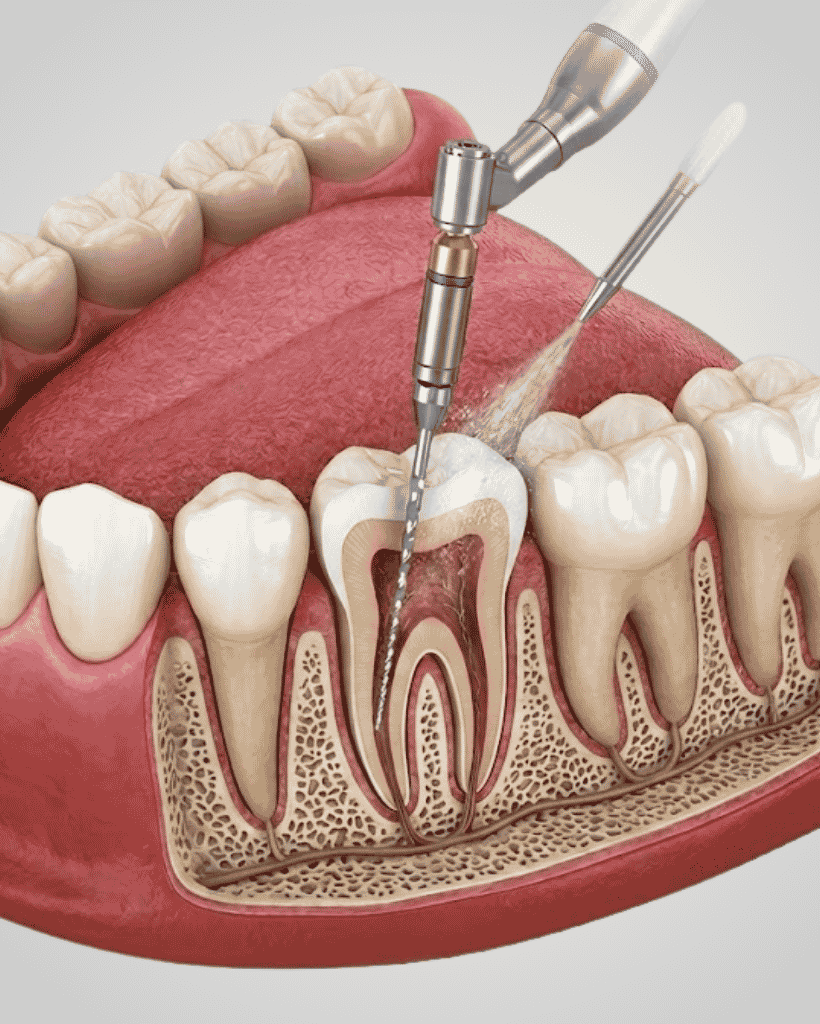
Rotary instruments make the procedure faster and more comfortable
Advanced sterilisation reduces post-treatment complications
Today, unless you completely refuse anaesthesia, severe pain during a root canal is highly unlikely.
What Does a Root Canal Actually Feel Like?
During the procedure, you should feel pressure, movement, and vibration—but not sharp pain. Studies have shown that:
73% of patients report no procedural pain at all
95% indicate their tooth felt "numb enough" during treatment
65% of patients say their experience was better than they had feared
The most intense moments are usually during local anaesthesia administration and drilling—and even then, a significant number of patients only report moderate pain. In one study, 47% of patients reported moderate pain during these moments, which is manageable with modern anaesthesia.
If you are particularly anxious, your dentist can also provide sedation options such as nitrous oxide to help you relax.
What If You Already Have a Tooth Infection?
Here is where it gets a little more complicated.
If your tooth is already badly infected with symptomatic irreversible pulpitis (a severely inflamed and infected pulp), the anaesthetic may not work as effectively. In these cases, research shows that some patients need supplemental anaesthesia to achieve full numbness.
About 26.9% of patients with symptomatic pulpitis require additional anaesthetic, compared to only 6.5% of patients with less severe conditions.
However, the pain during treatment is still manageable. Patients with severe infections report pain at similar rates to those without—around 27-30% report some discomfort. The difference is that you may need an extra injection to get fully numb.
The takeaway: The worse your infection, the harder it can be to numb. But your dentist has multiple tools to get you comfortable. Do not let this stop you from seeking treatment—the infection will only get worse and more painful if left untreated.
What Happens After the Procedure?
This is where patients are often pleasantly surprised. Recovery is usually straightforward.
In the first 24-48 hours, you may feel some mild tenderness or sensitivity, especially when biting. This is normal and usually manageable with over-the-counter pain relief like ibuprofen.
For 2-4 days, mild soreness can persist as the surrounding tissues heal from the inflammation that was already there before treatment.
Full recovery typically takes about a week, with symptoms steadily improving each day.
Tips for a Smooth Recovery:
Stick to soft foods for the first day or two—soup, yogurt, eggs, and smoothies are great choices
Chew on the opposite side of your mouth until the permanent crown is placed
Take over-the-counter pain medication as recommended by your dentist
Avoid strenuous exercise for 24 hours—increased blood flow can make swelling worse
Brush gently around the treated tooth but maintain your regular oral hygiene routine
When to Call Your Dentist
While some mild discomfort is normal, there are signs that something might be wrong. Contact your dentist immediately if you notice:
Severe or worsening pain after several days
Visible swelling that gets worse
A bump on your gum near the treated tooth
Your temporary filling falls out
Pain returns weeks or months later
Fever or other signs of infection
The Most Important Question: Should You Wait?
No. Absolutely not.
Here is something that surprises many patients: not all teeth that need root canals cause pain. Many damaged or infected teeth are pain-free—but that does not mean they are okay.
If your dentist recommends a root canal based on X-rays and clinical examination, delaying treatment is risky. Without treatment, the infection can spread to nearby tissues and cause more serious problems.
And here is the irony: treatment causes less discomfort when there is not an active infection. Waiting until you are in agony makes the procedure harder for you and your dentist.
The Bottom Line
Does a root canal hurt? The procedure itself is not painful for most patients. The fear is the worst part. Most people walk out wondering what all the fuss was about.
The real pain comes from the infected tooth you are avoiding treatment for. Modern dentistry has transformed root canals into a routine, comfortable procedure that saves your natural tooth and eliminates the agony of an infected nerve.
If you need a root canal, do not let fear hold you back. It is one of the most effective ways to save your tooth and get out of pain.
Worried about root canal pain? Visit https://painfreedentistsydney.com.au/ to book your consultation online. Call us at (02) 9558 8988 or email info@painfreedentistsydney.com.au to speak with our team.