🦷 Pre-Check on Your Dental Condition Before Going on Bisphosphonates

Learn why a dental check-up before starting bisphosphonates is essential. Prevent jaw necrosis, bone loss, and complications with early dental care, implants, crowns, and regular check-ups

Why a Dental Examination Before Bisphosphonate Therapy Is Essential

If you are about to start bisphosphonate therapy for osteoporosis or cancer treatment, a complete dental check-up is not optional — it is critical.

These medications strengthen bones but can reduce the jaw’s ability to heal after dental procedures. Without proper dental clearance, patients may be at risk of developing Medication-Related Osteonecrosis of the Jaw (MRONJ) — a serious condition involving exposed, non-healing jawbone.

What Are Bisphosphonates and Why Do They Affect the Jaw?

Bisphosphonates are commonly prescribed for:

  • Osteoporosis

  • Bone metastasis

  • Multiple myeloma

  • Paget’s disease

They slow bone breakdown by inhibiting bone resorption. While this protects against fractures, it also slows bone healing — particularly in the jaw, where constant bacterial exposure increases risk.

What Is MRONJ (Medication-Related Osteonecrosis of the Jaw)?

MRONJ occurs when jawbone tissue fails to heal after minor trauma such as:

  • Tooth extraction

  • Dental implant placement

  • Gum surgery

  • Poorly fitting dentures

Symptoms may include:

  • Jaw pain

  • Swelling

  • Exposed bone

  • Loose teeth

  • Infection

  • Delayed healing

What Happens During a Pre-Bisphosphonate Dental Check?

A comprehensive dental pre-check typically includes:

1️⃣ Full Oral Examination

Assessment of:

  • Tooth decay

  • Gum disease

  • Bone levels

  • Existing restorations

  • Infection risk

2️⃣ Dental X-Rays

To evaluate:

  • Hidden infections

  • Bone density

  • Impacted teeth

  • Failing root canals

3️⃣ Periodontal Evaluation

Gum health is critical. Untreated gum disease increases the risk of bone loss and infection.

Dental Treatment to Complete Before Starting Bisphosphonates

It is strongly recommended to finish major dental work before beginning therapy.

This may include:

  • Tooth extractions

  • Dental implants

  • Crowns and bridges

  • Root canal treatment

  • Deep cleaning (periodontal therapy)

Once medication begins, invasive procedures carry higher risk and slower healing.

Why Timing Matters

After starting bisphosphonates:

  • Bone turnover slows significantly

  • Blood supply to the jaw may decrease

  • Healing after surgery is delayed

  • Infection risk increases

Preventive dentistry before therapy reduces complications dramatically.

The Role of Regular Dental Check-Ups During Treatment

If you are already taking bisphosphonates:

  • Schedule check-ups every 3–6 months

  • Maintain excellent oral hygiene

  • Avoid unnecessary extractions

  • Inform your dentist of your medication history

Early detection prevents severe complications.

Calcium, Vitamin D, and Oral Health

Patients on bisphosphonates often take calcium and vitamin D supplements. While these support bone strength, they do not replace the need for:

  • Healthy gums

  • Infection control

  • Professional dental maintenance

Strong systemic bone health must be supported by strong oral health.

Who Is at Higher Risk?

Risk increases in patients who:

  • Receive IV bisphosphonates

  • Take medication long-term

  • Have uncontrolled diabetes

  • Smoke

  • Have poor oral hygiene

  • Delay dental care

Key Takeaway

Before starting bisphosphonate therapy, book a comprehensive dental evaluation. Addressing potential problems early can:

✔ Prevent jaw necrosis
✔ Reduce bone loss
✔ Avoid emergency dental surgery
✔ Protect long-term oral health

Your dentist and medical doctor should work together to ensure safe, coordinated care.

🦷 Bisphosphonates and Jaw Health: What Every Dental Patient Should Know

Understanding the Risk of Jaw Necrosis, Bone Loss, and Gum Problems

What Are Bisphosphonates?

Bisphosphonates are medications commonly used to treat:

  • Osteoporosis

  • Bone cancer and metastasis

  • Paget’s disease

  • High calcium levels in the blood

These drugs help slow down bone breakdown, making bones stronger and reducing fractures. However, they also affect how the jawbone heals after dental procedures.

Why Dentists Are Concerned About Bisphosphonates

While these medications are effective for bone health, they can increase the risk of a serious condition called Medication-Related Osteonecrosis of the Jaw (MRONJ).

This condition occurs when:

  • The jawbone does not heal properly

  • Bone becomes exposed in the mouth

  • Tissue breaks down

  • Infection develops

What Is Jaw Osteonecrosis?

Jaw osteonecrosis means bone death in the jaw due to reduced blood supply and poor healing.

Symptoms may include:

  • Pain or swelling in the jaw

  • Loose teeth

  • Exposed bone

  • Infection or bad taste

  • Difficulty chewing

  • Numbness or tingling

If untreated, this can lead to bone loss and tooth loss.

How Bisphosphonates Affect the Jawbone

Bisphosphonates work by slowing bone turnover. While this strengthens bones elsewhere in the body, it may:

  • Reduce blood supply to the jaw

  • Slow healing after dental procedures

  • Increase risk of infection

  • Prevent normal bone regeneration

The jawbone is especially vulnerable because it is constantly exposed to bacteria from the mouth.

Connection Between Bone Loss, Gum Disease, and Recession

Patients on bisphosphonates may experience:

1. Increased Gum Disease Risk

If oral hygiene is poor, gum disease may worsen because healing is slower.

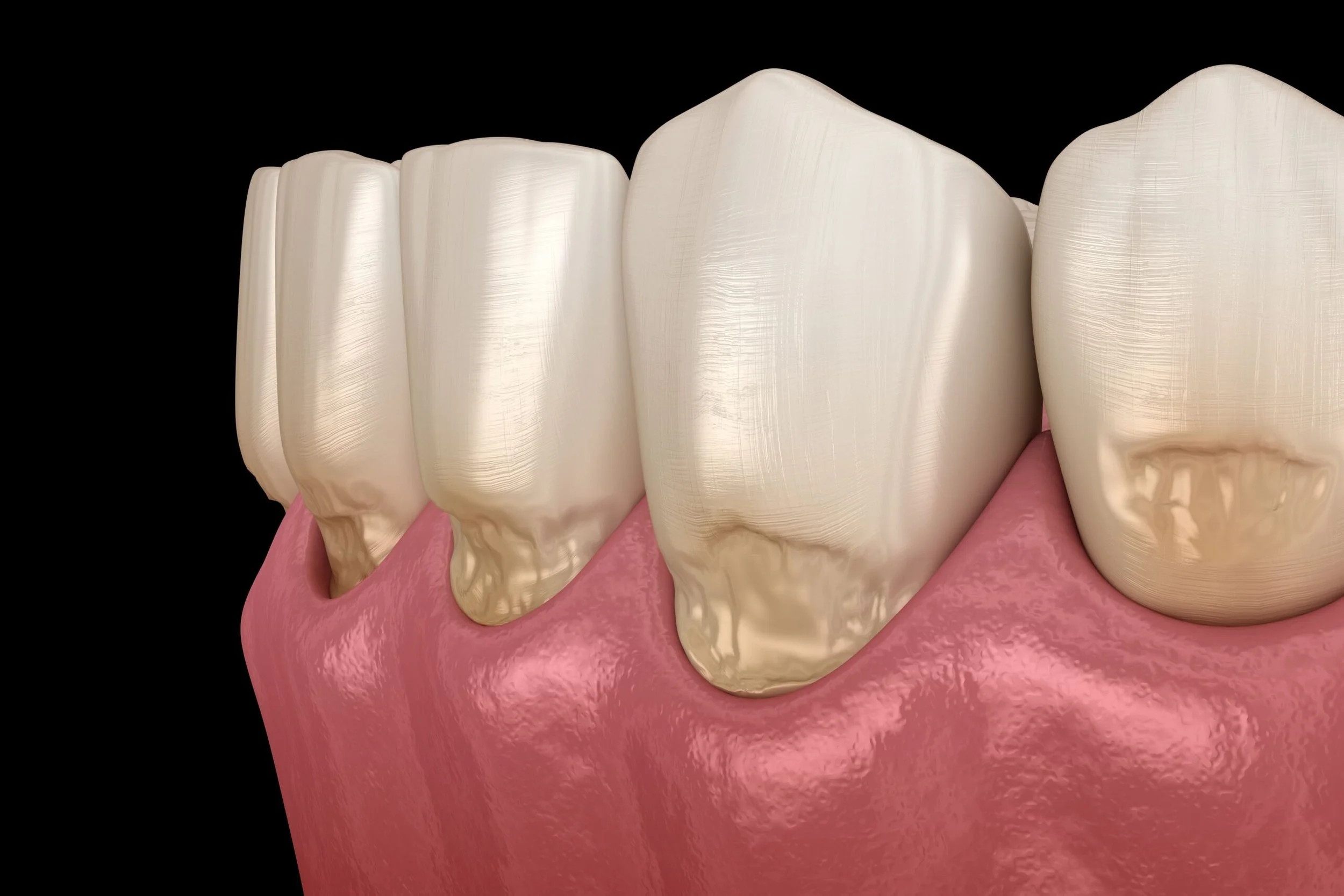
2. Gum Recession

Receding gums can expose roots and bone, increasing infection risk.

3. Bone Loss

Untreated periodontal disease combined with reduced bone turnover can accelerate damage.

Calcium and Bone Health

Bisphosphonates affect how calcium is used in the body. Calcium and vitamin D are often prescribed alongside these medications to support:

  • Bone density

  • Healing

  • Prevention of fractures

However, dental health also plays a key role. Healthy gums and bone are essential for maintaining proper calcium balance in the jaw.

Why Regular Dental Check-Ups Are Critical

Routine dental visits are extremely important for patients taking bisphosphonates.

Regular check-ups help:

  • Detect gum disease early

  • Prevent infection

  • Monitor bone health

  • Reduce the need for invasive procedures

Professional dental cleaning removes plaque and bacteria that may trigger complications.

👉 Most dentists recommend check-ups every 3–6 months for high-risk patients.

The Importance of Preventive Dentistry Before Starting Therapy

One of the most important steps is completing major dental work before starting bisphosphonate treatment.

This includes:

  • Tooth extractions

  • Dental implants

  • Crowns

  • Root canal treatment

  • Treatment of gum disease

Once therapy begins, healing becomes more complicated.

Dental Implants and Bisphosphonates

Patients often ask whether implants are safe.

Key considerations:

  • Implant placement is best done before medication starts

  • Risk increases with long-term use

  • Your dentist and doctor must coordinate care

  • Some patients may still be candidates with careful planning

Early consultation is essential.

Tips for Patients Taking Bisphosphonates

To protect your oral health:

✅ Inform your dentist about all medications
✅ Maintain excellent oral hygiene
✅ Brush twice daily and floss
✅ Attend regular dental check-ups
✅ Avoid smoking
✅ Report any pain or swelling immediately

When to Seek Urgent Dental Care

Contact your dentist if you notice:

  • Jaw pain

  • Swelling

  • Loose teeth

  • Exposed bone

  • Slow healing after dental treatment

Early management can prevent serious complications.

Final Thoughts

Bisphosphonates are important medications for bone health, but they require careful dental management. Preventive dentistry, regular check-ups, and early treatment are the best ways to reduce the risk of jaw necrosis, bone loss, and gum recession.

If you are planning to start bisphosphonate therapy, consult your dentist first. A comprehensive dental examination and completion of necessary treatment can help protect your long-term oral health.

Cracked Teeth from Bruxism: Causes, Symptoms, and Management

What Is Bruxism?

Bruxism is teeth grinding or clenching, often occurring during sleep (sleep bruxism) or while awake. Over time, excessive pressure on the teeth can lead to cracks, fractures, and worn enamel.

Patients in Sydney commonly notice tooth sensitivity, pain while chewing, or visible cracks, prompting urgent dental evaluation.

How Bruxism Causes Cracked Teeth

  • Excessive force: Constant grinding or clenching wears down enamel and weakens teeth

  • Misaligned bite: Uneven pressure concentrates stress on certain teeth

  • Nighttime grinding: Repetitive micro-trauma during sleep increases risk of cracks

  • Underlying TMJ issues: Muscle tension can worsen bite stress

Signs and Symptoms of Cracked Teeth

  • Pain when chewing or biting

  • Sensitivity to hot or cold foods/drinks

  • Visible lines or fractures in teeth

  • Occasional swelling or irritation of surrounding gums

  • Difficulty chewing on one side

Early detection is crucial to prevent tooth loss or infection.

Management and Treatment Options

1. Dental Bonding / Composite Build-Up

  • Restores minor cracks and worn areas

  • Reinforces tooth structure

  • Improves aesthetics and function

2. Crowns

  • Recommended for moderate to severe cracks

  • Protects the tooth from further damage

  • Restores proper bite and occlusion

3. Night Guards

  • Custom-fitted guards protect teeth from grinding

  • Reduces risk of future cracks

  • Relieves jaw tension and TMJ stress

4. Bite Adjustment

  • Minor reshaping of teeth to distribute forces evenly

  • Often combined with orthodontic or restorative treatment

5. Root Canal Therapy

  • Needed if cracks extend into the pulp or cause infection

  • Saves the tooth while relieving pain

Preventing Future Cracks

  • Wear a custom night guard if you grind teeth

  • Manage stress and reduce jaw clenching

  • Avoid hard foods or chewing on non-food items

  • Regular dental check-ups for early detection

  • Address TMJ issues to reduce muscle tension

Final Thoughts

Cracked teeth from bruxism are preventable and manageable with early intervention. Restorative treatments like composite build-ups, crowns, and bite adjustments, combined with night guards and TMJ therapy, can relieve pain, restore function, and prevent future damage. Patients in Sydney should consult a dentist promptly if they notice cracks or tooth sensitivity.