

Missing most or all of your teeth can affect your confidence, ability to eat, and overall quality of life. All-on-4 dental implants have become one of the most popular solutions for full-mouth restoration, providing a permanent and natural-looking alternative to traditional dentures.
In this guide, we'll explain how All-on-4 dental implants work, their benefits, recovery process, and whether they may be the right solution for you.
What Are All-on-4 Dental Implants?
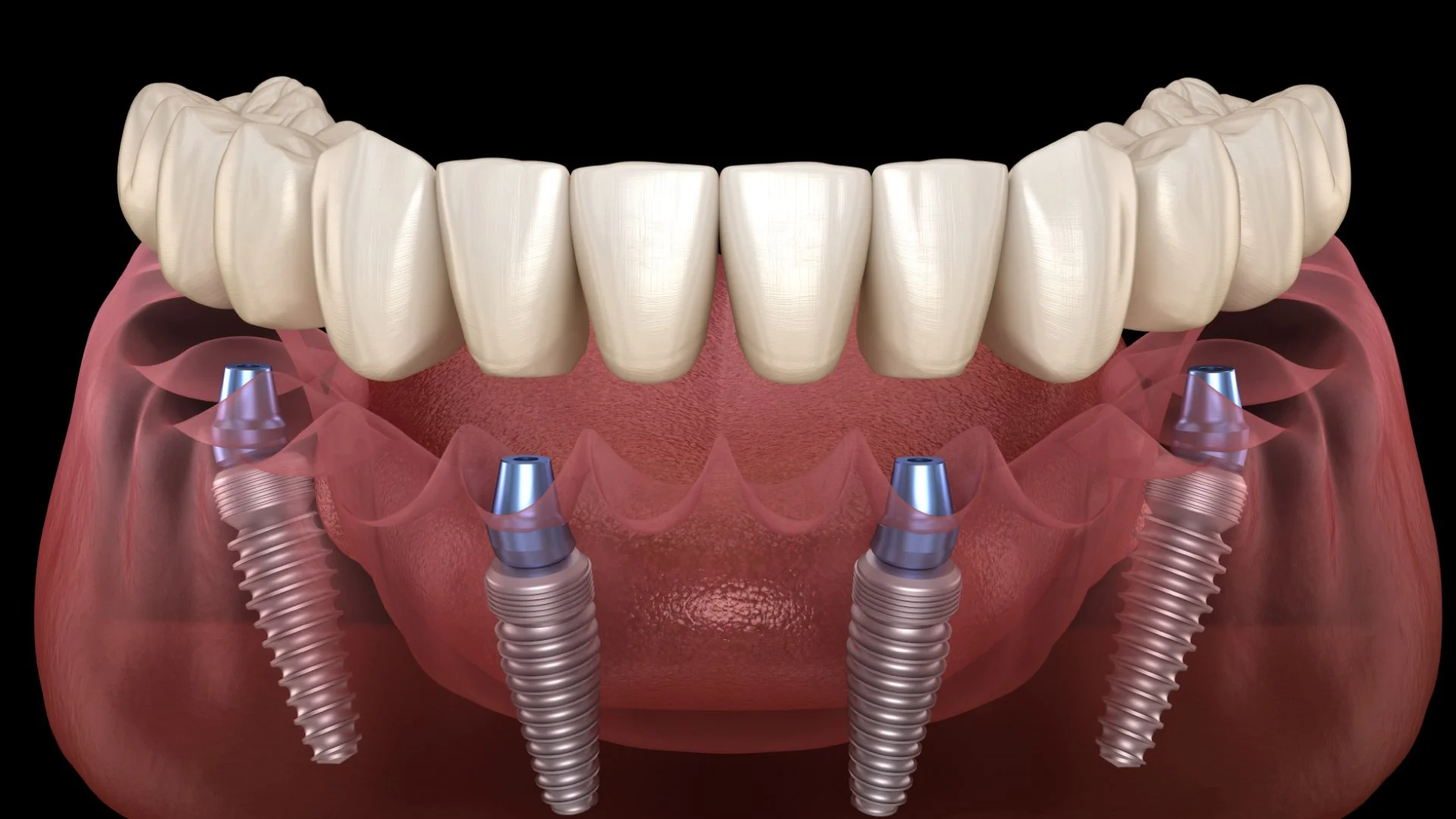
All-on-4 dental implants are a full-arch tooth replacement solution that uses four strategically placed dental implants to support a complete set of prosthetic teeth.
Unlike conventional implant treatments that may require six to eight implants per arch, the All-on-4 technique maximizes existing bone structure by placing the posterior implants at an angle. This approach often reduces the need for bone grafting while providing excellent stability.
How Does the All-on-4 Procedure Work?
The All-on-4 treatment process typically includes:
1. Comprehensive Consultation
Your dentist or implant specialist will perform:
Oral examination
Digital X-rays
3D CBCT imaging
Medical history review
Treatment planning
2. Tooth Extraction (If Needed)
Any remaining damaged or failing teeth may be removed before implant placement.
3. Implant Placement
Four titanium implants are surgically inserted into the jawbone:
Two implants at the front
Two angled implants at the back
4. Temporary Teeth Placement
Many patients receive a temporary fixed bridge on the same day, often referred to as "teeth in a day."
5. Healing and Osseointegration
Over the next 3 to 6 months, the implants fuse with the jawbone through a process called osseointegration.
6. Final Prosthesis
Once healing is complete, a custom-designed permanent bridge is attached.
Benefits of All-on-4 Dental Implants
Improved Stability
Unlike removable dentures, All-on-4 implants are securely anchored to the jawbone.
Natural Appearance
Modern prosthetic teeth are designed to closely mimic natural teeth and gums.
Enhanced Chewing Function
Patients can enjoy a wider variety of foods with greater comfort and confidence.
Bone Preservation
Dental implants help stimulate the jawbone and reduce bone loss associated with missing teeth.
Faster Treatment
Many patients can receive temporary teeth on the same day as implant surgery.
Who Is a Good Candidate for All-on-4?
You may be a suitable candidate if you:
Are missing most or all teeth in an arch
Wear dentures and want a fixed alternative
Have sufficient jawbone density
Are in generally good health
Do not smoke heavily or are willing to quit during healing
A thorough assessment is essential to determine suitability.
Recovery After All-on-4 Treatment
Recovery varies between patients, but most can return to normal daily activities within a few days.
Recovery Tips
Follow a soft-food diet initially
Maintain excellent oral hygiene
Avoid smoking
Attend follow-up appointments
Follow all post-operative instructions
Mild swelling and discomfort are common during the first week.
How Long Do All-on-4 Implants Last?
With proper care and regular dental visits:
Implants can last decades
Prosthetic bridges may require maintenance or replacement over time
Success rates are generally very high when performed by experienced clinicians
Are All-on-4 Implants Better Than Dentures?
For many patients, All-on-4 implants provide:
Better stability
Improved chewing efficiency
Enhanced comfort
Greater confidence
Reduced risk of jawbone loss
However, the best solution depends on individual needs, oral health, and budget.
Frequently Asked Questions
Is the All-on-4 procedure painful?
The procedure is performed under local anaesthesia, sedation, or general anaesthesia depending on the treatment plan. Most patients report manageable discomfort during recovery.
Can All-on-4 implants fail?
While uncommon, implant failure can occur due to infection, smoking, poor oral hygiene, or certain medical conditions.
How soon can I eat after surgery?
Most patients begin with soft foods and gradually transition to a normal diet as healing progresses.
Understanding All-on-4 Dental Implant Costs in Sydney
Investing in full-arch dental implants is a significant financial consideration. Because every patient presents a completely unique anatomical structure, varying bone volumes, and individual aesthetic requirements, a definitive final fee can only be ethically determined after a thorough 3D CBCT diagnostic assessment.
However, understanding how the pricing structure is compiled helps eliminate unexpected financial surprises.
The Full-Arch Advantage
Because the All-on-4 protocol replaces an entire missing arch using only four structural anchors instead of individual implants for each missing tooth, it represents a highly cost-effective and structurally stable treatment model.
What the Investment Covers
A comprehensive All-on-4 fee typically accounts for five distinct clinical phases:
Pre-Surgical Diagnostics: Initial 3D CBCT scans, digital jaw mapping, and custom surgical guides.
Clinical Sedation: On-site specialized Intravenous (IV) Twilight Sedation or dental anxiety management protocols.
The Surgical Phase: The sterile, precise placement of the four biocompatible titanium pillars.
The Immediate Prosthesis: The fabrication and secure attachment of your "Teeth in a Day" temporary bridge.
The Final Masterpiece: The creation and final calibration of your permanent, custom-engineered bridge (such as high-translucency zirconia).
Financial Management Pathways at Our Practice
To ensure necessary therapeutic care remains accessible, our private billing practice offers several transparent financial options:
Immediate HICAPS Processing: We process direct claims on-site for all major private health insurance funds to instantly determine your exact out-of-pocket gap fee.
Third-Party Payment Options: We support approved alternative financing platforms, including Afterpay and Zip, allowing you to distribute approved treatment costs across structured, manageable installments.
Government Support: We facilitate dental care access for eligible veterans via the Department of Veterans' Affairs (DVA) scheme.
Conclusion
All-on-4 dental implants offer a reliable, long-term solution for patients seeking to replace a full arch of missing teeth. By combining stability, aesthetics, and functionality, this treatment can significantly improve both oral health and quality of life.
Book a consultation with an experienced implant dentist to determine whether All-on-4 treatment is right for you.