If you have lost most or all of your teeth, you may have heard about All-on-4 and All-on-6 dental implants.
Both treatment options can provide a fixed solution for people who are missing multiple teeth. Unlike traditional removable dentures, implant-supported teeth are designed to be securely attached to dental implants placed into the jawbone.
But which option is better: All-on-4 or All-on-6 dental implants?
The answer depends on your individual dental condition, the amount and quality of available bone, your bite, your oral health and your long-term treatment goals.
There is no single implant treatment that is right for every patient.
What Are All-on-4 Dental Implants?
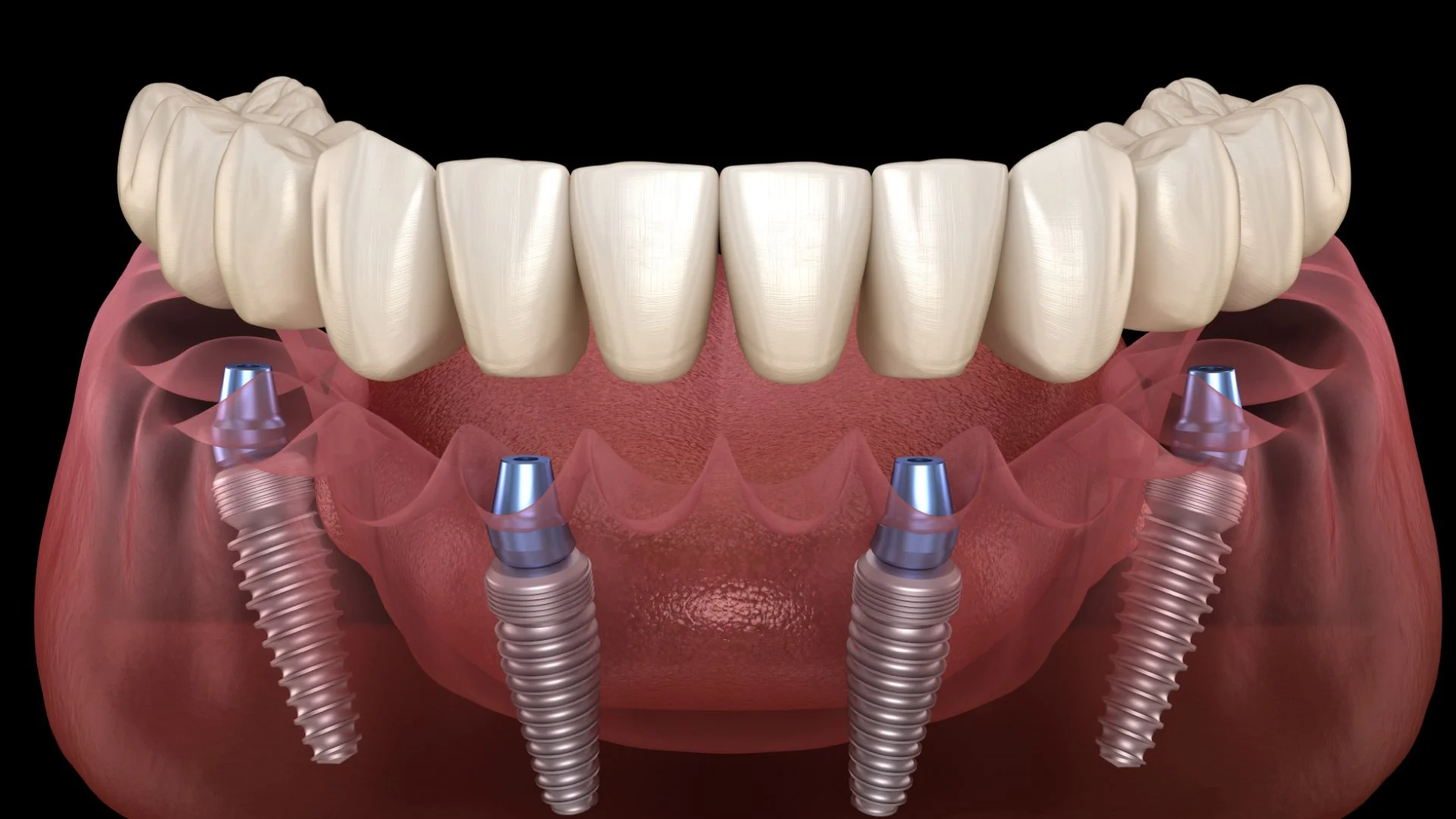
All-on-4 dental implants use four strategically positioned dental implants to support a fixed full-arch restoration.
The treatment is designed to replace an entire arch of missing or severely damaged teeth with a fixed set of teeth supported by dental implants.
All-on-4 may be considered for patients who:
Have lost most or all of their teeth
Have severely damaged or failing teeth
Have reduced bone availability in some areas
Want a fixed alternative to removable dentures
May benefit from strategically positioned implants
The suitability of All-on-4 depends on the patient's individual anatomy and treatment requirements.
What Are All-on-6 Dental Implants?
All-on-6 dental implants use six dental implants to support a full arch of fixed teeth.
The additional implants may provide increased support and distribute biting forces across more implant sites.
All-on-6 may be considered for patients who:
Have sufficient bone for six implants
May benefit from additional implant support
Have higher biting forces
Have a history of heavy teeth grinding or clenching
Require a treatment plan designed around additional implant support
However, having more implants does not automatically mean that All-on-6 is better for every patient.
All-on-4 vs All-on-6: What Is the Difference?
The main difference between the two treatment options is the number of dental implants used to support the replacement teeth.
All-on-4 dental implants use four strategically positioned implants to support a fixed full arch of teeth.
All-on-6 dental implants use six implants to support a full arch of fixed teeth. The additional implants may provide increased support and distribute biting forces across more implant sites in selected patients.
The most suitable treatment depends on factors such as:
The amount and quality of available bone
The condition of the gums
Your bite and chewing forces
Whether you grind or clench your teeth
Your overall oral health
The condition of any remaining teeth
Your long-term treatment goals
A comprehensive assessment is needed to determine which option is most appropriate for your individual situation.
Is All-on-6 Better Than All-on-4?
Not necessarily.
All-on-6 provides two additional implants, which may offer additional support and force distribution in selected patients.
However, All-on-4 may be a more suitable option for some patients depending on their:
Bone volume
Bone density
Jaw anatomy
Existing teeth
Gum health
Bite forces
Teeth grinding
Overall health
Treatment goals
The right treatment should be determined after a comprehensive dental assessment rather than simply choosing the option with the greatest number of implants.
Which Is Stronger: All-on-4 or All-on-6?
Both All-on-4 and All-on-6 can provide a fixed full-arch solution when properly planned and carried out in suitable patients.
All-on-6 uses more implants, which may provide additional support and distribute biting forces across more implant sites.
However, the long-term function of full-arch implant treatment depends on many factors, including:
Implant positioning
Bone quality
Oral hygiene
Bite forces
The design of the restoration
Regular maintenance
Teeth grinding or clenching
The quality of the treatment planning is extremely important.
Is All-on-4 Suitable If I Have Bone Loss?
Some patients with bone loss may still be suitable for full-arch implant treatment.
However, the amount and location of bone loss must be carefully assessed.
Depending on your individual situation, treatment may involve:
Strategic implant placement
Bone grafting
Sinus augmentation where appropriate
Other forms of bone augmentation
Alternative implant planning
A CBCT scan may be recommended when planning complex dental implant treatment. This type of imaging can provide detailed information about the available bone and important anatomical structures.
Is All-on-6 Better for People Who Grind Their Teeth?
Patients who grind or clench their teeth may place increased forces on their teeth and dental implants.
In some cases, additional implant support may be considered as part of treatment planning. However, the number of implants is only one factor.
A patient with bruxism may also require consideration of:
Bite forces
Jaw function
Implant positioning
The design of the final teeth
Protection of the restoration
Management of teeth grinding
If you grind or clench your teeth, it is important to discuss this with your dentist before implant treatment.
How Long Does All-on-4 or All-on-6 Treatment Take?
The treatment timeline varies between patients.
Factors that may influence treatment time include:
The condition of your existing teeth
Bone volume and quality
The need for bone grafting
Gum health
The need for extractions
The type of temporary teeth used
Healing time
The design and manufacture of the final restoration
Some patients may receive temporary fixed teeth during the treatment process, while the final restoration is completed after the implants have had time to integrate with the jawbone.
Your dentist should provide a personalised treatment timeline based on your clinical situation.
Are All-on-4 and All-on-6 Dental Implants Painful?
Dental implant treatment is performed using appropriate local anaesthesia. Sedation may also be an option for selected patients who experience dental anxiety or require more extensive treatment.
After treatment, some swelling, bruising or discomfort may occur.
Your dental team will provide instructions regarding recovery and pain management.
The experience varies between patients and depends on the complexity of the procedure.
How Much Do All-on-4 and All-on-6 Dental Implants Cost?
The cost of full-arch implant treatment varies significantly depending on the individual treatment plan.
Factors that may affect the cost include:
The number of implants
Extractions
Bone grafting
Implant components
Temporary teeth
The final prosthesis
Sedation
Diagnostic imaging
Laboratory costs
Additional restorative treatment
The most accurate way to determine the cost is through a comprehensive consultation and treatment plan.
A low initial price may not always represent the total cost of treatment, so it is important to understand exactly what is included in your treatment plan.
All-on-4 vs All-on-6: Which One Is Right for Me?
The best treatment depends on your individual circumstances.
You may be more suited to All-on-4 if:
Four strategically placed implants can provide adequate support
Your bone anatomy is suitable
You require a fixed full-arch solution
Your treatment plan is designed around four implant sites
You may be more suited to All-on-6 if:
You have sufficient bone for six implants
Additional implant support may be beneficial
You have significant biting forces
Your treatment plan requires greater distribution of forces
These are general considerations only. A comprehensive assessment is necessary to determine the most appropriate treatment for you.
What Happens During an All-on-4 or All-on-6 Consultation?
A dental implant consultation may include:
A discussion about your dental concerns and treatment goals.
An examination of your teeth, gums and jaw.
An assessment of your bite and chewing function.
An evaluation of your existing teeth.
Dental imaging, including CBCT imaging where clinically indicated.
An assessment of bone availability.
A discussion of possible treatment options.
An explanation of the expected treatment process, costs and timeline.
A personalised treatment plan can then be developed based on your individual needs.
Can I Have All-on-4 or All-on-6 Dental Implants Under Sedation?
Some patients may benefit from sedation during dental implant treatment.
Sedation may be particularly helpful for patients who:
Experience dental anxiety
Have difficulty sitting through lengthy dental procedures
Require extensive treatment
Have had negative dental experiences in the past
Your suitability for sedation should be assessed as part of your treatment planning.
Frequently Asked Questions
Is All-on-4 cheaper than All-on-6?
All-on-4 uses fewer implants, but the total cost depends on the entire treatment plan, including the restoration, surgery, imaging, bone grafting and other required procedures.
Is All-on-6 more secure than All-on-4?
Both treatments can provide a secure fixed solution when appropriately planned. All-on-6 may provide additional implant support in selected cases, but suitability depends on the individual patient.
Can I get All-on-4 if I have bone loss?
Some patients with bone loss may still be suitable for All-on-4. The amount and location of available bone must be assessed carefully.
Can All-on-4 or All-on-6 replace all my teeth?
Yes. Both treatment concepts are designed to support a fixed full-arch restoration that can replace an entire arch of missing or severely damaged teeth.
How long do All-on-4 and All-on-6 implants last?
Dental implants can provide long-term tooth replacement when properly planned, maintained and cared for. Regular dental reviews and good oral hygiene are important for long-term results.
What happens if one implant fails?
The appropriate management depends on the individual circumstances, including the number of remaining implants, the condition of the bone and the design of the restoration. Your implant dentist can discuss the risks and treatment options as part of your consultation.
All-on-4 and All-on-6 Dental Implants in Sydney
Choosing between All-on-4 and All-on-6 dental implants is an important decision.
The right treatment is not simply determined by choosing the option with the greatest number of implants. A comprehensive assessment is needed to evaluate your teeth, gums, jawbone, bite, oral health and long-term goals.
At Pain Free Dentist Sydney, we provide personalised dental implant consultations for patients considering full-arch implant treatment.
We can assess your individual situation and discuss whether All-on-4, All-on-6 or another treatment option may be appropriate for you.
If you are considering full-mouth dental implants or are struggling with severely damaged or missing teeth, contact us to arrange a consultation.
📞 Call Pain Free Dentist Sydney on 9558 8988.
Serving patients in Dulwich Hill, Hurlstone Park and Sydney's Inner West.