
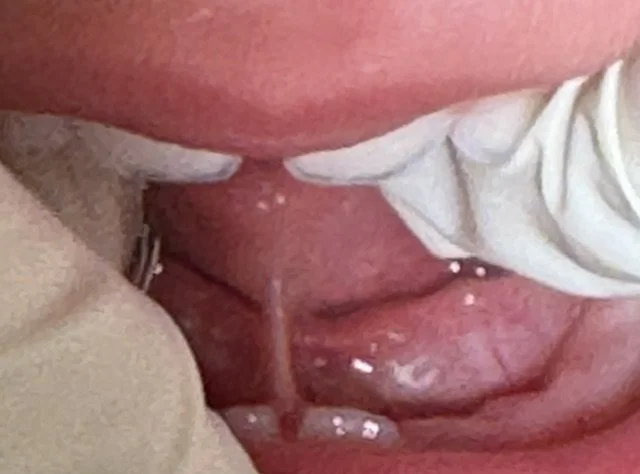
What is a tongue tie in babies?
A tongue tie, medically known as ankyloglossia, is a condition in which the small band of tissue connecting the underside of the tongue to the floor of the mouth (the lingual frenulum) is unusually restrictive. This restriction may limit the tongue's ability to move freely.
In some babies, the frenulum is short, thick, tight or positioned in a way that restricts tongue movement. However, not every baby with a visible tongue frenulum has a tongue tie that requires treatment.
The important question is not simply what the frenulum looks like, but whether the tongue can move and function adequately during feeding.
A baby's tongue plays an important role in breastfeeding, bottle feeding, swallowing and eventually the development of oral motor skills. When tongue movement is restricted, some babies may experience feeding difficulties.
What are the signs of tongue tie in a baby?
Tongue tie can present differently from one baby to another. Some babies have very obvious restrictions, while others may have subtle functional difficulties that are not immediately apparent.
Common signs and symptoms may include:
Difficulty latching onto the breast
Shallow latch during breastfeeding
Frequently losing suction while feeding
Clicking noises during breastfeeding or bottle feeding
Prolonged feeding sessions
Falling asleep during feeds because feeding is tiring
Difficulty maintaining a seal around the nipple
Milk leaking from the sides of the mouth
Poor milk transfer
Difficulty coordinating sucking, swallowing and breathing
Excessive wind or swallowing air during feeding
Maternal nipple pain, cracking or trauma
Difficulty maintaining adequate weight gain in some babies
Some parents may notice that their baby struggles to extend the tongue, lift it towards the roof of the mouth or move it from side to side.
However, these symptoms can also have other causes. A proper assessment is important before attributing feeding problems to tongue tie.
How can tongue tie affect breastfeeding?
Breastfeeding requires coordinated movement of the tongue, jaw, lips and muscles of the mouth.
During breastfeeding, the baby's tongue needs to move effectively to help maintain a seal, create suction and facilitate milk transfer.
When the tongue is restricted, a baby may compensate by using additional jaw movement or gripping the nipple more tightly. This may contribute to:
Painful breastfeeding
Nipple compression or damage
Poor latch
Reduced milk transfer
Frequent feeding
Frustration during feeding
Difficulty remaining attached to the breast
A baby may appear to be feeding constantly but may not necessarily be transferring milk efficiently.
For mothers, ongoing breastfeeding pain can become physically and emotionally exhausting. Some mothers may eventually experience reduced milk supply or decide to stop breastfeeding because feeding has become too difficult.
Early assessment may help identify whether tongue restriction is contributing to these difficulties and whether appropriate support or treatment may improve feeding function.
Does every baby with tongue tie need treatment?
No.
A tongue tie does not automatically mean that a baby needs a frenectomy or frenotomy.
Many babies with a visible frenulum can feed normally, gain weight appropriately and develop without any functional problems.
Treatment should be considered when there is a meaningful functional restriction associated with symptoms, particularly when breastfeeding or feeding difficulties persist despite appropriate feeding support.
A comprehensive assessment may consider:
Tongue mobility and range of movement
Ability to elevate and extend the tongue
Tongue coordination and function
Breastfeeding latch and milk transfer
Maternal nipple pain
Baby's feeding efficiency
Weight gain and growth
Other possible causes of feeding difficulties
The decision to treat should be based on the baby's individual circumstances rather than the appearance of the frenulum alone.
What is a baby tongue tie assessment?
A tongue tie assessment involves evaluating the anatomy and function of the baby's tongue and oral tissues.
At Pain Free Dentist Sydney, an assessment may involve examining the tongue's attachment, its movement, the surrounding oral structures and the functional limitations associated with the frenulum.
Where appropriate, feeding history and symptoms are considered, including difficulties reported during breastfeeding or bottle feeding.
We believe that treating the underlying functional problem is more important than simply identifying a tongue tie visually.
Depending on the baby's needs, collaboration with a lactation consultant, midwife, speech pathologist or other healthcare professional may be beneficial.
What is a tongue tie release for babies?
A tongue tie release, also known as a frenotomy or frenectomy depending on the technique used, is a procedure designed to release restrictive tissue beneath the tongue to improve tongue mobility.
The procedure may be recommended when a clinically significant tongue restriction is contributing to feeding problems and conservative feeding support has not adequately addressed the issue.
The procedure aims to allow the tongue to move more freely. However, outcomes can vary, and a tongue tie release is not a guaranteed solution for every breastfeeding or feeding difficulty.
Parents should be informed about the expected benefits, potential risks, alternatives and aftercare before deciding whether to proceed.
Is tongue tie release painful for babies?
Parents understandably worry about their baby's comfort during a tongue tie procedure.
The procedure, technique, pain management and aftercare should be discussed with the treating clinician before treatment. Babies may experience discomfort, crying, bleeding or temporary feeding changes following the procedure.
Individual babies respond differently, and appropriate pain management and support should be considered.
It is also important to understand that releasing the frenulum alone does not automatically resolve every feeding problem. Feeding support and follow-up may still be needed to help the baby develop more effective tongue movement and feeding patterns.
What happens after a tongue tie release?
After a tongue tie release, babies may need time to adapt to their improved tongue mobility.
Some babies feed more comfortably or demonstrate improved latch and milk transfer, while others may need ongoing support.
Follow-up may include monitoring feeding, assessing tongue movement, addressing any continuing difficulties and providing guidance to parents.
Any exercises or wound-care recommendations should be individualised by the treating clinician. Parents should not perform forceful stretching or wound manipulation unless specifically instructed by their treating healthcare professional.
If your baby has persistent feeding difficulties, worsening symptoms, poor weight gain or concerns about hydration, seek appropriate medical or feeding assessment.
When should you have your baby's tongue tie assessed?
Consider arranging an assessment if your baby:
Has difficulty latching onto the breast
Frequently slips off the nipple during feeding
Makes clicking noises while feeding
Has prolonged or exhausting feeds
Is not transferring milk effectively
Has difficulty gaining weight
Causes ongoing nipple pain or damage during breastfeeding
Appears to have restricted tongue movement
Early assessment can help parents understand whether tongue restriction is contributing to their baby's feeding difficulties and what options may be appropriate.
You do not need to wait until breastfeeding becomes unbearable before seeking help.
Baby Tongue Tie Assessment in Sydney
At Pain Free Dentist Sydney, we understand that feeding difficulties can be stressful for both babies and parents.
Our approach is to assess tongue function, understand the symptoms and discuss appropriate management options with parents. We focus on the individual baby's needs rather than recommending treatment based on appearance alone.
If you suspect your baby may have a tongue tie, an assessment may help you better understand whether restricted tongue movement is contributing to feeding difficulties.
Contact Pain Free Dentist Sydney to enquire about a baby tongue tie assessment in Sydney and discuss the next steps.
📍 Hurlstone Park, Sydney NSW
📞 02 9558 8988
🌐 https://painfreedentistsydney.com.au
Frequently Asked Questions About Baby Tongue Tie
Can tongue tie cause breastfeeding problems?
Yes. A functionally restrictive tongue tie may interfere with latch, suction and milk transfer, potentially contributing to painful breastfeeding and feeding difficulties.
Can a tongue tied baby still breastfeed?
Yes. Many babies with tongue tie can breastfeed successfully. The severity of functional restriction and the baby's ability to feed effectively are more important than the appearance of the frenulum.
Does tongue tie affect a baby's weight gain?
In some babies, tongue restriction may contribute to inefficient milk transfer and inadequate weight gain. However, poor weight gain can have many causes and requires appropriate assessment.
At what age can tongue tie be treated?
A tongue tie may be assessed at any age. Treatment timing depends on the baby's symptoms, feeding needs, clinical findings and the treating clinician's recommendations.
Does tongue tie release guarantee successful breastfeeding?
No. Some babies improve after release, but breastfeeding is influenced by multiple factors. Feeding support and follow-up may still be necessary.
Is tongue tie the same as lip tie?
No. Tongue tie involves the frenulum beneath the tongue, while lip tie refers to tissue connecting the upper lip to the gum. Their clinical significance and treatment considerations differ.
Where can I get my baby's tongue tie assessed in Sydney?
Pain Free Dentist Sydney in Hurlstone Park provides dental assessment and management of tongue tie. Parents can contact the clinic to enquire about assessment and suitability for treatment.