
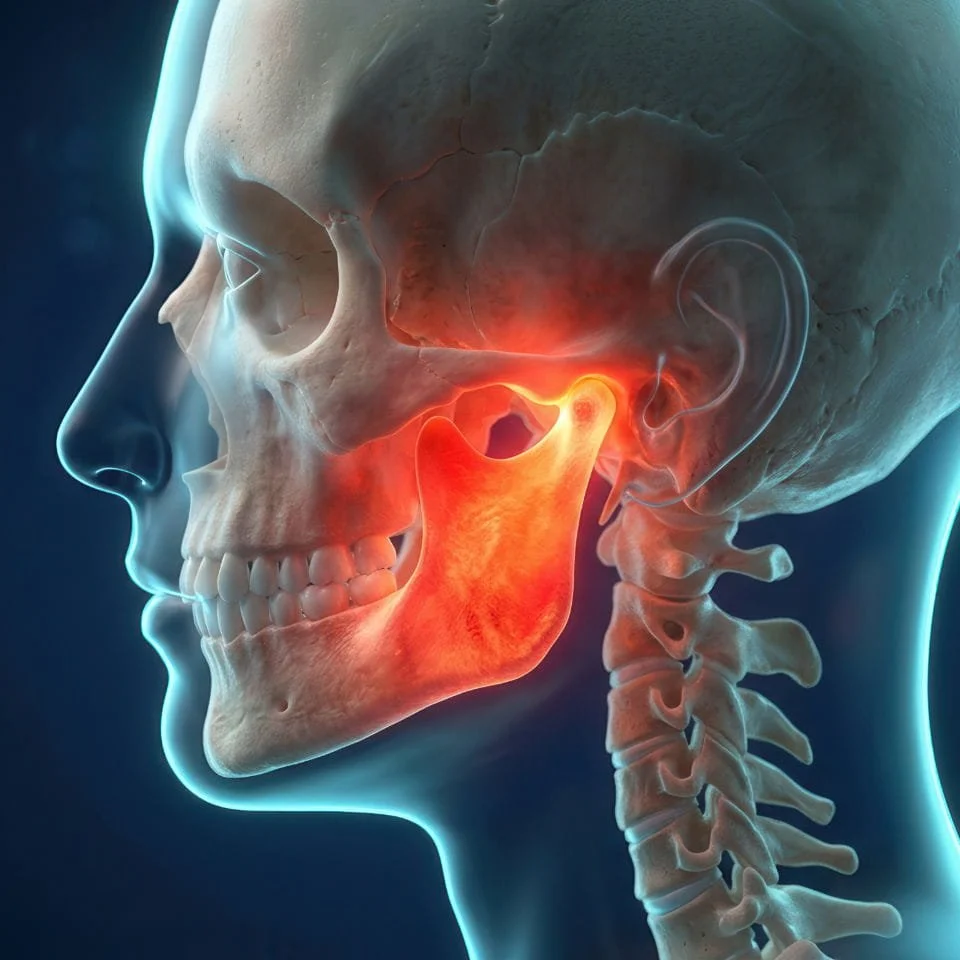
Could Your Jaw Pain, Teeth Grinding and Sleep Problems Be Connected?
Do you wake up with a sore jaw, headaches, tight neck muscles or facial pain?
Perhaps you have been diagnosed with TMJ dysfunction, experience episodes of lockjaw, grind your teeth at night or have been told that you snore or suffer from sleep apnoea.
You may also have a tongue tie that has never been assessed.
What if these symptoms are not entirely separate problems?
The relationship between the jaw, tongue, muscles, airway and sleep is complex. These structures work together during breathing, swallowing, speaking and chewing. When one part of this system is not functioning optimally, other structures may compensate.
For some individuals, a combination of jaw dysfunction, sleep disturbances, muscle overactivity and restricted tongue movement may contribute to a cycle of discomfort and chronic pain.
At Pain Free Dentist Sydney, we believe in looking beyond individual symptoms and considering how oral function, jaw mechanics, breathing and sleep may interact.
The goal is not simply to treat a painful jaw. It is to understand the factors that may be contributing to the patient's overall symptoms.
1. TMJ Dysfunction: More Than Just Jaw Clicking
The temporomandibular joints (TMJs) are the two joints connecting your lower jaw to your skull, located just in front of your ears.
They work together with the surrounding muscles, ligaments and supporting structures to allow you to open and close your mouth, chew, speak and swallow.
Temporomandibular disorders (TMD) describe a group of conditions affecting these joints and the muscles responsible for jaw movement.
Common symptoms include:
Jaw joint pain
Clicking or popping sounds
Limited mouth opening
Jaw stiffness
Difficulty chewing
Facial pain
Temple headaches
Ear-region discomfort
Neck and shoulder muscle tension
Jaw locking or catching
Some patients experience occasional clicking without pain, which does not necessarily indicate a disorder requiring treatment.
However, when jaw dysfunction is accompanied by persistent pain, restricted movement or recurrent locking, a more comprehensive assessment may be necessary.
TMD can involve the joint itself, the surrounding muscles or both.
In some individuals, pain can become persistent and affect sleep, concentration, eating and everyday activities.
2. Lockjaw: Why Does Your Jaw Get Stuck?
Lockjaw is a term commonly used to describe difficulty opening or closing the mouth.
In the context of TMJ dysfunction, jaw locking can occur for different reasons.
One possible cause is displacement of the articular disc within the temporomandibular joint.
The articular disc is a small fibrocartilage structure positioned between the lower jaw and the skull. It helps the joint move smoothly during opening and closing.
When the disc becomes displaced and interferes with normal movement, patients may experience:
Sudden restriction in mouth opening
A jaw that catches or gets stuck
Pain when attempting to open the mouth
Difficulty eating larger foods
Deviation of the jaw during opening
Clicking followed by restricted movement
There are different types of disc displacement.
Some patients experience clicking but can still open their mouths normally. Others develop a condition commonly described as closed lock, where mouth opening becomes significantly restricted.
Muscle-related guarding and spasm can also contribute to restricted jaw movement.
Recurrent locking should not be ignored because the underlying cause needs to be identified.
If the jaw suddenly becomes locked and cannot be opened or closed, seek urgent professional assessment. Difficulty swallowing or breathing requires emergency medical care.
3. Bruxism: Why Do You Grind or Clench Your Teeth?
Bruxism refers to repetitive jaw muscle activity involving clenching, grinding or bracing the jaw.
It can occur during the day or during sleep.
Some people are unaware that they clench their teeth, particularly while concentrating, working, driving or experiencing stress.
Common signs of bruxism include:
Flattened or worn teeth
Chipped teeth
Fractured fillings
Morning jaw soreness
Temple headaches
Facial muscle fatigue
Tooth sensitivity
Jaw stiffness
Increased muscle tenderness
Repeated excessive loading may contribute to tooth damage and aggravate existing jaw muscle or joint symptoms in some individuals.
However, bruxism is not simply a habit caused by stress.
Sleep-related bruxism is associated with activity in the central nervous system and may occur alongside sleep arousals and other sleep-related conditions.
Its causes are multifactorial and may include neurological, physiological, psychological and medication-related influences.
This is why simply telling a patient to stop grinding their teeth may not adequately address the problem.
It is important to investigate the possible contributing factors.
4. Sleep Apnoea: Could Your Breathing Problems Be Affecting Your Jaw?
Obstructive sleep apnoea (OSA) is a sleep-related breathing disorder in which the upper airway repeatedly becomes partially or completely obstructed during sleep.
When airflow is restricted, oxygen levels may fall and the brain may briefly arouse the person to restore normal breathing.
These interruptions can occur many times throughout the night.
Common symptoms include:
Loud snoring
Pauses in breathing during sleep
Gasping or choking during sleep
Waking with a dry mouth
Morning headaches
Daytime fatigue
Poor concentration
Unrefreshing sleep
Frequent nighttime waking
Sleep apnoea can affect more than just your energy levels.
Repeated sleep disruption may affect pain sensitivity, mood, concentration and overall quality of life.
How might sleep apnoea relate to bruxism?
Some patients experience both obstructive sleep apnoea and sleep-related bruxism.
There are theories that jaw muscle activity may occur around respiratory arousals in some individuals, potentially involving attempts to restore airway patency.
However, the relationship is complex. Research has not established that sleep apnoea directly causes teeth grinding or that grinding is necessarily a protective response to airway obstruction.
The important clinical point is that patients presenting with significant bruxism, morning headaches and jaw pain may also benefit from screening for sleep-disordered breathing.
Treating the teeth alone may not address an underlying sleep problem.
5. Tongue Tie: Could Restricted Tongue Movement Affect Your Oral Function?
Tongue tie, medically known as ankyloglossia, occurs when the lingual frenulum beneath the tongue restricts its movement.
Although tongue tie is commonly discussed in babies, it can also persist into adulthood.
The tongue plays an important role in:
Swallowing
Speech
Oral coordination
Maintaining oral function
Positioning within the mouth
Supporting normal feeding patterns
Some adults with a restrictive lingual frenulum may experience:
Difficulty elevating the tongue
Difficulty extending the tongue
Restricted tongue movement from side to side
Difficulty placing the tongue against the palate
Compensatory movements during swallowing
Difficulty with certain oral motor tasks
Speech difficulties in some cases
How could tongue tie relate to jaw dysfunction?
The tongue, jaw and surrounding muscles work together during swallowing, speaking and other oral functions.
When tongue movement is restricted, some individuals may develop compensatory movement patterns involving the jaw or other oral muscles.
This may contribute to functional difficulties in selected patients.
However, it is important to understand that evidence does not establish adult tongue tie as a direct cause of TMJ disorders, bruxism, sleep apnoea or chronic pain.
A visible tongue tie does not automatically mean that treatment is necessary.
The important consideration is whether there is a meaningful functional restriction and whether it is contributing to the patient's symptoms.
6. The Connection Between the Jaw, Tongue, Airway and Neck
The jaw, tongue, head and neck are functionally interconnected.
For example, the muscles involved in jaw movement do not operate independently from the muscles responsible for head and neck positioning.
The tongue also participates in swallowing and upper airway function.
When a person experiences persistent jaw discomfort, restricted movement or muscle overactivity, surrounding muscles may become more sensitive or develop compensatory movement patterns.
Some patients with chronic jaw pain also report:
Neck stiffness
Shoulder tension
Temple headaches
Facial muscle fatigue
Ear-region discomfort
Difficulty maintaining comfortable head posture
These symptoms may overlap because of shared muscular and neurological pathways.
However, neck pain and forward head posture can have many causes. They should not automatically be attributed to TMJ dysfunction.
A comprehensive assessment should consider the cervical spine, jaw joints, muscles, neurological factors and other possible sources of pain.
7. How Can These Conditions Contribute to a Cycle of Chronic Pain?
One of the biggest challenges in managing chronic orofacial pain is that multiple factors may contribute to the same symptoms.
Consider the following possible cycle:
Step 1: Restricted oral function or jaw dysfunction
A patient may have limited jaw movement, painful TMJ mechanics or difficulty coordinating tongue and jaw movements.
Step 2: Increased muscular activity
The jaw and surrounding muscles may compensate during chewing, swallowing or other oral functions.
Step 3: Bruxism and excessive loading
Some individuals may experience repeated clenching or grinding, adding further mechanical stress to teeth and jaw muscles.
Step 4: Disrupted sleep
Sleep-related breathing problems, pain and repeated arousals may contribute to poor sleep quality.
Step 5: Increased pain sensitivity
Insufficient or fragmented sleep can make pain harder to tolerate. Persistent pain can also interfere with sleep, creating a reinforcing cycle.
Step 6: Chronic pain and reduced quality of life
Over time, some patients may experience persistent headaches, facial pain, jaw discomfort, neck tension and fatigue.
This is not a universal sequence, and one condition does not necessarily cause the next. It is a way of understanding how several contributing factors may overlap in an individual patient.
Chronic pain is often multifactorial, involving physical, neurological, sleep-related and psychosocial influences.
8. Why Treating Only the Symptoms May Not Be Enough
Imagine a patient who has been grinding their teeth for years.
They receive a night guard to protect their teeth, but they continue waking with headaches, jaw stiffness and neck discomfort.
Another patient receives treatment for TMJ pain but continues to experience loud snoring, poor sleep and daytime fatigue.
A third patient has a restrictive tongue frenulum but has never had their swallowing, tongue mobility or broader oral function assessed.
In these situations, focusing on only one symptom may leave other relevant problems unidentified.
This does not mean every patient requires extensive treatment.
It means the clinician should understand the patient's complete clinical picture before deciding which treatments are appropriate.
An integrated assessment may consider:
TMJ joint function
Jaw muscle activity
Bruxism
Tongue mobility
Swallowing patterns
Dental wear
Bite and tooth support
Sleep quality
Snoring and possible sleep apnoea
Neck and facial muscle symptoms
Medical and medication history
The purpose is to identify relevant contributing factors and develop an appropriate, individualised management plan.
9. What Does a Comprehensive TMJ and Airway Assessment Involve?
At Pain Free Dentist Sydney, our approach to TMJ assessment considers more than just the presence of jaw pain.
Depending on the patient's symptoms, a comprehensive evaluation may include:
TMJ joint assessment
Evaluation of jaw movement, joint sounds, tenderness, locking episodes and mouth opening.
Muscle assessment
Assessment of the muscles involved in chewing and jaw movement, including the masseter and temporalis muscles, as well as relevant surrounding structures.
Tongue mobility assessment
Examination of tongue elevation, extension, lateral movement and the function of the lingual frenulum.
Dental and bite assessment
Evaluation of tooth wear, missing teeth, fractured restorations, clenching-related damage and dental support.
Airway and sleep screening
Review of snoring, breathing interruptions, daytime sleepiness, morning headaches and other symptoms that may suggest sleep-disordered breathing.
Where indicated, referral for a formal sleep study may be necessary to establish a diagnosis of obstructive sleep apnoea.
Imaging where appropriate
Depending on the clinical findings, dental imaging such as panoramic radiographs or CBCT may help assess dental structures, jaw anatomy and bone.
MRI may be more appropriate when detailed assessment of the TMJ disc and other soft tissues is required.
No single scan can diagnose every type of TMJ disorder or sleep-related breathing condition.
10. What Treatment Options Are Available?
Treatment should be tailored to the underlying diagnosis, severity of symptoms and individual needs.
There is no single treatment that resolves every case of TMJ dysfunction, bruxism, sleep apnoea or tongue restriction.
TMJ splint therapy
An appropriately selected oral appliance may help protect the teeth and manage certain jaw-related symptoms.
The type of appliance and its intended purpose should be clearly established.
Splints should be monitored, and any appliance that increases pain or causes unwanted bite changes should be reassessed.
Managing bruxism
Management may include:
Awareness of daytime clenching
Behavioural strategies
Stress management
Appropriate dental protection
Assessment of contributing sleep disorders
Monitoring tooth wear and muscle symptoms
Botox for jaw muscle overactivity
Botulinum toxin injections may be considered in selected patients with significant jaw muscle overactivity and associated symptoms.
Treatment may reduce the force generated by targeted muscles, but it does not correct the underlying cause of bruxism or treat sleep apnoea.
Potential adverse effects, including chewing weakness and changes in muscle function, should be discussed before treatment.
Photobiomodulation therapy
Photobiomodulation, also known as low-level light therapy, uses specific wavelengths of light to influence biological activity in tissues.
It has been investigated as an adjunctive treatment for certain musculoskeletal and orofacial pain conditions.
Some patients may experience symptom improvement, but evidence varies according to the condition and treatment protocol.
It should not replace appropriate diagnosis or treatment of the underlying disorder.
Tongue tie assessment and release
If a restrictive frenulum is associated with meaningful functional difficulties, a tongue tie release may be considered following an appropriate assessment.
The aim is to improve tongue mobility where restriction is clinically significant.
However, release should not be presented as a guaranteed treatment for TMJ pain, bruxism, headaches or sleep apnoea.
Functional assessment and appropriate follow-up are important.
Sleep apnoea treatment
Confirmed obstructive sleep apnoea requires appropriate management.
Depending on the severity and individual circumstances, treatment may include:
Continuous positive airway pressure (CPAP)
Custom mandibular advancement devices for suitable patients
Positional therapy
Weight management where appropriate
ENT assessment
Selected surgical interventions
A dentist may be involved in providing an oral appliance, but sleep apnoea should be properly diagnosed and managed in coordination with qualified sleep health professionals.
Physiotherapy and myofunctional support
Selected patients may benefit from physiotherapy addressing jaw and cervical muscle function.
Myofunctional therapy may also be considered where there are relevant tongue, swallowing or oral motor difficulties.
These therapies should be matched to the individual diagnosis rather than prescribed routinely to every patient.
11. Why We Believe in Treating the Person, Not Just the Jaw
At Pain Free Dentist Sydney, we believe that a patient's symptoms should be considered in the context of their overall health and function.
A patient with TMJ pain may also have poor sleep, bruxism, restricted jaw movement, neck muscle tenderness or oral functional difficulties.
Another patient may have the same jaw pain but completely different contributing factors.
This is why treatment should never be based on a single symptom or a one-size-fits-all protocol.
Our philosophy is to understand the relationship between the teeth, jaw joints, muscles, tongue function and airway where clinically relevant.
We aim to identify the factors that may be contributing to discomfort and discuss appropriate treatment options, including collaboration with other healthcare professionals when needed.
The objective is not simply to make the jaw feel better temporarily. It is to develop a treatment strategy that addresses the patient's relevant clinical needs and supports long-term function.
TMJ and Chronic Orofacial Pain Assessment in Sydney
If you experience recurring jaw pain, lockjaw, teeth grinding, headaches, neck tension or poor sleep, it may be worth having a comprehensive assessment.
At Pain Free Dentist Sydney, we provide TMJ-focused dental assessments that consider jaw function, muscle symptoms, dental wear and relevant oral and airway factors.
We understand that living with chronic pain can be exhausting, particularly when you have tried different treatments without achieving lasting relief.
Our approach is to listen, investigate the contributing factors and discuss an individualised management plan.
You deserve an assessment that looks beyond the painful tooth or jaw joint and considers the bigger clinical picture.
📍 Pain Free Dentist Sydney
570 New Canterbury Road, Hurlstone Park NSW 2193
📞 02 9558 8988
🌐 https://painfreedentistsydney.com.au
Contact us to enquire about a comprehensive TMJ assessment in Sydney.
Frequently Asked Questions
Are TMJ dysfunction and bruxism connected?
They can coexist. Bruxism may contribute to muscle discomfort and aggravate symptoms in some patients with TMD, but the relationship is multifactorial and neither condition necessarily causes the other.
Can sleep apnoea cause jaw pain?
Sleep apnoea and TMD have been found to occur together more frequently than might be expected in some studies. Poor sleep may also increase pain sensitivity. However, a direct cause-and-effect relationship has not been established.
Can tongue tie cause TMJ problems?
Restricted tongue movement may affect oral function in some individuals, but current evidence does not establish tongue tie as a direct cause of TMJ dysfunction. A functional assessment is needed to determine whether the restriction is clinically relevant.
Can tongue tie cause sleep apnoea?
Tongue position and upper airway anatomy can be relevant to breathing during sleep. However, there is insufficient evidence to conclude that tongue tie directly causes obstructive sleep apnoea. Sleep apnoea requires proper diagnostic assessment.
Why do I wake up with headaches and jaw pain?
Morning headaches and jaw discomfort may be associated with sleep-related bruxism, TMD, disrupted sleep or other conditions. Sleep apnoea, migraine and other medical causes should also be considered.
Can TMJ dysfunction cause neck and shoulder pain?
TMD can be associated with pain extending into the face and neck. Jaw and cervical muscle function can overlap, although neck and shoulder pain may have other independent causes.
Can Botox treat TMJ pain and teeth grinding?
Botulinum toxin may help selected patients with painful jaw muscle overactivity. It is not a cure for TMD or bruxism and does not treat the underlying cause of sleep apnoea.
Do I need a CBCT scan for TMJ problems?
Not necessarily. CBCT can help assess bone and joint anatomy when indicated, but it does not adequately show all soft tissue structures, such as the TMJ disc. MRI may be more appropriate for certain joint conditions.
Can chronic TMJ pain be treated?
Many patients improve with appropriate conservative and multidisciplinary management. Treatment may involve education, self-management, physiotherapy, selected dental appliances and addressing relevant sleep or medical conditions. Chronic pain sometimes requires a broader pain management approach.
Where can I get a TMJ assessment in Sydney?
Pain Free Dentist Sydney in Hurlstone Park offers TMJ-focused dental assessments. Contact the clinic to discuss your symptoms and arrange an appointment.