
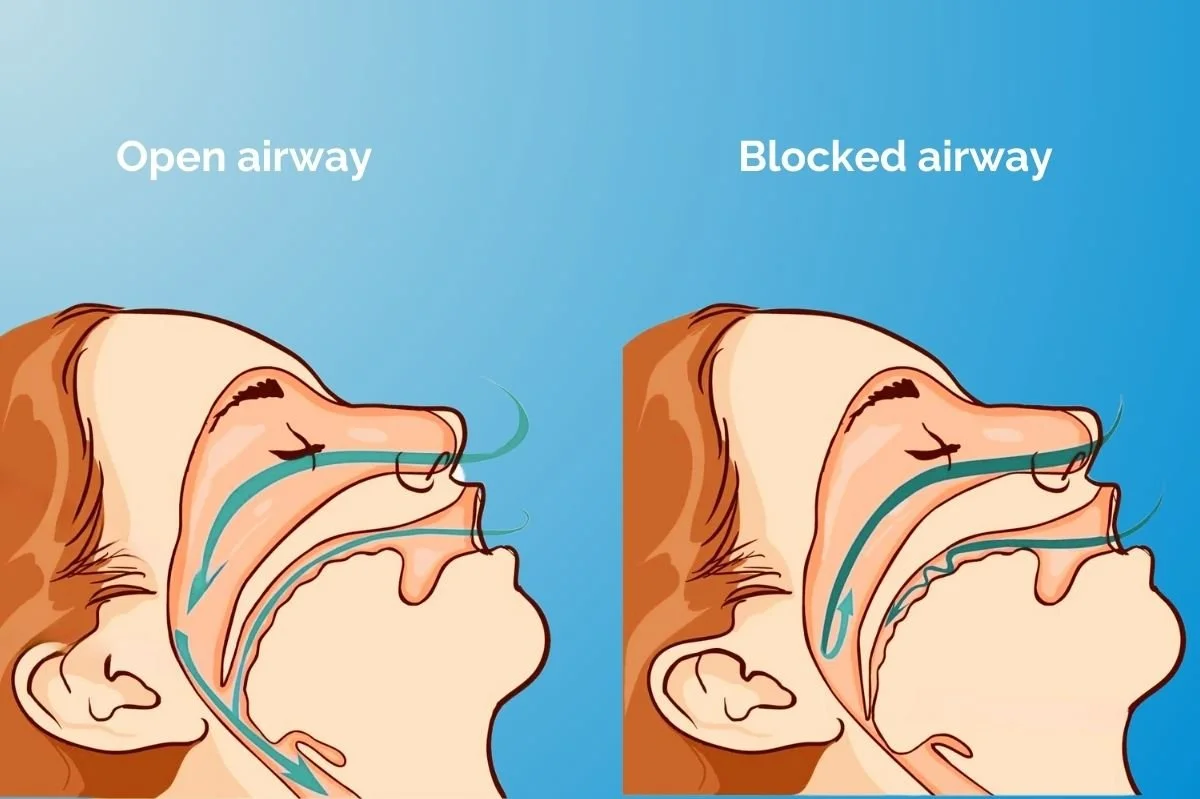
Do you wake up with a sore jaw, headaches, sensitive teeth, or feel tired even after a full night's sleep? You may assume that stress is causing you to grind your teeth, but there could be another factor worth investigating: sleep-disordered breathing, including obstructive sleep apnoea (OSA).
Sleep apnoea and bruxism, commonly known as teeth grinding or jaw clenching, can occur in the same person. Research suggests there may be a relationship between these conditions, although the connection is complex and one does not necessarily cause the other.
At Pain Free Dentist Sydney, we look beyond the teeth when assessing patients with grinding, jaw discomfort, and possible sleep-related concerns. Understanding the potential relationship between your breathing, sleep quality, jaw muscles, and teeth may help you identify the most appropriate next steps.
What Is Sleep Apnoea?
Obstructive sleep apnoea is a sleep-related breathing disorder in which the upper airway repeatedly becomes partially or completely blocked during sleep.
These episodes can reduce airflow, lower blood oxygen levels, and cause brief awakenings that interrupt normal sleep.
Common signs and symptoms include:
Loud or frequent snoring
Pauses in breathing noticed by a bed partner
Gasping, choking, or snorting during sleep
Waking with a dry mouth or headache
Feeling tired or unrefreshed in the morning
Difficulty concentrating during the day
Frequent nighttime awakenings
Not everyone with sleep apnoea snores loudly, and some people may not realise their breathing is interrupted while they sleep.
If you suspect sleep apnoea, assessment by a qualified medical or sleep professional is important. A sleep study may be recommended to determine whether you have the condition and how severe it is.
What Is Bruxism?
Bruxism refers to repetitive jaw-muscle activity that may involve clenching, grinding, or bracing the jaw. It can occur during sleep or while you are awake.
Sleep bruxism may cause symptoms such as:
Flattened, worn, or chipped teeth
Cracked fillings or dental restorations
Jaw muscle soreness or tightness
Morning headaches
Tooth sensitivity
Jaw fatigue when waking up
Discomfort around the temples or face
Some people grind their teeth without realising it. Others may clench their jaw quietly, without the familiar grinding noise.
Bruxism can have several contributing factors, including stress, medications, individual susceptibility, and sleep-related factors. It is important not to assume that every case of teeth grinding is caused by sleep apnoea.
What Is the Relationship Between Sleep Apnoea and Bruxism?
The relationship between obstructive sleep apnoea and sleep bruxism is an area of ongoing research.
Both conditions may occur around periods of disrupted sleep and changes in nervous system activity. In some people, jaw-muscle activity occurs near breathing-related arousals, when the brain briefly shifts towards wakefulness after an airway obstruction.
However, the pattern varies between individuals. Bruxism does not reliably indicate that a person has sleep apnoea, and treating bruxism alone does not necessarily improve breathing during sleep.
Understanding this distinction is important because the two conditions may require different assessments and treatments.
1. Sleep Disruption May Be a Shared Factor
Obstructive sleep apnoea can repeatedly interrupt sleep, preventing normal restorative sleep patterns.
Sleep bruxism is also associated with brief changes in brain and muscle activity during sleep. Some episodes may occur close to breathing-related arousals, but this does not mean that all grinding episodes are a response to airway obstruction.
If you experience both frequent grinding and symptoms of poor sleep, it may be worth discussing both with your dentist and medical practitioner.
2. Jaw Clenching and Grinding Can Place Stress on Teeth
Repeated clenching and grinding can place substantial forces on the teeth, fillings, crowns, and jaw muscles.
Over time, this may contribute to tooth wear, fractures, restoration damage, and muscle discomfort.
A dentist can assess signs of bruxism and recommend ways to protect your teeth while considering other symptoms that may warrant further investigation.
3. Jaw Position and Airway Anatomy May Be Relevant
The structure and position of the jaws can influence the space available for the tongue and surrounding soft tissues. In some people, particular craniofacial features are associated with a greater risk of upper airway obstruction during sleep.
However, jaw shape alone cannot diagnose sleep apnoea. Many factors influence airway function, including soft tissue anatomy, body weight, age, nasal obstruction, and individual physiology.
A dental assessment may identify features worth discussing with a sleep physician, but diagnosis requires an appropriate sleep assessment.
Can Teeth Grinding Be a Warning Sign of Sleep Apnoea?
Teeth grinding alone is not a reliable warning sign of obstructive sleep apnoea. Many people who grind their teeth do not have sleep apnoea, and not everyone with sleep apnoea grinds their teeth.
However, further investigation may be appropriate if grinding occurs alongside symptoms such as:
Loud habitual snoring
Witnessed pauses in breathing
Gasping or choking during sleep
Persistent daytime sleepiness
Frequent waking or unrefreshing sleep
Morning headaches or dry mouth
If you experience these symptoms, speak with your GP or a qualified sleep professional about whether a sleep study is appropriate.
The key message is simple: do not treat teeth grinding as an isolated dental problem if you also have symptoms of disrupted breathing during sleep.
Does Treating Sleep Apnoea Stop Teeth Grinding?
Treating sleep apnoea may change sleep-related symptoms in some people, but it does not guarantee that bruxism will stop.
Treatment should be based on a proper assessment of both conditions.
Depending on the diagnosis, sleep apnoea treatment may include positive airway pressure therapy (CPAP), a medically assessed mandibular advancement device, or other approaches recommended by the treating clinician.
Bruxism management may involve monitoring tooth wear, protecting vulnerable teeth, addressing contributing factors, and managing jaw muscle discomfort.
If both conditions are present, coordinated care can help ensure that treatment for one does not overlook the other.
Can a Dental Splint Treat Both Sleep Apnoea and Bruxism?
This is an important distinction.
A conventional night guard or occlusal splint is generally designed to protect the teeth and manage certain dental or jaw symptoms associated with bruxism. It does not treat obstructive sleep apnoea simply by covering the teeth.
A mandibular advancement device (MAD) is different. It is designed to hold the lower jaw forward during sleep to help maintain upper airway patency. It may be prescribed for selected patients with obstructive sleep apnoea or snoring after appropriate assessment.
Although both appliances may look similar to some patients, they have different purposes and designs.
If you suspect sleep apnoea, do not rely on an ordinary night guard as a substitute for diagnosis or appropriate airway treatment. A dentist and sleep physician can help determine which appliance, if any, is suitable.
What About TMJ Pain, Jaw Clenching and Sleep Apnoea?
Some patients experience several symptoms together, including jaw muscle pain, morning headaches, tooth grinding, and unrefreshing sleep.
Temporomandibular disorders (TMD) affect the jaw joints and the muscles responsible for chewing. Symptoms can include jaw pain, restricted movement, tenderness, and sometimes clicking.
These symptoms may coexist with sleep-disordered breathing, but they are not proof of sleep apnoea. Each concern needs to be assessed on its own merits.
A comprehensive dental assessment may help identify tooth wear, bite-related concerns, jaw muscle tenderness, and signs that further medical investigation may be appropriate.
Treatment may include conservative jaw care, suitable dental protection, and referral to other healthcare professionals when indicated.
How Is Sleep Apnoea Diagnosed?
A dentist can identify signs that raise concern about sleep-disordered breathing, but a dental examination alone cannot confirm obstructive sleep apnoea.
Depending on your symptoms and medical history, the next steps may include:
Medical review: Your GP or sleep physician assesses your symptoms and risk factors.
Sleep testing: A home sleep apnoea test or laboratory polysomnography may be recommended.
Diagnosis and treatment planning: A qualified clinician interprets the results and discusses appropriate treatment.
Dental assessment where relevant: A dentist with appropriate training can assess oral health and determine whether a dental appliance may be suitable as part of the overall plan.
The correct sequence matters because treating the underlying sleep disorder, when present, is different from simply managing the dental effects of grinding.
What Can You Do If You Grind Your Teeth and Sleep Poorly?
If you wake with jaw soreness, have visibly worn teeth, or feel tired despite spending enough time in bed, start by documenting your symptoms.
Consider the following steps:
Arrange a dental assessment to check for tooth wear, cracks, and jaw muscle symptoms.
Speak with your GP if you snore regularly, wake gasping, or experience excessive daytime sleepiness.
Ask your bed partner whether they have noticed pauses in your breathing.
Avoid assuming that stress or bruxism alone explains all your symptoms.
Follow professional advice about protective appliances and any recommended sleep testing.
If you experience severe daytime sleepiness, avoid driving or operating machinery when drowsy and seek medical advice promptly.
Sleep Apnoea and Bruxism Assessment at Pain Free Dentist Sydney
At Pain Free Dentist Sydney, we understand that grinding, jaw discomfort, and poor sleep can affect everyday life. Our approach considers the health of your teeth and jaw while recognising when symptoms may need assessment beyond dentistry.
If you have worn teeth, persistent clenching, jaw discomfort, or concerns about the relationship between your bite and sleep, we can assess your dental concerns and discuss appropriate next steps. Where sleep apnoea is suspected, medical assessment is important.
Contact Pain Free Dentist Sydney
Address: Suite 1A, 570 New Canterbury Road, Hurlstone Park NSW 2193
Phone: 02 9558 8988
Website: https://painfreedentistsydney.com.au
Book a consultation to discuss teeth grinding, TMJ symptoms, and whether further assessment may be appropriate.
This article is for general information only and is not a substitute for medical or dental advice. Sleep apnoea requires appropriate clinical assessment and sleep testing where indicated.
Frequently Asked Questions
Does sleep apnoea cause teeth grinding?
Research has identified an association between sleep apnoea and sleep bruxism in some people, but the relationship is complex. Sleep apnoea does not necessarily cause grinding, and grinding alone does not diagnose sleep apnoea.
Can a night guard cure sleep apnoea?
No. A conventional night guard protects teeth but is not a treatment for obstructive sleep apnoea. A purpose-designed mandibular advancement device may be suitable for selected patients after appropriate assessment.
Why do I wake up with a sore jaw and headache?
Possible causes include sleep bruxism, jaw muscle tension, temporomandibular disorders, headaches, and disrupted sleep. An assessment can help identify possible contributors.
Should I see a dentist or a sleep physician first?
If your main concern is tooth wear or jaw discomfort, a dentist can assess those symptoms. If you snore loudly, wake gasping, or experience excessive daytime sleepiness, arrange a medical review as well. Both types of assessment may be helpful.
Can treating bruxism improve my sleep?
Managing bruxism may reduce dental damage and jaw discomfort, but it will not necessarily resolve poor sleep or treat an underlying breathing disorder. Persistent sleep symptoms should be investigated separately.