Have you lost several teeth, are you struggling with loose dentures, or have you been told that many of your remaining teeth may need to be removed?
Living with missing or failing teeth can affect more than your smile. It may change how you eat, speak and feel in social situations. While removable dentures remain a suitable option for many people, others prefer to explore fixed teeth supported by dental implants.
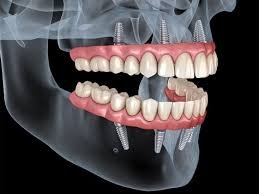
All-on-4 and All-on-6 dental implants are treatment approaches designed to support a full arch of replacement teeth using four or six dental implants, respectively.
At Pain Free Dentist Sydney in Dulwich Hill, we understand that choosing full-arch dental rehabilitation is a significant decision. Understanding how these treatments work, their potential benefits and limitations, and what the treatment journey involves can help you make an informed decision.
What Are All-on-4 Dental Implants?
All-on-4 is a full-arch tooth replacement approach in which a complete bridge of replacement teeth is supported by four strategically positioned dental implants.
The implants are placed in the jawbone to support a fixed prosthesis. In selected cases, the positioning and angulation of the implants may help make use of the available bone and reduce the need for additional bone grafting. However, this depends on your anatomy and individual treatment plan.
Potential benefits include:
A fixed alternative to conventional removable dentures.
Replacement of an entire arch of missing teeth.
Support for chewing and speaking.
A treatment approach that may reduce the need for additional bone grafting in suitable patients.
The possibility of receiving temporary fixed teeth soon after surgery when clinical conditions permit.
Not every patient is suitable for immediate fixed teeth. Implant stability, bone quality, bite forces and other clinical factors influence when the replacement bridge can be attached.
What Are All-on-6 Dental Implants?
All-on-6 follows a similar full-arch concept but uses six dental implants to support the replacement bridge.
Depending on the patient's anatomy and the design of the prosthesis, the additional implants may provide more opportunities to distribute chewing forces across the supporting implants.
Potential benefits may include additional implant support and greater flexibility in distributing forces in selected cases.
However, more implants do not automatically mean a better outcome. The success of treatment depends on implant positioning, bone quality, prosthetic design, bite management, oral hygiene and ongoing maintenance.
All-on-6 may not be necessary or appropriate for every patient. Your dentist will assess whether four or six implants are more suitable for your individual circumstances.
All-on-4 vs All-on-6: Which Is Better?
One of the most common questions patients ask is whether four or six implants are better for replacing an entire arch of teeth.
The answer depends on your individual clinical situation.
All-on-4 uses four implants to support the bridge, while All-on-6 uses six. The most appropriate approach depends on the available bone, implant positions, bite forces, restorative requirements and long-term maintenance considerations.
For some patients, four strategically positioned implants may provide suitable support. For others, six implants may be preferred to meet the demands of their anatomy and planned restoration.
The goal is not simply to place more implants. It is to develop a treatment plan that provides appropriate support, function and maintainability.
A comprehensive assessment helps determine which approach is most suitable for you.
Who May Be Suitable for Full-Arch Dental Implants?
All-on-4 and All-on-6 may be considered for patients who have lost most or all teeth in an arch, have multiple failing teeth, or are looking for an alternative to removable dentures.
Several factors need to be considered before treatment begins.
1. Bone Volume and Quality
Dental implants require adequate bone support. Your dentist will assess the available bone and determine whether the proposed implant positions are appropriate.
Three-dimensional imaging, such as cone beam computed tomography (CBCT), may be recommended when clinically indicated to assess the jaw anatomy and assist with implant planning.
2. Gum Health
Healthy gums and supporting tissues are important for long-term implant function. Existing gum disease should be assessed and managed as part of the treatment plan.
After implant placement, ongoing care is necessary to help reduce the risk of inflammation around the implants and associated bone loss.
3. General Health and Medications
Your medical history, medications, smoking status and any conditions affecting healing can influence treatment planning.
Your dentist will review these factors and discuss whether additional precautions or modifications are needed.
4. Bite and Jaw Function
Your bite plays an important role in full-arch rehabilitation. The relationship between your upper and lower teeth, jaw position, available restorative space and chewing forces all need to be considered.
Patients who clench or grind their teeth may require particular attention to bite design and maintenance planning. In some cases, a protective night guard may be recommended after treatment.
5. Oral Hygiene and Long-Term Maintenance
Fixed implant teeth are not maintenance-free. Daily cleaning around the bridge and implants, together with regular professional reviews, is essential.
Your dentist should explain how to clean beneath the bridge, what warning signs to look for and how frequently your restoration should be reviewed.
What Happens During All-on-4 or All-on-6 Treatment?
Although every case is different, full-arch implant treatment generally involves several stages.
Step 1: Consultation and Treatment Planning
Your dentist will examine your teeth, gums, bite and jaw function, review your medical history and discuss your goals.
Imaging and dental records may be required to assess the bone and plan implant placement and the replacement bridge.
You should receive a clear explanation of the proposed treatment, alternatives, potential risks and expected timeline before making a decision.
Step 2: Tooth Extractions, If Required
If some teeth cannot be predictably restored, extraction may form part of the treatment plan.
In selected cases, implants can be placed during the same surgical appointment as extractions. Whether this is appropriate depends on factors such as bone availability, infection, tissue conditions and implant stability.
Step 3: Dental Implant Placement
The implants are surgically positioned in the jawbone according to the treatment plan.
For patients who feel anxious about dental surgery, sedation may be considered if clinically appropriate. Local anaesthesia is generally used to manage pain during surgery, and any sedation requires a separate suitability assessment.
Step 4: Temporary Teeth and Healing
Some patients may be suitable for a temporary fixed bridge soon after implant placement. This is commonly called immediate loading.
However, immediate loading is not appropriate for every patient. Implant stability, bone conditions, bite forces and other clinical factors determine whether it is a suitable option.
Other patients may need a healing period before their fixed bridge can be attached.
Step 5: Fitting the Final Bridge
Once the implants have integrated with the bone and the tissues have stabilised sufficiently, the final restoration can be planned and fitted.
The final bridge may be made from different restorative materials, depending on your clinical needs, bite, design requirements and treatment goals.
Your dentist should also explain how the restoration will be maintained and what to do if it requires adjustment or repair.
Is All-on-4 or All-on-6 Surgery Painful?
It is natural to feel nervous about dental implant surgery, particularly if you have had an unpleasant dental experience in the past.
Local anaesthesia is generally used to numb the treatment area during surgery. For suitable patients, sedation may also help manage anxiety and make the experience more comfortable.
After surgery, some swelling, bruising, tenderness and discomfort may occur. The degree and duration vary according to the extent of the procedure and individual healing.
Your treating team will provide instructions for managing discomfort, maintaining oral hygiene, eating during the initial healing period and recognising potential complications.
If you experience severe or worsening pain, persistent bleeding, fever or significant swelling, contact your treating clinician promptly.
Can All-on-4 and All-on-6 Replace Conventional Dentures?
For suitable patients, full-arch implant treatment can provide a fixed alternative to conventional removable dentures.
Traditional dentures rest on the supporting oral tissues and may move during eating or speaking. Implant-supported fixed bridges are secured to dental implants and are designed to remain in place during normal function.
However, fixed implant teeth are not the right choice for everyone. Some patients prefer removable dentures, while others may require additional treatment before implant placement can be considered.
Your dentist can explain the benefits, limitations and maintenance requirements of each option so you can choose an approach that suits your needs.
How Long Do All-on-4 and All-on-6 Implants Last?
Dental implants can function for many years, but neither implants nor the attached bridge can be guaranteed to last a lifetime.
Long-term outcomes depend on several factors, including bone and gum health, smoking, medical conditions, bite forces, oral hygiene, implant positioning and regular maintenance.
The bridge itself may experience wear or mechanical complications over time and may require repair or replacement.
Regular dental reviews allow your clinician to assess the implants, surrounding tissues, bite and condition of the bridge. Early attention to emerging problems can help protect your oral health and the function of your restoration.
All-on-4 and All-on-6 Dental Implants in Dulwich Hill, Sydney
Living with failing teeth or uncomfortable dentures can affect everyday activities, from enjoying meals to smiling confidently in photographs.
Full-arch dental implants may offer a solution for suitable patients, but successful treatment begins with careful assessment and realistic expectations.
At Pain Free Dentist Sydney, we aim to help patients understand their treatment options and make informed decisions based on their individual needs.
If you are considering All-on-4 or All-on-6 dental implants, arrange a consultation to discuss your oral health, available bone, bite, treatment goals and the options that may be appropriate for you.
Your journey towards a healthier, more functional smile starts with understanding your options.
Book a Dental Consultation
Pain Free Dentist Sydney
Dulwich Hill, NSW
Phone: 02 9558 8988
Email: info@painfreedentistsydney.com.au
Website: https://painfreedentistsydney.com.au
Suitability for dental implant treatment is determined following an individual clinical assessment. Treatment outcomes, healing times and maintenance requirements vary between patients.