Missing a tooth can affect more than the appearance of your smile. It may change the way you chew, speak and feel about your teeth. If you have lost a tooth through decay, gum disease, an injury or another dental problem, you may be wondering what options are available to replace it.
Dental implants are one option for replacing missing teeth. They are designed to provide support for replacement teeth without relying on neighbouring natural teeth for support in the same way as a conventional tooth-supported bridge.
At Pain Free Dentist Sydney in Dulwich Hill, we understand that choosing tooth replacement treatment is an important decision. Knowing how dental implants work, what the procedure involves and how to care for them can help you make an informed choice.
What Are Dental Implants?
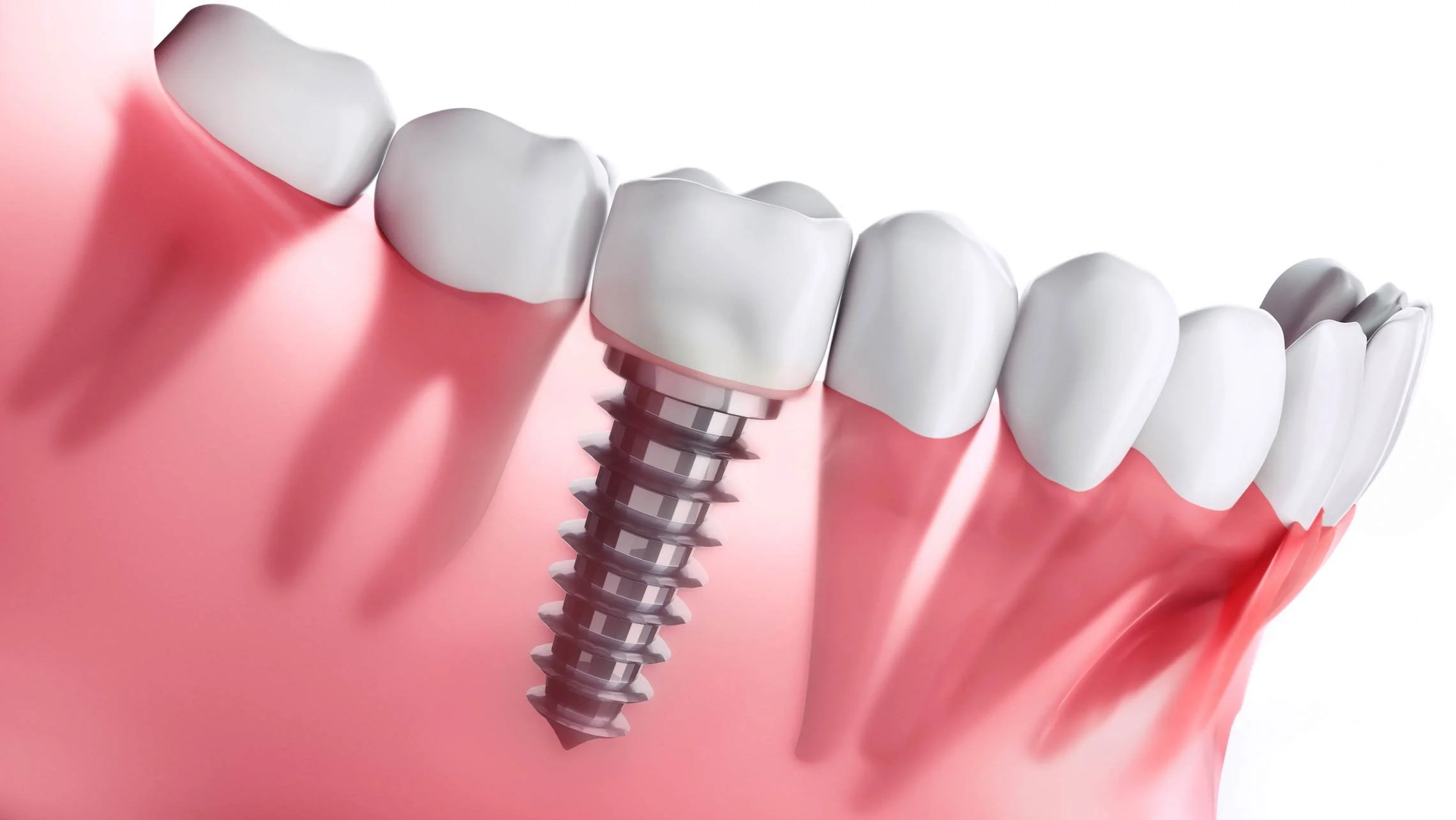
A dental implant is a small fixture, commonly made from titanium, that is surgically placed in the jawbone to support a replacement tooth or dental prosthesis.
After placement, the implant can integrate with the surrounding bone through a biological process called osseointegration. Once the implant has achieved adequate stability and healing, it can support a suitable restoration.
A typical dental implant restoration consists of three components:
The implant: The fixture placed in the jawbone.
The abutment: The connecting component between the implant and the restoration, where required by the design.
The crown or prosthesis: The visible replacement tooth or teeth.
The design varies according to the number of missing teeth, the available bone, the position of the implants and the type of restoration planned.
What Can Dental Implants Replace?
Dental implants can be used in several different ways, depending on your needs.
1. Replacing a Single Missing Tooth
If you have lost one tooth, a dental implant may support an individual crown designed to replace the missing tooth.
One potential advantage is that a single implant crown generally does not require the adjacent teeth to be prepared as supporting teeth, unlike a conventional tooth-supported bridge.
However, an implant is not automatically the best option for every missing tooth. The condition of neighbouring teeth, bone availability, gum health and your overall treatment goals all need to be considered.
2. Replacing Several Missing Teeth
When several teeth are missing, implant-supported bridges may be an option.
Rather than placing an individual implant for every missing tooth, a carefully planned bridge may use strategically positioned implants to support multiple replacement teeth.
The appropriate design depends on the location of the missing teeth, the distribution of chewing forces, the available bone and the long-term maintenance requirements.
3. Replacing an Entire Arch of Teeth
For patients who have lost most or all teeth in the upper or lower jaw, full-arch implant rehabilitation may be considered.
Two commonly discussed approaches are All-on-4 and All-on-6 dental implants.
All-on-4 uses four implants to support a full-arch prosthesis, while All-on-6 uses six. The most suitable approach depends on your anatomy, bone quality, bite forces, prosthetic design and clinical assessment.
Neither approach is universally better for every patient.
You can learn more in our related article about All-on-4 vs All-on-6 dental implants in Sydney.
Who May Be Suitable for Dental Implants?
Dental implants may be suitable for adults who have one or more missing teeth and want to explore a fixed tooth replacement option.
However, suitability depends on several factors.
Healthy Gums and Supporting Tissues
Gum disease should be assessed and managed before implant treatment. Healthy tissues and effective oral hygiene are important for supporting the implants over time.
Adequate Bone Support
Dental implants need sufficient bone to provide appropriate support. Your dentist will assess the available bone and determine whether the planned implant position is suitable.
In selected cases, additional procedures such as bone grafting may be considered.
General Health
Your medical history, medications, smoking status and any conditions affecting healing can influence treatment planning.
Be sure to tell your dentist about your medical conditions and all medications you take so that potential risks can be assessed.
Commitment to Ongoing Maintenance
Dental implants require daily cleaning and regular professional reviews. Patients need to understand the ongoing care involved before deciding whether implant treatment is right for them.
If you have been told that you are not suitable for dental implants, it may be worth asking your dentist to explain the specific reasons and whether alternative treatment approaches are available.
What Happens During Dental Implant Treatment?
Dental implant treatment usually involves several stages, although the sequence and timing vary between patients.
Step 1: Consultation and Examination
Your dentist will assess your oral health, examine the area of the missing tooth or teeth and discuss your treatment goals.
Your medical history, bite, gum health and available restorative space will also be considered.
Step 2: Diagnostic Imaging and Treatment Planning
Dental X-rays and, where clinically indicated, cone beam computed tomography (CBCT) may be used to assess the jawbone and surrounding anatomy.
These records help your dentist plan implant positioning and determine whether additional procedures may be needed.
You should receive an explanation of the proposed treatment, its risks, alternatives and expected timeline before deciding to proceed.
Step 3: Implant Placement
The implant is surgically placed in the jawbone under appropriate local anaesthesia.
For patients who experience significant dental anxiety or require extensive surgery, sedation may be considered if clinically suitable.
Sedation can help with relaxation, while local anaesthesia is generally used to manage pain during the procedure.
Step 4: Healing and Bone Integration
Following implant placement, a healing period is usually required for the implant to integrate with the surrounding bone.
The time needed varies according to the location of the implant, bone quality, the procedure performed and individual healing.
Some suitable patients may receive a temporary restoration earlier, while others need to wait before the implant can be loaded.
Your dentist will advise you on the appropriate timeline for your case.
Step 5: Fitting the Final Restoration
Once the implant is sufficiently stable and healing has progressed appropriately, the final crown, bridge or full-arch prosthesis can be fitted.
Your dentist will assess the fit, appearance, bite and function of the restoration.
Follow-up appointments help monitor healing and ensure that the restoration remains comfortable and functional.
Are Dental Implants Painful?
It is understandable to feel nervous about implant surgery, especially if you have had an unpleasant dental experience in the past.
Local anaesthesia is generally used to numb the treatment area during implant placement. You may feel pressure or movement, but the area should be appropriately anaesthetised to manage surgical pain.
After the procedure, some swelling, bruising, tenderness or discomfort may occur. The degree varies depending on the extent of surgery and individual healing.
Your dental team will provide post-operative instructions and advice about appropriate pain management.
If you experience severe or worsening pain, persistent bleeding, fever or significant swelling, contact your treating clinician promptly.
For patients who feel particularly anxious, discussing dental sedation before treatment may help identify an appropriate approach.
How Long Do Dental Implants Last?
Dental implants can function for many years, but they cannot be guaranteed to last a lifetime.
Their long-term performance depends on several factors, including:
Gum and bone health.
Daily oral hygiene.
Smoking and other lifestyle factors.
Medical conditions and healing.
Bite forces and teeth grinding.
The position and design of the restoration.
Regular professional maintenance.
The implant fixture and the restoration it supports are also different components. Although the implant may remain stable, the crown or bridge may experience wear, damage or mechanical complications and may need repair or replacement over time.
Regular dental reviews help monitor the implants, surrounding tissues and the condition of the restoration.
How Do You Care for Dental Implants?
Dental implants need ongoing care, just like natural teeth.
Brush at least twice daily and clean between your teeth and around the implant restoration using the tools recommended by your dentist.
If you have an implant-supported bridge, you may need specialised cleaning tools to reach underneath the restoration.
Watch for bleeding, redness, swelling, persistent bad breath or discomfort around the implant. These symptoms warrant assessment because inflammation around implants can sometimes progress and affect the supporting bone.
Avoid assuming that an implant is problem-free simply because it feels comfortable.
Your dentist will recommend an appropriate maintenance schedule based on your individual needs.
What Are the Alternatives to Dental Implants?
Dental implants are not the only way to replace missing teeth.
Depending on your circumstances, alternatives may include:
A conventional dental bridge: Replacement teeth supported by neighbouring natural teeth. This may be suitable when the supporting teeth are healthy enough or already require crowns.
A removable partial denture: A removable appliance that replaces one or more missing teeth.
A complete denture: A removable option for replacing all teeth in an arch.
Monitoring the space: In selected circumstances, your dentist may discuss leaving a missing tooth space untreated, depending on its location, function and potential consequences.
Each option has advantages, limitations and maintenance requirements. The best choice depends on your oral health, treatment goals and preferences.
Dental Implants and Sedation: What If I Feel Anxious?
Dental anxiety should not prevent you from asking about your treatment options.
If you feel worried about implant surgery, tell your dentist before making a decision. Understanding the procedure, expected sensations and recovery can help reduce uncertainty.
For selected patients, sedation may be an option to help manage anxiety during implant surgery. Suitability depends on your medical history, the procedure and the assessment of the treating dental and sedation practitioners.
You can read our related guide to IV dental sedation in Sydney to learn more about the process, preparation and recovery.
Dental Implants in Dulwich Hill, Sydney
Replacing missing teeth involves more than filling a gap. It requires a treatment plan that considers your oral health, bite, available bone, appearance and long-term maintenance.
At Pain Free Dentist Sydney, we aim to help patients understand their options and make informed decisions based on their individual circumstances.
Whether you are missing a single tooth, several teeth or an entire arch, an assessment can help determine which replacement options may be appropriate.
Take the first step towards restoring your smile by arranging a dental implant consultation.
Contact Pain Free Dentist Sydney
Location: Dulwich Hill, NSW
Phone: 02 9558 8988
Email: info@painfreedentistsydney.com.au
Website: https://painfreedentistsydney.com.au
Dental implant suitability and treatment outcomes vary between individuals. An examination and appropriate diagnostic assessment are required before a treatment plan can be recommended.