Does the thought of visiting the dentist make you feel anxious? You are not alone.
For many people, dental anxiety is more than a little nervousness. The sound of dental instruments, fear of pain, sensitive teeth, a previous unpleasant experience or embarrassment about the condition of their teeth can make even a routine appointment feel overwhelming.
The good news is that modern dentistry offers several ways to help patients feel more comfortable. Dental sedation can help make dental treatment a calmer and more manageable experience, particularly for people who experience dental anxiety or need more complex procedures.
At Pain Free Dentist Sydney in Dulwich Hill, we understand that every patient has different concerns. Our approach focuses on listening to your needs, explaining your options and helping you feel informed and comfortable before treatment begins.
What Is Dental Sedation?
Dental sedation involves using medication or other techniques to help patients relax during dental treatment. Depending on the method used, sedation may reduce anxiety, make you feel drowsy or decrease your awareness of the procedure.
Sedation is not the same as general anaesthesia. With many forms of sedation, you remain conscious and may still be able to respond to instructions. Local anaesthetic is generally used as well to help control pain during the procedure.
The appropriate option depends on your medical history, anxiety level, treatment requirements and overall health.
Who Can Benefit from Dental Sedation?
Dental sedation may be worth discussing with your dentist if you:
Experience significant dental anxiety or fear.
Have had a difficult or traumatic dental experience in the past.
Find it hard to tolerate dental instruments in your mouth.
Have a strong gag reflex.
Need lengthy or complex dental treatment.
Feel overwhelmed by the thought of dental surgery.
Have difficulty remaining comfortable during conventional dental appointments.
You do not need to wait until a dental problem becomes painful before asking about sedation. Discussing your concerns early may help you plan treatment in a way that feels more manageable.
What Types of Dental Sedation Are Available?
Different sedation methods offer different levels of relaxation. Your dentist will discuss the options appropriate for your circumstances.
1. Nitrous Oxide Sedation
Nitrous oxide, sometimes called laughing gas, is inhaled through a small nasal mask. It can help reduce anxiety and promote relaxation while you remain conscious.
Its effects generally wear off relatively quickly after administration stops. However, whether it is suitable for you depends on your medical circumstances and the procedure being performed.
2. Oral Sedation
Oral sedation involves taking prescribed medication before dental treatment. It may help reduce anxiety and make the appointment feel less stressful.
The effects vary between individuals. You may feel sleepy or less alert, and you will generally need someone to accompany you home. You must follow your treating clinician's instructions regarding driving and other activities after sedation.
3. Intravenous (IV) Sedation
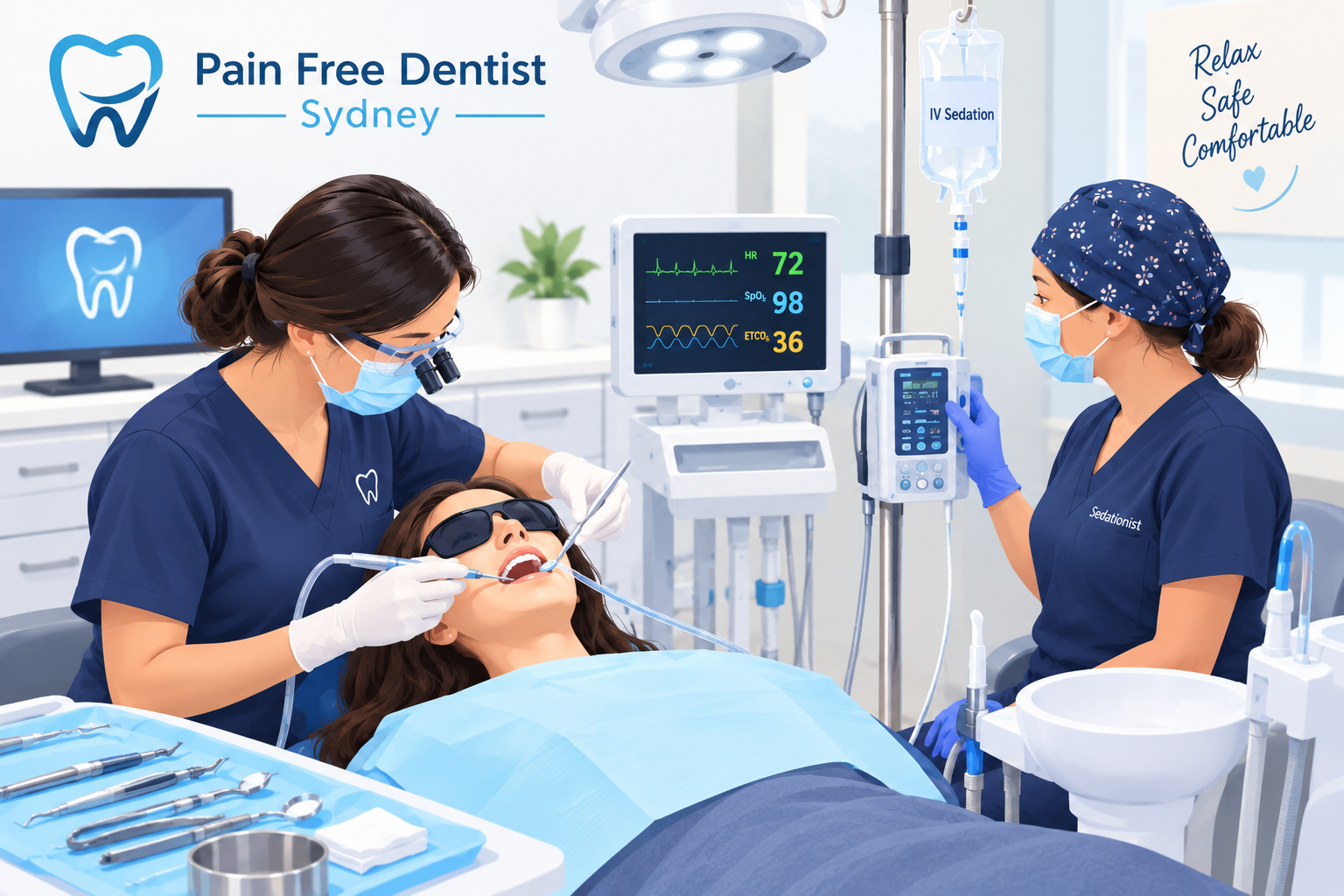
IV sedation is administered through a vein by an appropriately qualified sedation practitioner. It can provide a deeper level of relaxation than some other sedation methods.
Patients may feel very drowsy and remember little of the procedure, although individual responses vary. IV sedation is not the same as general anaesthesia, and you may remain responsive during treatment.
A thorough pre-sedation assessment is important. Your medical history, medications, fasting requirements, monitoring arrangements and recovery plan must all be considered.
At Pain Free Dentist Sydney, IV sedation may be considered for appropriate patients requiring procedures such as dental implant surgery or complex extractions, subject to clinical assessment and the availability of a suitable sedation practitioner.
Is Dental Sedation Pain-Free?
This is one of the most common questions patients ask.
Sedation primarily helps with anxiety and relaxation. It does not automatically eliminate pain. Local anaesthesia is commonly used to numb the treatment area, while sedation helps you cope more comfortably with the experience.
Your dentist should explain what you may feel during treatment, how discomfort will be managed and what to do if you feel uncomfortable.
No dental procedure can be guaranteed to be completely painless for every patient. However, careful planning, effective anaesthesia, communication and appropriate sedation can help improve comfort.
Is Dental Sedation Safe?
Sedation can be appropriate for many patients when carefully planned and administered by suitably qualified professionals. However, no sedation method is completely without risk.
Before recommending sedation, your dental team should review your medical conditions, allergies, current medications, previous reactions to anaesthesia or sedation, and other relevant factors.
Depending on the method used, your care may include monitoring of breathing, oxygen levels, heart rate and blood pressure. The level of monitoring and the personnel required depend on the sedation technique and applicable clinical requirements.
It is important to disclose conditions such as sleep apnoea, breathing difficulties and significant cardiovascular problems, as well as any medications or supplements you take.
You should also follow all pre-treatment instructions carefully, including fasting requirements where applicable. After sedation, you may need an escort and should follow the recovery instructions provided by your treating team.
What Dental Treatments Can Be Performed Under Sedation?
Depending on your individual needs and clinical suitability, sedation may be considered for:
Dental implant surgery, including All-on-4 and All-on-6 treatment.
Complex tooth extractions.
Surgical dental procedures.
Extensive restorative treatment.
Other lengthy procedures that may be difficult to tolerate while fully alert.
Sedation is not necessary for every procedure, and it does not replace a proper dental examination or treatment plan.
Your dentist will explain the anticipated duration, treatment stages, alternatives and costs before you decide how to proceed.
How Should You Prepare for Dental Sedation?
Preparation depends on the type of sedation planned. Before your appointment, make sure you:
Provide an accurate medical history and medication list.
Tell your dental team about previous experiences with sedation or anaesthesia.
Follow the specific eating and drinking instructions provided.
Arrange transport and an appropriate support person if required.
Ask when you can safely return to work, drive or resume normal activities.
Understand the proposed treatment, its risks, alternatives and fees.
Do not stop prescribed medication or alter your usual routine unless instructed by your treating clinician.
Dental Sedation in Dulwich Hill, Sydney
At Pain Free Dentist Sydney, we recognise that dental anxiety can prevent people from seeking the care they need. We aim to provide a supportive environment where patients can ask questions, understand their treatment choices and make informed decisions without feeling pressured.
If you are considering dental implants, extractions or other extensive dental treatment but feel anxious about the procedure, we can discuss whether sedation may be appropriate for you.
The first step is to arrange a dental assessment so that we can understand your needs and explain the available options.
You deserve to feel heard, informed and supported throughout your dental journey.
Book a Dental Consultation
Contact Pain Free Dentist Sydney in Dulwich Hill to discuss your dental concerns and whether sedation may be suitable for your treatment.
Phone: 02 9558 8988
Email: info@painfreedentistsydney.com.au
Website: https://painfreedentistsydney.com.au
Dental sedation suitability, risks, recovery requirements and fees vary according to the individual patient and the sedation method used. An assessment is required before treatment can be planned.