
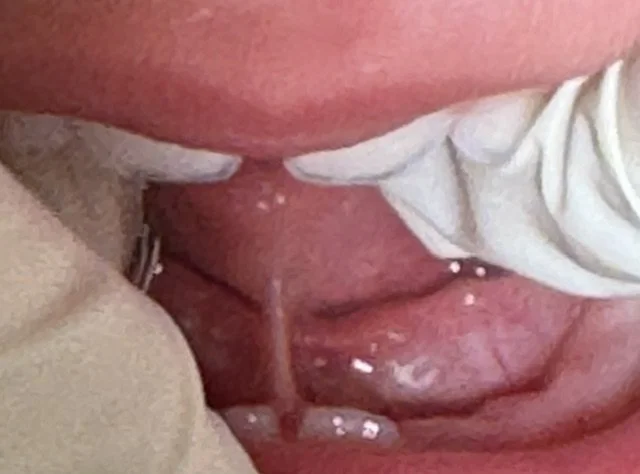
Is Your Baby Struggling to Breastfeed? It May Be Worth Looking at Their Tongue Movement
Breastfeeding is often described as a natural process, but that does not mean it is always easy.
Some babies struggle to latch deeply, repeatedly slip off the breast, make clicking sounds while feeding or seem unsettled even after frequent feeds. Some parents experience persistent nipple pain, damaged nipples or concerns that their baby is not transferring enough milk.
There can be several reasons for these difficulties. One possibility worth assessing is baby tongue-tie, also known as ankyloglossia.
Tongue-tie occurs when the lingual frenulum, the small band of tissue connecting the underside of the tongue to the floor of the mouth, restricts the tongue's movement.
However, not every baby with a visible tongue-tie will experience feeding problems, and not every breastfeeding difficulty is caused by tongue-tie. The important question is whether the baby's tongue movement is functionally restricted and whether this contributes to the feeding difficulties.
What Does Tongue-Tie Look Like in a Baby?
The appearance of a tongue-tie can vary considerably from one baby to another. In some babies, the restriction is easy to see. In others, the tissue may be less obvious, and the functional assessment is particularly important.
Possible signs include:
Difficulty lifting the tongue towards the roof of the mouth.
Limited ability to extend the tongue beyond the lower gum.
A tongue that appears heart-shaped when extended.
Difficulty maintaining a deep latch during breastfeeding.
Clicking sounds or repeatedly losing suction during feeds.
Prolonged feeds or frequent feeding with signs of ineffective milk transfer.
Persistent maternal nipple pain or nipple damage.
Concerns about the baby's weight gain or feeding effectiveness.
These signs do not confirm tongue-tie on their own. A qualified clinician should assess tongue mobility alongside feeding, oral function and the baby's overall health.
How Can Tongue-Tie Affect Breastfeeding?
Effective breastfeeding requires coordination between the baby's tongue, jaw, lips and other oral structures.
The tongue helps maintain a seal, create the movements needed for milk transfer and coordinate feeding. If its movement is restricted, some babies may find it more difficult to latch or maintain effective suction.
This can sometimes contribute to:
1. Difficulty achieving a deep latch
A baby may struggle to maintain a comfortable, effective attachment to the breast.
2. Clicking or loss of suction
Repeated clicking sounds may occur when a baby struggles to maintain a seal, although clicking can have other causes too.
3. Long or frequent feeds
Some babies feed for extended periods but may not transfer milk efficiently. Frequent feeding alone, however, is not proof of a feeding problem.
4. Maternal nipple pain
A shallow or unstable latch can contribute to nipple discomfort or damage. Other causes should also be considered.
5. Concerns about milk intake
If feeding is ineffective, some babies may not receive enough milk. Poor weight gain, reduced wet nappies or signs of dehydration require prompt assessment.
When these problems occur, a comprehensive feeding assessment can help determine whether tongue restriction is contributing and what support is appropriate.
Does Every Baby With Tongue-Tie Need a Frenectomy?
No. A visible tongue-tie does not automatically mean a baby needs surgery.
Some babies have a restricted-looking frenulum but feed comfortably and effectively. If tongue movement does not cause functional difficulties, a procedure may not be necessary.
When feeding difficulties are present, assessment should consider:
The baby's tongue movement and oral function.
Breastfeeding or bottle-feeding effectiveness.
Maternal comfort and nipple condition.
Milk transfer and the baby's growth.
Other possible causes of feeding difficulties.
Lactation support and feeding adjustments may help some families without surgery.
If a functionally significant restriction is identified and feeding difficulties persist despite appropriate support, a clinician may discuss a frenotomy or frenectomy, a procedure that releases the restrictive tissue.
The potential benefits, limitations and risks should be explained to parents before they make a decision.
What Is a Baby Tongue-Tie Release Procedure?
A tongue-tie release is a procedure intended to divide or release the tissue restricting tongue movement.
The technique used depends on the baby's age, anatomy, clinical circumstances and the practitioner's assessment.
For selected infants, a frenotomy may be a relatively brief procedure. However, it is still a medical procedure and is not appropriate for every baby.
Potential complications can include bleeding, pain, infection, injury to nearby structures and feeding difficulties that persist despite the release. Families should receive clear aftercare instructions and know when to seek further medical attention.
Parents should also understand that releasing the frenulum does not guarantee that breastfeeding will immediately improve. Some babies need continued feeding support, and the original problem may have more than one cause.
What About Laser Tongue-Tie Release in Babies?
Parents sometimes search for laser tongue-tie treatment because they hope it will be gentler or more comfortable for their baby.
Laser is one technique that may be used for selected oral soft-tissue procedures. However, it should not automatically be considered superior to other techniques, and the choice of instrument does not replace the need for an accurate diagnosis and appropriate clinical judgement.
The clinician should explain the proposed technique, pain management, bleeding control, potential risks and follow-up arrangements.
For infants, it is especially important that the procedure is performed by an appropriately trained practitioner who understands infant oral anatomy and feeding function.
Do Babies Need Stretching Exercises After Tongue-Tie Release?
This is an important question for parents to ask before agreeing to a procedure.
Post-procedure advice varies, and parents may receive different recommendations from different providers. Routine wound-opening stretches after infant frenotomy are not universally recommended. The American Academy of Pediatrics advises against repeatedly opening the wound to prevent reattachment because evidence of benefit is lacking and the exercises may contribute to oral aversion.
Follow the treating clinician's specific advice and seek clarification if you are unsure about feeding support, wound care or follow-up.
A good treatment plan should include more than the procedure itself. It should explain how feeding will be reassessed and what support is available if difficulties continue.
Can Tongue-Tie Affect a Baby's Future Speech or Development?
Parents sometimes worry that an untreated tongue-tie will inevitably cause speech problems or affect their child's development.
The evidence does not support assuming that every infant tongue-tie will cause future speech difficulties. Many children with tongue-tie develop normally without treatment.
If speech or oral function concerns arise as a child grows, an appropriate assessment can help determine whether tongue restriction is relevant. A procedure should not be recommended solely on the assumption that it will prevent future problems without a clear clinical indication.
The focus should remain on the child's current function, individual needs and evidence-based care.
When Should You Seek Help for Your Baby's Feeding Difficulties?
Consider seeking professional support if your baby consistently struggles to latch, feeds ineffectively, has persistent clicking or suction difficulties, or if breastfeeding causes ongoing nipple pain.
A feeding assessment is particularly important if you are worried about your baby's milk intake or weight gain.
Seek urgent medical advice if your baby has signs of dehydration, is unusually sleepy or difficult to wake, or is feeding poorly. A baby with significant feeding problems should not have care delayed while waiting for a tongue-tie consultation.
Early support may help identify the cause of the difficulty and guide the next steps.
Baby Tongue-Tie Assessment in Sydney's Inner West
At Pain Free Dentist Sydney, we understand that parents want to know whether a tongue-tie is genuinely affecting their baby's feeding and whether treatment may help.
Our approach should begin with understanding the concerns, assessing the relevant oral function and discussing appropriate options. Where necessary, collaboration with the baby's GP, paediatrician, maternal and child health nurse or lactation consultant can help provide a more complete picture.
We believe parents deserve clear explanations without unnecessary pressure to proceed with a procedure.
If you are concerned about your baby's tongue movement or feeding difficulties, contact our clinic to discuss an appropriate assessment.
Pain Free Dentist Sydney
Address: Suite 1A, 570 New Canterbury Road, Hurlstone Park NSW 2193
Phone: 02 9558 8988
Email: info@painfreedentistsydney.com.au
Website: https://painfreedentistsydney.com.au
This article provides general information and does not replace an individual assessment by an appropriately qualified healthcare professional.