Are you experiencing pain at the back of your mouth, swollen gums or recurring discomfort around your wisdom teeth? Perhaps your dentist has recommended wisdom tooth removal, but the thought of undergoing oral surgery makes you feel anxious.
For many patients, wisdom teeth removal can be an intimidating experience, particularly when the teeth are impacted, difficult to access or positioned close to important anatomical structures.
Fortunately, wisdom teeth removal under sedation may offer a more comfortable treatment experience for suitable patients.
Sedation can help patients who experience dental anxiety, have a strong gag reflex or require more complex dental procedures feel more relaxed during treatment.
At Pain Free Dentist Sydney, we understand that every patient has different needs and levels of dental anxiety. Understanding your treatment and sedation options is an important first step towards making an informed decision.
What Are Wisdom Teeth?
Wisdom teeth, also known as third molars, are the last permanent teeth to develop. They usually emerge during the late teenage years or early adulthood, although the timing varies between individuals.
Most people develop up to four wisdom teeth, with one located at the back of each corner of the mouth.
However, there is not always enough room in the jaw for these teeth to erupt properly.
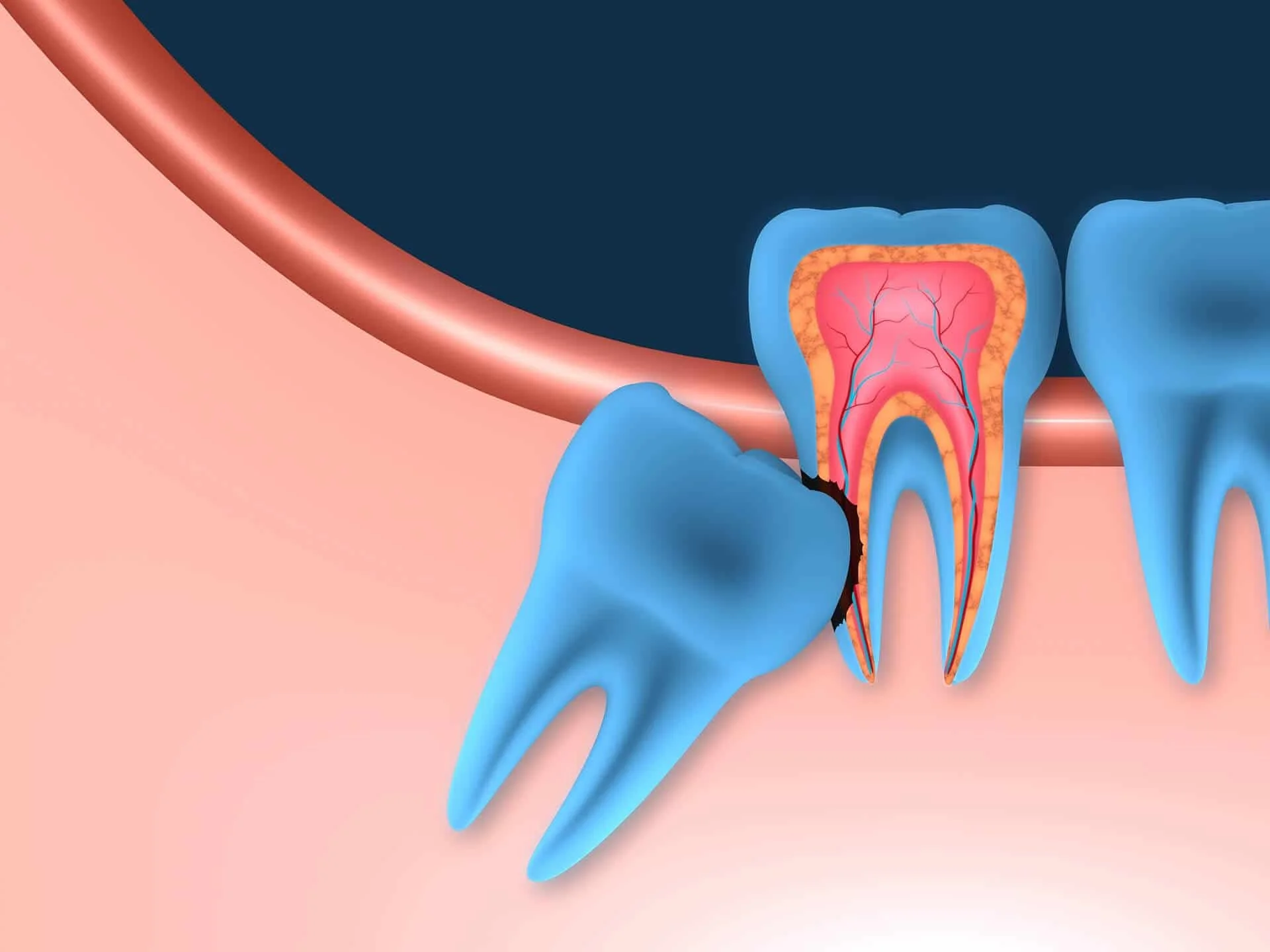
When wisdom teeth do not have sufficient space, they may become impacted, partially erupted or positioned at an angle.
Some wisdom teeth remain completely buried beneath the gum or within the jawbone.
Why Do Wisdom Teeth Need to Be Removed?
Not every wisdom tooth needs to be removed. Healthy wisdom teeth that have erupted properly and can be maintained may be monitored.
However, removal may be recommended when a wisdom tooth causes or is likely to contribute to certain dental problems.
Common reasons include:
1. Impacted wisdom teeth
An impacted wisdom tooth cannot erupt normally because it is obstructed by surrounding teeth, gum tissue or bone.
2. Recurrent gum infections
Partially erupted wisdom teeth can create areas where food and bacteria accumulate, potentially causing inflammation and infection known as pericoronitis.
3. Tooth decay
Wisdom teeth at the back of the mouth can be difficult to clean, increasing the risk of dental decay.
4. Damage to neighbouring teeth
An impacted wisdom tooth may contribute to decay, periodontal problems or damage to the adjacent second molar.
5. Cysts and other pathology
Occasionally, impacted wisdom teeth are associated with cyst formation or other pathological changes that require investigation and treatment.
A clinical examination and appropriate dental imaging help determine whether removal is necessary.
Why Consider Wisdom Teeth Removal Under Sedation?
Many patients delay wisdom tooth treatment because of dental anxiety.
Others may be concerned about the sounds, sensations or length of oral surgery.
Sedation may help make the experience more manageable for suitable patients.
Potential benefits include:
Reduced anxiety and fear during treatment.
Greater relaxation throughout the procedure.
Improved tolerance of longer dental appointments.
Assistance for patients with a strong gag reflex.
Greater comfort during complex surgical procedures.
An option for patients who have previously experienced difficult dental treatment.
It is important to understand that sedation is not the same as general anaesthesia. The type of sedation used determines the patient's level of consciousness and responsiveness.
What Are the Different Types of Dental Sedation?
The appropriate sedation method depends on the patient's medical history, anxiety level, procedure complexity and clinical suitability.
1. Nitrous Oxide Sedation
Nitrous oxide, commonly known as laughing gas, is inhaled through a small nasal mask.
It can help reduce anxiety and create a relaxed feeling during dental treatment.
Patients generally remain conscious and able to respond to instructions.
Nitrous oxide may be suitable for patients with mild to moderate dental anxiety, depending on the procedure and individual circumstances.
2. Intravenous (IV) Sedation
IV sedation involves administering sedative medication through a vein.
It is commonly considered for patients undergoing more involved dental procedures or those experiencing significant dental anxiety.
Depending on the medications and sedation depth, patients may feel very relaxed and may have limited recollection of parts of the procedure.
IV sedation is not necessarily the same as being completely unconscious. Patients may remain responsive, depending on the level of sedation.
It requires appropriate monitoring by a qualified sedation practitioner and suitable recovery arrangements.
3. General Anaesthesia
General anaesthesia places the patient into a controlled state of unconsciousness.
It may be considered for selected complex surgical cases or patients who are not suitable for other sedation approaches.
General anaesthesia requires an appropriately qualified anaesthetist and an appropriately equipped clinical setting.
The decision should be made following an individual medical and surgical assessment.
What Happens During Wisdom Teeth Removal Under IV Sedation?
The treatment process generally involves several stages.
Step 1: Initial Consultation and Assessment
Before surgery, your dentist or oral surgeon will assess your wisdom teeth and review your medical and dental history.
This may include:
Examination of the wisdom teeth.
Assessment of gum inflammation or infection.
Review of dental X-rays or panoramic imaging.
CBCT imaging when clinically indicated.
Assessment of tooth position and surgical complexity.
Review of medications, allergies and medical conditions.
Discussion of sedation suitability and treatment options.
Step 2: Preparing for Sedation
If IV sedation is recommended, you will receive instructions regarding fasting, medications and preparation before your appointment.
You will generally need a responsible adult to accompany you home.
You should not drive, operate machinery or make important decisions for the period specified by your sedation practitioner.
Step 3: Administering Sedation
The sedation practitioner administers the medication intravenously and monitors your condition throughout the procedure.
Your vital signs, including oxygen levels, breathing and circulation, are monitored according to the sedation requirements.
The dental team will also ensure that appropriate local anaesthesia is provided to numb the surgical area.
Step 4: Wisdom Teeth Removal
Depending on the position of the teeth, removal may involve:
Making a small incision in the gum.
Removing a small amount of surrounding bone.
Dividing the tooth into smaller sections when necessary.
Carefully removing the tooth.
Cleaning the surgical site.
Placing stitches when indicated.
The surgical approach depends on whether the wisdom tooth is fully erupted, partially impacted or deeply positioned within the jawbone.
Step 5: Recovery and Postoperative Care
After the procedure, you will be monitored during recovery until the clinical team considers it appropriate for discharge.
You will receive instructions about pain management, oral hygiene, eating, drinking and follow-up appointments.
What Is Recovery Like After Wisdom Teeth Removal?
Recovery varies depending on the number of teeth removed, their position and the complexity of surgery.
Some swelling, discomfort and limited mouth opening are common during the initial recovery period.
Patients may experience:
Facial swelling.
Jaw stiffness.
Mild bleeding or blood-stained saliva.
Tenderness around the surgical area.
Difficulty chewing for several days.
Temporary bruising.
Following postoperative instructions is important.
Helpful recovery measures may include:
Resting after surgery.
Applying cold packs as instructed.
Eating soft foods during the initial recovery period.
Maintaining gentle oral hygiene.
Avoiding smoking and vaping.
Avoiding vigorous rinsing during the first 24 hours.
Taking prescribed or recommended medication as directed.
Attending follow-up appointments when required.
If you experience increasing swelling, fever, persistent bleeding, worsening pain or difficulty swallowing or breathing, seek prompt medical or dental attention. Difficulty breathing or swallowing requires emergency assessment.
What Are the Risks of Wisdom Teeth Removal?
Although wisdom teeth removal is a common surgical procedure, it is important to understand that complications can occur.
Potential risks include:
Infection.
Postoperative bleeding.
Dry socket.
Swelling and bruising.
Temporary or, rarely, persistent altered sensation involving the lower lip, chin or tongue.
Damage to neighbouring teeth or restorations.
Sinus communication with upper wisdom tooth removal.
Jaw stiffness.
The risk profile depends on the tooth's position and its relationship to nearby nerves, sinuses and other anatomical structures.
Sedation also carries risks, including respiratory and cardiovascular complications. These risks should be discussed during the preoperative assessment.
Is Wisdom Teeth Removal Under Sedation Suitable for Dental Anxiety?
For patients who experience significant dental anxiety, sedation may provide an alternative to undergoing treatment fully awake.
It may be particularly helpful for individuals who:
Have a history of dental phobia.
Feel anxious about surgical procedures.
Have difficulty tolerating lengthy appointments.
Have a strong gag reflex.
Require multiple wisdom teeth to be removed.
Have previously avoided necessary dental treatment because of fear.
However, sedation is not suitable for everyone. Your medical history, current medications, airway health and other relevant factors must be reviewed before treatment.
Why Is Early Assessment Important?
Wisdom teeth can sometimes cause problems before patients experience significant pain.
Regular dental examinations and appropriate imaging can help identify potential issues before they become more complicated.
Early assessment may help determine whether monitoring, preventive care or surgical removal is the most appropriate approach.
Waiting until severe pain or infection develops may limit treatment options and make the experience more difficult.
A More Comfortable Approach to Wisdom Teeth Surgery
Wisdom teeth removal does not have to be an overwhelming experience.
For suitable patients, sedation can help reduce anxiety and improve comfort during dental surgery.
At Pain Free Dentist Sydney – Dulwich Hill, we understand that dental anxiety is a genuine concern. We aim to provide a supportive, patient-centred approach, with treatment options tailored to individual needs.
Whether you require assessment of an impacted wisdom tooth or are considering removal under IV sedation, a consultation can help determine the most appropriate treatment pathway.
Your comfort, safety and understanding of the procedure matter.
Book Your Wisdom Teeth Consultation
Pain Free Dentist Sydney – Dulwich Hill
Phone: 02 9558 8988
Email: info@painfreedentistsydney.com.au
Website: https://painfreedentistsydney.com.au