Most people never think about the shape of their palate — the roof of the mouth — but your palatal arch form can reveal a lot about your dental health, breathing patterns, jaw development, and even sleep quality.
In modern dentistry, the shape of the palate is increasingly linked to airway health, TMJ function, and facial development. Understanding your arch form can help uncover hidden causes of issues like crowding, teeth grinding, and even sleep problems.
What Is Palate or Arch Form?
Your palate (palatal arch) is the curved roof of your mouth. Its shape and width are influenced by genetics, childhood development, tongue posture, breathing habits, and facial growth patterns.
Common arch forms include:
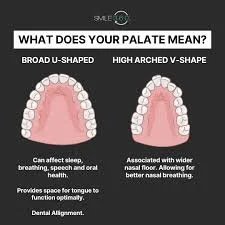
Narrow (high-arched palate)
Wide (U-shaped palate)
Flat or low palate
Asymmetrical or uneven arch
Each shape can give clues about how the face and jaw developed over time.
What a Narrow or High-Arched Palate Can Indicate
A narrow or high-arched palate is one of the most clinically significant arch forms.
It may indicate:
Mouth breathing during childhood
Restricted nasal airway
Underdeveloped upper jaw
Tongue posture issues (low tongue resting position)
People with narrow palates often experience:
Dental crowding
Crossbites
TMJ discomfort or jaw strain
Teeth grinding (bruxism)
Snoring or sleep-disordered breathing
Because the upper jaw is closely linked to airway space, a narrow palate can sometimes reduce nasal airflow.
What a Wide or U-Shaped Palate Suggests
A wide, U-shaped palate is generally considered a more optimal arch form.
It often indicates:
Balanced facial development
Better tongue posture
Improved nasal breathing habits
More space for teeth alignment
People with wider palates may experience fewer issues with crowding or bite problems, although TMJ or grinding can still occur due to other factors like stress or bite imbalance.
How Your Palate Affects Breathing and Sleep
Your palate plays an important role in airway structure.
A narrow or high-arched palate can reduce space in the nasal airway and contribute to:
Mouth breathing
Snoring
Restless sleep
Possible sleep apnea symptoms
Morning headaches or dry mouth
This is why airway-focused dentistry often evaluates palatal structure when assessing sleep-related issues.
Palate Shape and TMJ Disorder
Your arch form and jaw alignment are closely connected to TMJ function.
A narrow palate can influence how the upper and lower teeth fit together, which may place extra strain on the jaw joints.
This can contribute to:
Jaw clicking or popping
TMJ pain or tightness
Muscle imbalance in the face
Headaches and facial tension
Uneven bite pressure
Over time, the jaw may compensate for structural imbalance, leading to chronic discomfort.
Palate Shape and Teeth Alignment
The shape of your palate directly affects how your teeth erupt and align.
A narrow palate often leads to:
Crowded teeth
Overlapping teeth
Misaligned bite (malocclusion)
Need for orthodontic treatment
A wider palate provides more room for teeth to align naturally.
Can Your Palate Change Over Time?
While genetics play a role, your palate can be influenced during growth and development. In adults, changes are more limited, but dental treatments such as orthodontics or airway-focused expansion techniques may help in certain cases.
Functional factors that influence palate development include:
Tongue posture
Nasal vs mouth breathing
Childhood habits (thumb sucking, etc.)
Jaw growth patterns
Signs Your Palate May Be Affecting Your Health
You may want to consider an assessment if you experience:
Crowded or crooked teeth
Chronic jaw tension or TMJ symptoms
Mouth breathing or snoring
Frequent headaches
Teeth grinding or clenching
Narrow dental arch appearance
Difficulty breathing comfortably through the nose
These signs often overlap with airway and jaw function concerns.
Why Dentists Look at Arch Form
Dentists and airway-focused clinicians assess palate shape because it provides insight into:
Jaw development and bite alignment
Airway health and breathing patterns
Risk of TMJ dysfunction
Orthodontic needs
Sleep-related breathing issues
It is not just about teeth — it reflects overall craniofacial function.
Conclusion
Your palatal arch form is more than just the shape of the roof of your mouth — it can reveal important clues about your breathing, jaw health, bite alignment, and sleep quality.
A narrow palate may be associated with crowding, TMJ symptoms, and airway restriction, while a wider arch often supports better overall oral function.
Understanding your palate is an important step in identifying hidden issues and improving long-term dental and health outcomes.