
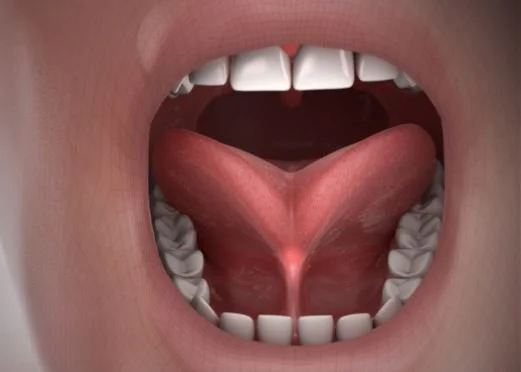
Most people associate tongue tie (ankyloglossia) with babies, but it can also affect adults — often without being diagnosed for years. In many cases, adults only discover they have a tongue tie after experiencing ongoing issues with speech, jaw pain, breathing, or even sleep problems.
Because the body adapts over time, adult tongue tie is often “hidden,” with symptoms mistakenly attributed to TMJ disorder, stress, or posture.
What Is Tongue Tie in Adults?
A tongue tie occurs when the band of tissue (lingual frenulum) under the tongue is too tight, short, or thick, restricting normal tongue movement.
In adults, this restriction can affect:
Tongue mobility
Speech clarity
Swallowing patterns
Oral posture (tongue resting position)
Jaw and facial muscle balance
Many adults don’t realise they have it because they have lived with compensations for years.
Hidden Problems Caused by Adult Tongue Tie
Jaw Pain and TMJ Issues
Restricted tongue movement can lead to poor oral posture, which may force the jaw muscles to overcompensate.
This can contribute to:
Jaw tightness or pain
Clicking or popping jaw
TMJ dysfunction
Facial muscle strain
Headaches
Over time, these imbalances may worsen TMJ symptoms.
Speech Difficulties
Adult tongue tie can subtly affect speech, especially with certain sounds like “t,” “d,” “l,” and “r.”
Common issues include:
Slurred or unclear speech
Difficulty pronouncing certain words
Fatigue when speaking for long periods
Feeling like speech is “restricted”
Many people never connect these issues to tongue movement.
Breathing and Sleep Issues
The tongue plays a major role in airway stability. If tongue posture is restricted, it may fall backward during sleep, contributing to:
Mouth breathing
Snoring
Poor sleep quality
Possible contribution to sleep apnea symptoms
Morning dry mouth
This is one of the most overlooked effects of adult tongue tie.
Teeth Grinding and Jaw Clenching
When tongue posture is not functioning properly, the jaw may compensate by clenching or grinding during sleep.
This can lead to:
Worn teeth
Jaw soreness in the morning
Headaches
Increased TMJ strain
Many patients diagnosed with bruxism later discover tongue restriction as a contributing factor.
Neck and Posture Issues
Tongue position is linked to overall head and neck posture. A restricted tongue can contribute to forward head posture and muscular imbalance.
This may result in:
Neck stiffness
Shoulder tension
Poor head posture
Chronic muscle fatigue
Why Adult Tongue Tie Is Often Missed
Adult tongue tie is frequently overlooked because:
Symptoms develop gradually over time
The tongue may still appear “functional”
Compensations hide the restriction
Symptoms overlap with TMJ, stress, or sleep disorders
As a result, many patients go years without a correct diagnosis.
Signs You May Have an Adult Tongue Tie
You may want to consider assessment if you experience:
Difficulty sticking your tongue out fully
Tightness under the tongue
Jaw pain or TMJ symptoms
Speech fatigue or difficulty pronouncing words
Snoring or mouth breathing
Teeth grinding or jaw clenching
Feeling like your tongue is “restricted”
Even mild restrictions can have long-term effects.
Treatment Options for Adult Tongue Tie
Tongue Tie Release (Frenectomy)
A frenectomy is a simple procedure that releases the tight tissue under the tongue, improving mobility.
Myofunctional Therapy
Exercises may be recommended before and after treatment to retrain tongue posture, swallowing patterns, and muscle coordination.
TMJ and Jaw Support Therapy
If TMJ symptoms are present, additional support may be needed to reduce muscle strain and improve jaw function.
Sleep and Airway Management
For patients with snoring or sleep-related symptoms, airway evaluation may be recommended as part of a broader treatment plan.
Benefits of Treating Adult Tongue Tie
Correcting tongue tie in adults may help improve:
Jaw comfort and TMJ symptoms
Speech clarity
Sleep quality
Breathing patterns
Oral posture
Muscle balance in the face and neck
Many patients report feeling “less tension” overall after treatment and rehabilitation.
When to Seek Professional Assessment
If you experience chronic jaw pain, speech difficulties, sleep issues, or ongoing TMJ symptoms with no clear cause, an evaluation for tongue tie in adults may be beneficial.
A dental professional trained in airway and functional dentistry can assess tongue mobility and its impact on oral health and jaw function.
Conclusion
Adult tongue tie is a commonly missed condition that can contribute to a wide range of hidden problems — including TMJ pain, speech issues, sleep disturbances, and muscle tension.
Because symptoms often develop slowly, many patients don’t realise the root cause until later in life.
With proper diagnosis and treatment, significant improvements in comfort, function, and quality of life are possible.