Do you wake up with a headache, sore jaw or sensitive teeth? Do you notice that your teeth appear shorter, flatter or more worn than they used to be?
You may be experiencing bruxism, the medical term for grinding or clenching your teeth.
Teeth grinding is common and can happen during the day or while you sleep. Some people are aware that they grind their teeth, while others may only discover the problem after developing headaches, jaw pain, tooth sensitivity or noticeable tooth wear.
Over time, excessive teeth grinding can place significant stress on your teeth, jaw muscles and temporomandibular joints (TMJs).
What Is Teeth Grinding?
Teeth grinding, or bruxism, involves involuntary clenching, grinding or forceful contact between the teeth.
It may occur:
During sleep
While awake
During periods of stress or concentration
When lifting weights or performing strenuous activities
As a response to certain habits or physical factors
Sleep bruxism can be particularly difficult to identify because many people are unaware that they grind their teeth during the night.
A partner or family member may notice grinding sounds, or a dentist may identify signs of excessive wear during a dental examination.
Can Teeth Grinding Cause Headaches?
Yes. Teeth grinding can contribute to headaches, particularly headaches that occur in the morning.
When you clench or grind your teeth, the muscles responsible for chewing may remain active for extended periods. These muscles connect with surrounding structures in the face, temples and head.
Excessive muscle activity can contribute to:
Morning headaches
Temple pain
Forehead pain
Facial pain
Pressure around the eyes
Tension-type headaches
Some people may also experience headaches that become worse during periods of stress or after a night of poor sleep.
If you regularly wake up with headaches, especially together with jaw soreness or tooth sensitivity, teeth grinding may be one possible contributing factor.
However, headaches can have many different causes. A proper assessment is important to determine whether bruxism, TMJ dysfunction or another condition may be contributing to your symptoms.
Can Teeth Grinding Cause Jaw Pain?
Yes. Repeated clenching and grinding can place excessive stress on the muscles and joints involved in jaw movement.
Symptoms may include:
Jaw pain
Soreness when chewing
Pain when opening the mouth
Jaw clicking or popping
Jaw stiffness
Difficulty opening the mouth fully
Jaw locking
Facial muscle tension
The temporomandibular joints are located on either side of the face, just in front of the ears. These joints allow the jaw to open, close and move from side to side.
Excessive forces from clenching and grinding may contribute to inflammation, muscle overactivity and stress on the jaw joints.
Can Teeth Grinding Wear Down Your Teeth?
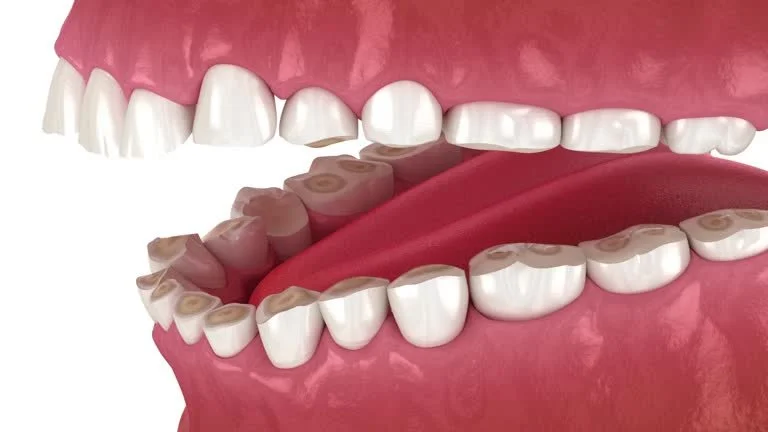
Yes. One of the most visible effects of long-term bruxism is tooth wear.
Signs of tooth wear may include:
Flattened biting surfaces
Shorter-looking teeth
Chipped enamel
Cracked teeth
Increased tooth sensitivity
Small fractures in the teeth
Loss of tooth structure
Over time, significant tooth wear can affect the appearance and function of the teeth.
In some cases, severe wear may also affect the way the upper and lower teeth come together.
Why Do People Grind Their Teeth?
There is no single cause of teeth grinding.
Possible contributing factors include:
Stress and Anxiety
Emotional stress can increase muscle tension and may contribute to clenching and grinding.
Some people clench their teeth during the day without realising it, particularly when concentrating or feeling stressed.
Sleep Disturbances
Sleep-related factors may contribute to nighttime teeth grinding.
Some people who grind their teeth may also experience sleep-disordered breathing, snoring or other sleep-related problems.
If teeth grinding is accompanied by loud snoring, gasping during sleep, mouth breathing or significant daytime tiredness, further assessment may be appropriate.
Jaw and Bite Factors
The relationship between the teeth, jaw muscles and jaw joints can influence how forces are distributed during chewing and clenching.
An assessment may help identify whether the bite, tooth position or jaw function may be contributing to excessive stress.
Lifestyle Factors
Certain lifestyle factors may also contribute to increased muscle activity and teeth grinding, including:
Stress
Poor sleep
Excessive caffeine
Alcohol consumption
Certain medications
The cause of bruxism can vary from person to person.
How Do I Know If I Grind My Teeth at Night?
You may not be aware that you grind your teeth while sleeping.
Possible signs include:
Waking with jaw pain
Morning headaches
Sore teeth
Tooth sensitivity
Worn or flattened teeth
Chipped teeth
Jaw clicking or popping
A partner hearing grinding sounds
Tight or tired jaw muscles
A dentist may also identify signs of bruxism during a dental examination.
Can Teeth Grinding Cause TMJ Problems?
Teeth grinding may contribute to stress on the temporomandibular joints and surrounding muscles.
Some people with bruxism develop symptoms such as:
Jaw pain
Clicking or popping
Headaches
Ear pain
Facial pain
Neck tension
Limited jaw movement
However, not everyone who has jaw clicking or pain grinds their teeth, and not everyone who grinds their teeth develops TMJ symptoms.
This is why it is important to assess the individual patient rather than treating every case in exactly the same way.
How Is Teeth Grinding Diagnosed?
A dental and TMJ assessment may include:
Discussion of your symptoms
Examination of the teeth
Assessment of tooth wear
Evaluation of the jaw joints
Examination of the jaw muscles
Assessment of jaw movement
Review of clenching and grinding habits
Evaluation of sleep-related symptoms
Dental imaging where clinically indicated
The aim is to identify the possible contributing factors and understand how the teeth, jaw muscles and joints are functioning.
How Is Teeth Grinding Treated?
Treatment depends on the severity and contributing factors.
Custom Dental Splint Therapy
A professionally designed custom splint may help protect the teeth and manage forces associated with clenching and grinding.
A splint should be carefully assessed and appropriately fitted for the individual patient.
Myofunctional Therapy
Myofunctional therapy may be recommended in selected cases to help address factors related to:
Tongue posture
Breathing
Swallowing
Oral muscle function
The appropriate approach depends on the individual patient's symptoms and assessment.
Addressing Sleep and Airway Factors
Some patients who grind their teeth may also have symptoms associated with sleep-disordered breathing.
If you snore, mouth-breathe, wake frequently during the night or feel excessively tired during the day, discussing these symptoms with a qualified healthcare professional may be appropriate.
Further assessment may sometimes involve collaboration with other healthcare professionals.
Botox for Jaw Muscle Overactivity
In selected cases, Botox may be considered to help reduce excessive activity in certain jaw muscles.
This may be considered for patients with significant muscle tension, clenching or related jaw pain.
Botox is not suitable for every patient and should be considered as part of an individualised treatment plan.
Restorative Dental Treatment
If teeth have been significantly worn, cracked or damaged, restorative treatment may be required to restore their structure and function.
Treatment may include options such as:
Composite restorations
Crowns
Other restorative dental procedures
The appropriate treatment depends on the amount of tooth structure remaining and the overall condition of the teeth.
Can Teeth Grinding Be Cured?
The answer depends on the underlying cause.
For some people, symptoms can be significantly reduced by addressing contributing factors and protecting the teeth.
For others, bruxism may be a long-term condition that requires ongoing management.
The goal of treatment is often to:
Reduce excessive forces
Protect the teeth
Reduce muscle tension
Improve jaw function
Manage pain
Identify contributing factors
A personalised assessment is important because there is no single treatment that is appropriate for every person who grinds their teeth.
When Should I See a Dentist for Teeth Grinding?
You should consider arranging an assessment if you experience:
Regular morning headaches
Jaw pain or stiffness
Teeth grinding or clenching
Worn or flattened teeth
Chipped or cracked teeth
Tooth sensitivity
Jaw clicking or popping
Difficulty opening your mouth
Jaw locking
Facial pain
Early assessment may help identify signs of tooth wear and excessive jaw muscle activity before more significant damage occurs.
Frequently Asked Questions
Why do I wake up with a headache and sore jaw?
Morning headaches and jaw soreness may be associated with nighttime teeth grinding or clenching. Other causes are also possible, so an appropriate assessment is recommended.
Can stress cause teeth grinding?
Stress can contribute to clenching and grinding in some people. Stress management and identifying other contributing factors may form part of an overall treatment plan.
Can teeth grinding damage my teeth permanently?
Yes. Long-term, excessive grinding can cause irreversible loss of tooth structure, cracks and other damage.
Is a night guard the same as a TMJ splint?
Not necessarily. Different appliances are designed for different purposes. The appropriate appliance depends on the patient's symptoms, jaw function, bite and clinical assessment.
Can Botox help with teeth grinding?
Botox may help reduce excessive muscle activity in selected patients. It is not appropriate for every case and should be assessed individually.
Can teeth grinding cause ear pain or tinnitus?
Jaw muscle and TMJ problems can sometimes be associated with ear-related symptoms, including ear pain or tinnitus. However, ear symptoms can have many possible causes and should be properly assessed.
Teeth Grinding and Jaw Pain in Sydney
If you grind or clench your teeth, wake up with headaches or experience jaw pain, an assessment may help identify the possible causes and contributing factors.
At Pain Free Dentist Sydney, we assess patients experiencing symptoms associated with teeth grinding, jaw pain, TMJ dysfunction and excessive muscle tension.
Treatment may involve a personalised approach that considers the teeth, jaw joints, muscles, bite, breathing and other relevant factors.
If you are experiencing teeth grinding, headaches, jaw pain or worn teeth, contact us to arrange an assessment.
📞 Call Pain Free Dentist Sydney on 9558 8988.
Serving patients in Dulwich Hill, Hurlstone Park and Sydney's Inner West.