Root canal treatment is one of the most commonly misunderstood dental procedures.
Many people associate a root canal with pain, but modern dental techniques, local anaesthetic and sedation options can make treatment much more comfortable than many patients expect.
If you have tooth pain, you may be wondering:
How do I know if I need a root canal?
The answer depends on what is happening inside the tooth. A dental examination and appropriate imaging are usually required to determine whether the nerve or pulp of the tooth has become inflamed, infected or irreversibly damaged.
What Is a Root Canal?
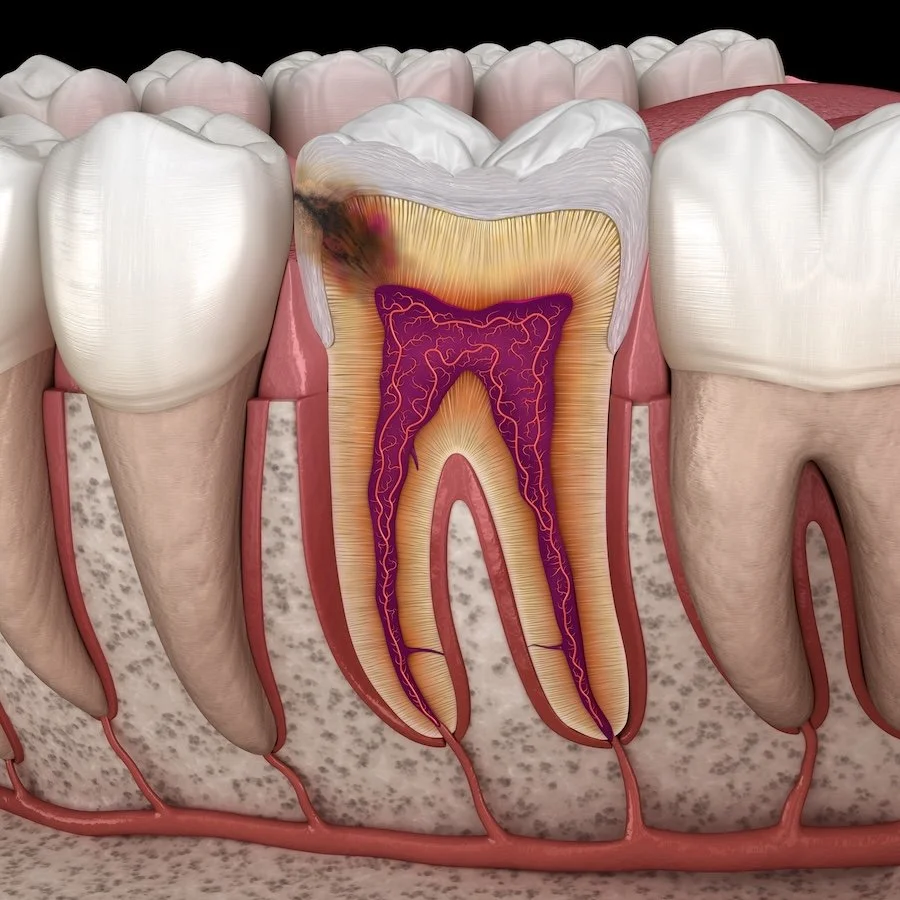
Inside every tooth is a soft area called the dental pulp.
The pulp contains:
Nerves
Blood vessels
Connective tissue
If the pulp becomes severely inflamed or infected, the tooth may cause significant pain.
Root canal treatment involves removing the damaged or infected pulp from inside the tooth, cleaning and disinfecting the root canals, and sealing the tooth.
The purpose of root canal treatment is to remove the source of infection or inflammation while preserving the natural tooth where possible.
What Are the Signs You May Need a Root Canal?
1. Severe Toothache
Severe tooth pain may be a sign that the dental nerve inside the tooth is inflamed or infected.
The pain may be:
Throbbing
Constant
Sharp
Worse at night
Triggered by hot or cold foods
Worse when biting
Severe tooth pain should be assessed promptly.
However, toothache can have many possible causes, so pain alone does not automatically mean that you need a root canal.
2. Lingering Sensitivity to Hot or Cold
It is normal for some teeth to experience a brief sensation when exposed to cold or hot temperatures.
However, if the pain lingers for a significant period after the source of the temperature has been removed, it may indicate inflammation of the dental pulp.
For example, you may drink something cold and continue to experience pain long after finishing the drink.
This type of lingering sensitivity should be assessed by a dentist.
3. Pain When Biting or Chewing
Pain when biting down may be associated with:
Inflammation inside the tooth
A dental infection
A cracked tooth
A damaged filling
Problems around the tooth root
If the pain is persistent or worsening, a dental examination may be required.
4. Swelling Around the Tooth
Swelling around a tooth may indicate an infection.
You may notice:
A swollen gum
A small pimple or bump on the gum
Facial swelling
Tenderness around the tooth
An infection inside a tooth can spread into the surrounding tissues.
Prompt dental assessment is recommended if you notice swelling.
5. A Dental Abscess
A dental abscess may develop when bacteria enter the inner part of a tooth and cause infection.
Symptoms may include:
Severe throbbing pain
Swelling
Pus
A bad taste in the mouth
Fever
Pain when biting
A dental abscess requires professional assessment.
Depending on the condition of the tooth, root canal treatment may be one treatment option to remove the source of infection and preserve the tooth.
6. A Deep Cavity
A cavity that extends deeply into the tooth may eventually reach the dental pulp.
If the pulp becomes irreversibly inflamed or infected, a filling may no longer be sufficient.
Root canal treatment may be considered to preserve the remaining tooth structure.
7. A Cracked or Fractured Tooth
A crack in a tooth can allow bacteria to reach the inner part of the tooth.
A cracked tooth may cause:
Sharp pain when biting
Pain when releasing your bite
Sensitivity to hot and cold
Intermittent toothache
The treatment required depends on the location and severity of the crack.
Some cracked teeth may be treated with root canal treatment and a crown, while severely fractured teeth may not be restorable.
Can I Need a Root Canal Without Pain?
Yes.
Some teeth requiring root canal treatment may not cause significant pain.
A tooth may have a damaged or dead nerve and still appear relatively comfortable.
In some cases, the problem may be discovered during a routine dental examination or on an X-ray.
This is one reason why regular dental check-ups can be important.
How Does a Dentist Know If I Need a Root Canal?
Your dentist may assess:
Your symptoms
The history of your tooth pain
Your response to hot and cold testing
Your response to tapping or biting
The condition of the tooth
The surrounding gum tissues
Dental X-rays where clinically indicated
In some cases, additional imaging may be recommended.
The goal is to determine whether the dental pulp is healthy, inflamed, infected or no longer viable.
Is Root Canal Treatment Painful?
Many patients are surprised to learn that the procedure itself is often much more comfortable than they expect.
Local anaesthetic is used to numb the tooth and surrounding area.
For patients who are anxious about dental treatment, sedation may also be an option in suitable circumstances.
The level of discomfort after treatment can vary depending on the condition of the tooth and the extent of infection or inflammation.
Your dentist will provide instructions for managing your recovery.
Root Canal Treatment Under Dental Sedation
Dental anxiety is very common.
Some patients delay root canal treatment because they are worried about:
Pain
The sound of dental instruments
The length of treatment
Previous negative dental experiences
Feeling anxious or unable to relax in the dental chair
Sedation may help selected patients feel more relaxed during dental treatment.
What Is Dental Sedation?
Dental sedation uses medication to help reduce anxiety and promote relaxation during dental treatment.
Depending on the type of sedation used, you may remain conscious and able to communicate with the dental team while feeling calmer and more comfortable.
The appropriate sedation option depends on:
Your medical history
Your level of anxiety
The complexity of the procedure
The expected length of treatment
Your individual health circumstances
Can I Have a Root Canal Under IV Sedation?
Selected patients may be suitable for IV sedation during dental treatment.
IV sedation may be considered for patients who:
Experience significant dental anxiety
Have had a previous traumatic dental experience
Have difficulty relaxing during dental treatment
Require lengthy or complex dental procedures
Prefer a more relaxed treatment experience
Your suitability for IV sedation must be assessed before treatment.
Specific fasting instructions may apply, and patients receiving IV sedation generally require an appropriate escort home after treatment.
Your dental team will provide detailed instructions before your appointment.
How Long Does Root Canal Treatment Take?
The length of treatment depends on:
The tooth being treated
The number of root canals
The complexity of the root canal anatomy
The presence of infection
The condition of the tooth
Whether additional restorative treatment is required
Some root canal treatments can be completed in one appointment, while others may require multiple appointments.
After root canal treatment, the tooth may require a restoration such as a crown to help protect the remaining tooth structure.
Does Every Tooth Need a Crown After a Root Canal?
Not necessarily.
The type of restoration required depends on:
The tooth's location
The amount of remaining tooth structure
The extent of damage
The forces placed on the tooth
Back teeth often experience significant chewing forces and may require additional protection.
Your dentist can discuss the most appropriate restoration for your tooth.
What Happens If I Do Not Have a Root Canal?
If a tooth has an infected or severely damaged dental pulp and is left untreated, the problem may progress.
Possible complications include:
Increasing pain
Dental abscess
Swelling
Bone damage
Spread of infection
Loss of the tooth
The appropriate treatment depends on the individual situation.
In some cases, the options may include root canal treatment or extraction.
Can a Root Canal Save My Tooth?
In many cases, root canal treatment can help preserve a natural tooth that might otherwise require extraction.
Preserving a natural tooth may help maintain:
Chewing function
The position of surrounding teeth
Jawbone support
Your natural bite
However, not every tooth can be saved.
The prognosis depends on factors such as:
The extent of decay
The amount of remaining tooth structure
The severity of any crack
The condition of the surrounding bone and gums
The quality of the root canal treatment and final restoration
When Is Tooth Pain a Dental Emergency?
Seek urgent dental care if you experience:
Severe or worsening tooth pain
Facial swelling
Swelling around the gums
Fever
Pus or a bad taste
Difficulty opening your mouth
Difficulty swallowing
Difficulty breathing
Difficulty breathing or swallowing, or rapidly increasing facial swelling, requires immediate medical attention.
Frequently Asked Questions
How do I know if I need a root canal or a filling?
A filling may be suitable when decay has not reached or permanently damaged the dental pulp. If the pulp is severely inflamed or infected, root canal treatment may be required.
Can a tooth infection go away without a root canal?
An infection inside a tooth generally requires professional treatment. The appropriate treatment may involve root canal treatment or extraction, depending on whether the tooth can be restored.
Can I have a root canal if I am scared of the dentist?
Yes. Dental sedation may be an option for selected patients who experience significant dental anxiety.
Is IV sedation available for root canal treatment?
Selected patients may be suitable for IV sedation, depending on their health, medical history and the complexity of the dental treatment.
How long does a root canal last?
A successfully treated tooth can provide long-term function when properly restored and maintained. Regular dental care and good oral hygiene remain important.
Is it better to have a root canal or extract the tooth?
The answer depends on the condition of the tooth. When a tooth can be predictably restored, preserving the natural tooth may be considered. In other cases, extraction may be the more appropriate option.
Root Canal Treatment and Dental Sedation in Sydney
Severe tooth pain should not be ignored.
If you have lingering sensitivity, pain when biting, a cracked tooth, swelling or a dental abscess, you may require prompt dental assessment.
At Pain Free Dentist Sydney, we assess patients experiencing tooth pain and dental infections and can discuss appropriate treatment options.
For suitable patients who experience dental anxiety, dental sedation may be available to help create a calmer and more comfortable treatment experience.
If you are concerned that you may need a root canal or are anxious about dental treatment, contact us to discuss your options.
📞 Call Pain Free Dentist Sydney on 9558 8988.
Serving patients in Dulwich Hill, Hurlstone Park and Sydney's Inner West.