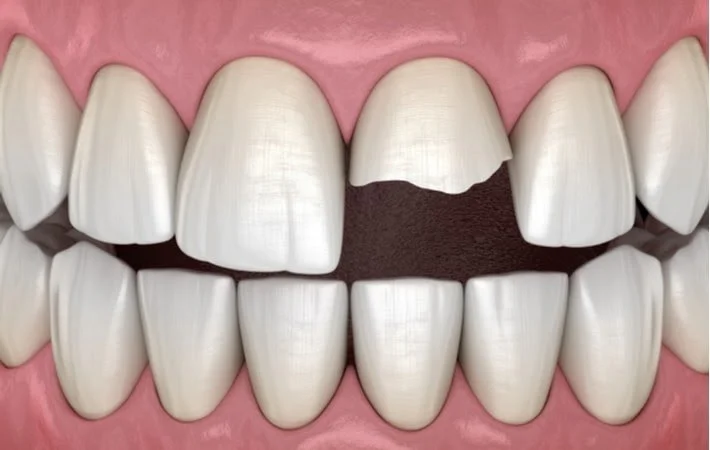
A chipped or broken tooth can happen suddenly and unexpectedly.
You may break a tooth while eating, playing sport or after an accident. In some cases, a tooth may break because it has already been weakened by decay, a large filling, grinding or previous dental treatment.
So, what should you do if you have a broken or chipped tooth?
The most important thing is to stay calm, protect the tooth and arrange a dental assessment.
What Should I Do Immediately After Breaking a Tooth?
If you break or chip a tooth, you should:
Rinse your mouth gently with warm water.
Remove any small pieces of tooth from your mouth.
If there is bleeding, apply gentle pressure with clean gauze.
Apply a cold compress to the outside of your face if there is swelling.
Avoid chewing on the affected side.
Keep any broken tooth fragments and bring them to your dentist.
Arrange a dental appointment as soon as possible.
If you experience severe pain, significant swelling or facial trauma, seek urgent dental assessment.
Can a Chipped Tooth Be Repaired?
In many cases, yes.
The appropriate treatment depends on:
How much of the tooth has broken
Whether the nerve is exposed
Whether the tooth is cracked
Whether the tooth has decay
The condition of the remaining tooth structure
Possible treatments may include:
Composite bonding
A filling
A dental crown
Root canal treatment
Dental extraction in severe cases
Your dentist will assess the tooth and discuss the most appropriate option.
What Is Composite Bonding?
A small chip may sometimes be repaired using tooth-coloured composite resin.
Composite bonding may be suitable for selected cases involving:
Small chips
Minor fractures
Damaged edges
The resin is shaped and bonded to the tooth to restore its appearance and function.
However, composite bonding may not be suitable for every broken tooth.
When Is a Dental Crown Needed?
A dental crown may be recommended when a significant amount of tooth structure has been lost.
A crown may help restore:
The shape of the tooth
The strength of the tooth
The ability to chew
The condition of the remaining tooth must be assessed before deciding whether a crown is appropriate.
Can a Broken Tooth Need a Root Canal?
Yes.
If the fracture extends into the inner part of the tooth and affects the dental pulp or nerve, root canal treatment may be required.
Possible symptoms of nerve involvement include:
Severe tooth pain
Sensitivity to hot or cold
Pain when biting
Throbbing pain
Spontaneous toothache
A broken tooth with an exposed or damaged nerve should be assessed promptly.
What If My Broken Tooth Does Not Hurt?
A broken tooth does not always cause pain.
However, the absence of pain does not necessarily mean that the tooth is healthy.
A fracture may weaken the tooth and allow bacteria to enter.
Some dental problems can also develop without obvious symptoms.
It is still important to arrange a dental assessment.
Can a Cracked Tooth Get Worse?
Yes.
A crack may extend further when the tooth is exposed to pressure from chewing.
This may cause more of the tooth to break.
If you suspect that a tooth is cracked, avoid chewing hard foods on that side until you can see your dentist.
Why Do Teeth Break?
Teeth can break for many different reasons.
Common causes include:
Tooth decay
Large fillings
Teeth grinding
Jaw clenching
Trauma
Biting hard foods
Weakened tooth structure
Age-related wear
A tooth that appears to break suddenly may have been weakened for some time.
Can Teeth Grinding Cause Broken Teeth?
Yes.
Teeth grinding and clenching can place significant forces on the teeth.
Over time, this may contribute to:
Cracks
Chips
Fractures
Tooth wear
Broken fillings
If you frequently break or chip teeth, your dentist may assess whether grinding or clenching is contributing to the problem.
What If I Have a Broken Tooth After an Accident?
If your tooth breaks after an accident, you should arrange a dental assessment as soon as possible.
A dental injury may involve more than just the visible part of the tooth.
The surrounding gums, jaw and other teeth may also be affected.
If you have experienced a significant facial injury, additional medical assessment may be required.
Can a Broken Tooth Be Treated Under Sedation?
Selected patients may be suitable for dental sedation.
This may be particularly helpful for patients who:
Have significant dental anxiety
Have experienced a traumatic injury
Require extensive treatment
Need multiple dental procedures
Depending on your individual needs, sedation options may include oral sedation or IV sedation.
Your medical history and treatment requirements must be assessed before sedation is recommended.
Can a Broken Tooth Be an Emergency?
A broken tooth may require urgent dental treatment, particularly if you have:
Severe pain
Significant swelling
Bleeding that does not stop
A visible fracture extending below the gum
An exposed nerve
Facial trauma
Difficulty swallowing or breathing
If you experience difficulty breathing or swallowing, seek emergency medical assistance.
What Should I Avoid After Breaking a Tooth?
Until you see your dentist, try to avoid:
Chewing on the affected tooth
Hard or crunchy foods
Very hot or cold foods if the tooth is sensitive
Touching the broken area unnecessarily
If the tooth has a sharp edge, avoid repeatedly touching it with your tongue.
How Quickly Should I See a Dentist?
The sooner a broken tooth is assessed, the better.
Some fractures may be relatively minor, while others may require urgent treatment.
Early assessment may help determine whether the tooth can be restored and prevent further damage.
Frequently Asked Questions
What should I do if I chip my tooth?
Rinse your mouth, keep any tooth fragments, avoid chewing on the affected side and arrange a dental appointment.
Is a chipped tooth a dental emergency?
It can be, depending on the severity of the damage and whether there is pain, swelling or nerve exposure.
Can a chipped tooth grow back?
No. Adult teeth do not naturally grow back. However, a dentist may be able to restore the damaged tooth.
Can a broken tooth be repaired?
Many broken teeth can be restored with treatments such as composite bonding, fillings, crowns or root canal treatment.
What if my broken tooth does not hurt?
You should still see a dentist. A painless fracture may still worsen or allow bacteria to enter the tooth.
Can I have treatment for a broken tooth under sedation?
Selected patients may be suitable for sedation, including patients with significant dental anxiety or those requiring extensive treatment.
Broken and Chipped Tooth Treatment in Sydney
A broken or chipped tooth should not be ignored, even if it does not hurt.
Early dental assessment can help determine the extent of the damage and whether the tooth can be repaired.
At Pain Free Dentist Sydney, we assess patients with broken teeth, chipped teeth, dental trauma and tooth pain.
Depending on the condition of the tooth, treatment may include composite restoration, crowns, root canal treatment or other restorative options.
For anxious patients or those requiring extensive treatment, sedation options may also be discussed where appropriate.
If you have broken or chipped a tooth, contact us to arrange an assessment.
📞 Call Pain Free Dentist Sydney on 9558 8988.
Serving patients in Dulwich Hill, Hurlstone Park and Sydney's Inner West.