Losing a tooth can affect much more than your smile.
A missing tooth can make chewing more difficult, affect how you feel about your appearance, and allow surrounding teeth to shift over time. Fortunately, modern dentistry offers several ways to replace missing teeth, including dental implants.
But are dental implants right for everyone?
Before deciding on treatment, it helps to understand how implants work, what the process involves, and what you can realistically expect.
Here are seven important things to know.
1. A Dental Implant Replaces More Than the Visible Tooth
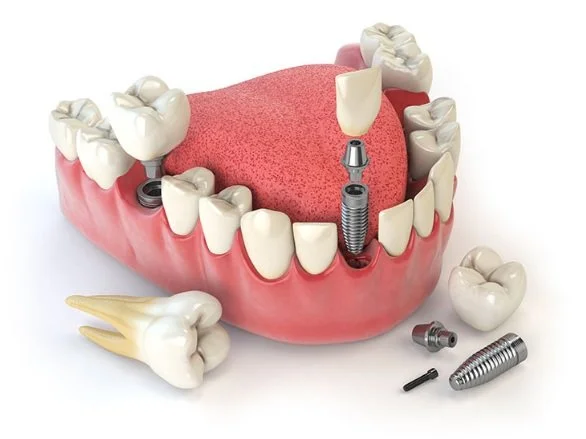
A dental implant is designed to replace the root portion of a missing tooth.
The implant is typically placed into the jawbone, where it can integrate with the surrounding bone. Once the implant has healed sufficiently, a connector called an abutment can support a dental crown or another restoration.
The result is a tooth replacement designed to look and function much like a natural tooth.
2. You Don't Have to Live With a Missing Tooth
Some people postpone replacing a missing tooth because it isn't causing pain.
But a missing tooth can affect your bite and the way you chew. Depending on its location and the surrounding teeth, neighbouring teeth may also move into the space.
Replacing a missing tooth can help restore function and maintain a more complete smile.
Your dentist can assess whether replacement is recommended in your particular situation.
3. Dental Implants Can Feel Very Natural
One of the major advantages of dental implants is that they are fixed in place rather than removable like conventional dentures.
Once the implant and restoration are fully integrated into your treatment, you can use the replacement tooth for everyday activities such as eating and speaking.
With appropriate planning, the crown can also be designed to closely match the surrounding teeth.
The goal is not simply to fill a gap—it is to create a comfortable, functional, natural-looking result.
4. The Treatment Usually Happens in Stages
Dental implant treatment isn't always a single appointment.
The process may involve:
A comprehensive dental examination
Dental imaging and treatment planning
Implant placement
A healing period
Placement of the abutment
Attachment of the final crown or restoration
The exact sequence depends on factors such as your oral health, bone condition, the location of the missing tooth, and the type of restoration being planned.
In some cases, additional procedures may be required before implant placement.
5. Bone Health Matters
A dental implant needs adequate bone support.
After a tooth is lost, the jawbone in that area can gradually change. If there isn't enough suitable bone for implant placement, your dentist may discuss options to improve the available support.
This can sometimes involve bone grafting or other procedures.
A detailed assessment, often including three-dimensional dental imaging, can help your dentist evaluate the area before treatment.
6. Dental Implants Require Good Oral Hygiene
A dental implant isn't maintenance-free.
You still need to brush regularly, clean between your teeth, and attend dental check-ups.
The tissues around implants can become inflamed or infected if plaque is allowed to accumulate. This makes ongoing oral hygiene and professional maintenance important for protecting your implant and surrounding tissues.
Your dental team can show you the best way to clean around your implant based on your individual restoration.
7. Dental Implants Can Be a Long-Term Tooth Replacement Option
With appropriate planning, good oral hygiene, regular dental care, and suitable patient factors, dental implants can provide a long-term solution for missing teeth.
However, no dental treatment lasts forever under every circumstance.
The lifespan of an implant restoration can be influenced by factors such as oral hygiene, bite forces, smoking, general health, the condition of the surrounding bone and gums, and regular maintenance.
Your dentist can explain what you can do to protect your investment in your smile.
Who Is a Good Candidate for Dental Implants?
Dental implants may be suitable for many adults with one or more missing teeth.
However, suitability isn't determined simply by having a missing tooth.
Your dentist will consider factors such as:
Overall oral health
Gum health
Available bone
Bite and jaw function
Existing dental conditions
Smoking habits
General health
Your expectations and treatment goals
If gum disease, significant decay, or another oral health problem is present, it may need to be addressed before implant treatment.
What Happens During Dental Implant Treatment?
Before treatment begins, your dentist will assess your mouth and develop a personalised treatment plan.
During implant placement, local anaesthetic is used to keep the area numb. The implant is then positioned in the jawbone.
Over time, the implant can integrate with the surrounding bone. Once the appropriate healing has occurred, the replacement tooth can be attached.
Your dentist will explain each stage before treatment so you know what to expect.
Do Dental Implants Hurt?
The procedure is performed with anaesthesia to keep you comfortable during treatment.
Afterwards, it is normal to experience some tenderness, swelling, or discomfort as the area heals. Your dental team will provide aftercare instructions and explain how to manage the recovery period.
If you are particularly nervous about dental treatment, ask your dentist about the comfort and sedation options available.
Dental Implants vs Dentures vs Bridges
Dental implants aren't the only way to replace missing teeth.
A dental bridge can replace a missing tooth by using neighbouring teeth to support the restoration.
Dentures can replace several missing teeth or a complete arch and can be removable.
Dental implants are placed into the jawbone and can support individual crowns, bridges, or implant-supported dentures.
The best option depends on your oral health, number of missing teeth, bone condition, lifestyle, preferences, and long-term goals.
Your dentist can explain the advantages and limitations of each approach.
How Long Does a Dental Implant Take?
There isn't one standard treatment timeline.
Some patients may complete treatment relatively quickly, while others require additional procedures and longer healing periods.
The process can depend on whether you need tooth extraction, bone grafting, gum treatment, or other preparatory procedures.
Your dentist can provide a more accurate timeline after assessing your individual situation.
What Happens After Getting a Dental Implant?
Once your implant restoration is completed, looking after it should become part of your normal oral hygiene routine.
Continue to:
Brush twice daily.
Clean between your teeth as recommended.
Attend regular dental examinations.
Follow your dentist's implant maintenance advice.
Avoid using your teeth to bite hard objects.
Contact your dentist if you notice pain, swelling, bleeding, or movement around the implant.
Early attention to problems can help prevent more serious complications.
The Bottom Line
A missing tooth doesn't have to mean living with a permanent gap.
Dental implants can provide a stable, natural-looking way to replace missing teeth, but successful treatment starts with proper assessment and planning.
If you're considering dental implants, speak with your dentist about your options. They can assess your teeth, gums, bone, and bite and help determine whether implants are appropriate for you.
Frequently Asked Questions
What is a dental implant?
A dental implant is a small fixture placed into the jawbone to replace the root portion of a missing tooth. It can support a crown, bridge, or implant-supported denture.
Are dental implants permanent?
Dental implants are designed as a long-term tooth replacement option, but their longevity varies between patients. Good oral hygiene, regular dental care, and proper maintenance are important.
Can you get a dental implant after losing a tooth?
Yes, many people can have an implant placed after tooth loss. Your dentist will assess the available bone, gum health, and other factors before recommending treatment.
Can dental implants replace multiple teeth?
Yes. Depending on your circumstances, implants can be used to support multiple individual crowns, an implant-supported bridge, or other implant-supported restorations.
Are dental implants better than dentures?
Neither option is automatically better for everyone. Dental implants and dentures have different benefits and limitations. Your dentist can help you determine which option best suits your oral health and needs.
How do I know if I'm suitable for dental implants?
A dental examination and appropriate imaging can help determine whether you have suitable bone and healthy surrounding tissues for implant treatment. Your dentist will also consider your overall circumstances and treatment goals.