Intro:
If you are missing a tooth—or several teeth—you have probably already spent hours searching online for solutions. You have seen the glossy ads, the "teeth in a day" promises, and the before-and-after photos that look almost too good to be true.
But here is what most websites will not tell you: dental implants are a serious medical procedure, and they are not the right choice for everyone. The decision to get implants is not just about whether they look good. It is about whether your body is ready for them, whether you are prepared for the journey, and whether you understand what life with implants actually looks like.
Let us cut through the marketing and give you the real answers.
The 95% Success Rate: What It Actually Means
You have probably read that dental implants have a success rate of around 95% even ten years after placement . That statistic is accurate—but it is often presented without context.
Here is what that number actually means: it applies to patients who have been carefully screened for candidacy, who have sufficient jawbone density, who do not smoke, and who maintain excellent oral hygiene after the procedure. It is not a guarantee. It is a statistical average for ideal candidates.
For patients with underlying health conditions, smokers, or those with significant bone loss, the success rate can be lower. This is not meant to scare you—it is meant to help you ask the right questions before you commit.
The Timeline: This Is Not a Quick Fix
One of the biggest surprises for patients is the time commitment. You cannot walk into a dental office and walk out with a permanent implant in a single visit—no matter what the ads say.
The process typically unfolds over several months :
Step 1: Assessment and Planning
Your dentist will take scans and X-rays to evaluate your bone density and overall oral health. This step determines whether you qualify for implants or whether you need preliminary procedures first .
Step 2: Preliminary Procedures (If Needed)
Some patients need a bone graft or sinus lift before implants can be placed . This adds time—often three to six months for healing—but it is essential for long-term success .
Step 3: Implant Placement
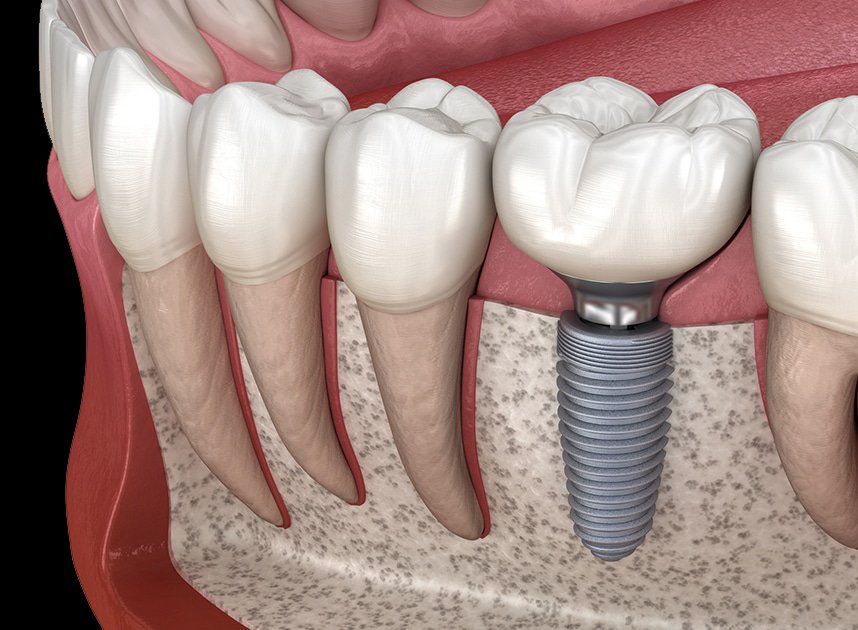
The titanium post is surgically placed into your jawbone. This is an outpatient procedure, usually performed under local anaesthetic.
Step 4: Osseointegration
This is the most critical phase. Over three to six months, the implant fuses with your jawbone in a process called osseointegration . You cannot rush this step. If the implant does not fully integrate, it will fail.
Step 5: Abutment and Crown Placement
Once healing is complete, an abutment is attached to the post, and your custom-made crown is fitted .
All up, the complete process can easily stretch to six months or more. For patients requiring bone grafts, it can take over a year .
What The Recovery Actually Feels Like
There is a difference between "recovery is manageable" and "recovery is painless." Most patients find the surgery itself less painful than they expected—but the recovery is where discomfort can set in .
Some patients report significant pain, swelling, and bruising in the days following surgery . You will need to adjust your diet to soft foods during the early healing phase, and you may be unable to wear temporary dentures for several weeks .
The good news? Most patients describe the end result as life-changing . Improved stability, confidence, and the ability to eat foods they had given up on make the recovery period worthwhile.
Are You Actually A Candidate? The Honest Answer
Not everyone is suitable for dental implants. The decision depends on several factors :
Health Conditions
Patients with poorly controlled diabetes, severe cardiovascular disease, autoimmune conditions, or those taking certain bone medications may not be good candidates .
Bone Density
Your jawbone must be thick enough to support the implant. If not, bone grafting may be an option—but it adds time, cost, and complexity.
Smoking
Smoking significantly increases the risk of implant failure and slows the healing process . If you smoke, your dentist will have an honest conversation with you about whether implants are worth the risk.
Oral Hygiene
Implants require meticulous care. If you struggle to maintain daily brushing and flossing, your risk of peri-implantitis (infection around the implant) rises dramatically .
Life With Implants: The Maintenance Reality
Here is something the glossy brochures do not emphasise: implants require consistent maintenance .
You cannot neglect them. Trapped food around implants can lead to infection, which jeopardises the implant itself. You will need an electric toothbrush, proper flossing techniques, and regular hygienist appointments . For some patients, fixed implant prostheses require even more demanding hygiene routines than natural teeth .
This is not a reason to avoid implants—it is a reason to understand the responsibility before you commit.
Implants vs. Dentures: A Quick Comparison
Patients frequently ask whether implants are "better" than dentures. The answer depends on your priorities.
Dental implants feel and function most like natural teeth. They prevent bone loss, do not rely on neighbouring teeth for support, and provide stability that allows you to eat a wider variety of foods . However, they involve surgery, take months to complete, and require sufficient bone density.
Traditional dentures are removable, less expensive upfront, and do not require surgery. However, they can shift during eating or speaking, may limit food choices, and do not prevent jawbone shrinkage over time .
Implant-supported dentures offer a middle ground—they use implants to stabilise a removable denture, providing better retention without a full fixed restoration .
There is no single "right" answer. The best choice depends on your oral health, lifestyle, budget, and long-term goals .
The Bottom Line
Dental implants are one of the most effective tooth replacement options available. They can restore function, confidence, and quality of life . But they are not a quick fix, and they are not right for everyone.
The first step is not booking surgery—it is booking a consultation. A thorough evaluation of your bone density, overall health, and oral hygiene habits will determine whether implants are a realistic option for you.
Ready to find out if dental implants are right for you? Visit https://painfreedentistsydney.com.au/ to book your consultation online. Call us at (02) 9558 8988 or email info@painfreedentistsydney.com.au to speak with our team.