Let's talk about a conversation that happens inside your body every single day—a conversation you cannot hear, but that your dentist is trained to listen for. It is the dialogue between your gums and your heart.
If you are someone who brushes off a little blood in the sink when you spit, or you figure that "pink in the sink" is just a sign you brushed too hard, I need you to pause. That tiny trace of blood is actually a distress signal. It is your mouth telling your immune system that there is an active, low-grade war happening right beneath your gumline.
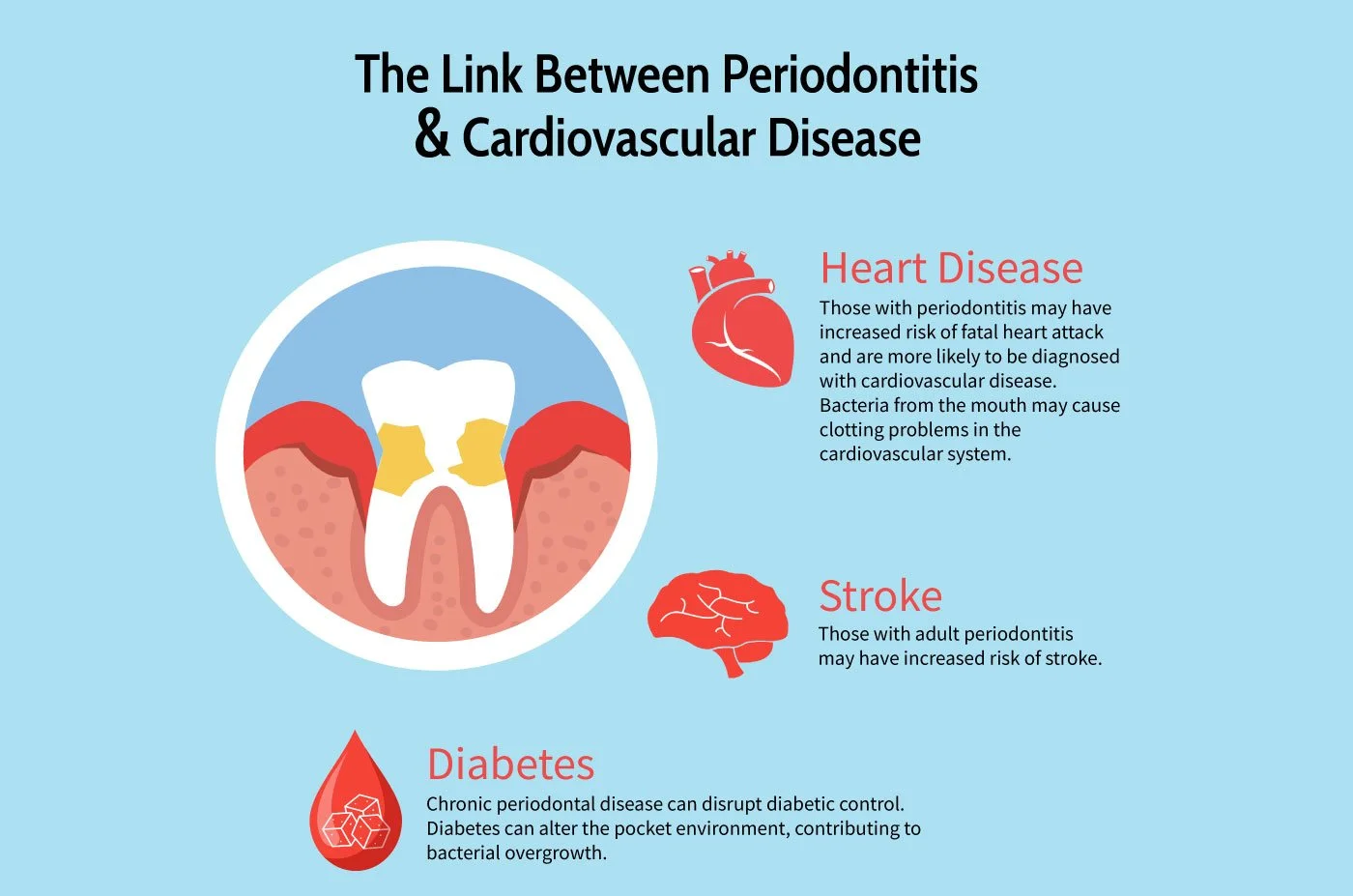
And here is the startling part: your immune system's response to that oral war doesn't stay contained in your mouth. It travels. It creates a ripple effect of inflammation throughout your entire vascular system. Over the last decade, major cardiology and dental journals have confirmed what many of us have long suspected: people with untreated periodontal (gum) disease have roughly two to three times the risk of suffering a heart attack, stroke, or other serious cardiovascular event.
So, why does this happen?
Think of gum disease not as a localized infection, but as a leaky faucet. When plaque builds up along the gumline, the bacteria within that plaque produce toxins. Your body sends white blood cells to fight these toxins, which causes the gums to become inflamed, swollen, and bleeding. This inflammation breaks down the tissue that holds your teeth in place, creating "pockets."
These pockets are essentially open wounds. Every time you chew or brush, bacteria from these pockets are pushed directly into your bloodstream. This bacteria carries a specific protein that causes your blood platelets to clump together. To protect you, your liver responds by producing more C-reactive protein (CRP), which is a marker for inflammation. Over time, this elevated CRP damages the inner lining of your arteries, making them stiffer and narrower—the perfect breeding ground for blood clots.
But here is the good news that often gets lost in the scary headlines: this connection works both ways. Just as gum disease can harm your heart, taking care of your gums can significantly lower your systemic inflammation levels. Studies have shown that a deep cleaning (scaling and root planing) doesn't just stop the bleeding in your mouth; it can actually lower your blood pressure and improve the function of your blood vessels within months.
Your dentist isn't looking at your gums just to save your teeth. We are looking at your gums to help save your life.
Actionable Takeaway:
If you have a family history of heart disease, please don't neglect your six-month cleanings. And if your gums bleed regularly, don't buy a "softer" toothbrush and hope it goes away. That bleeding is your earliest warning system. We can stop the inflammation cycle right here, right now, before it ever reaches your arteries.
Ready to take control of your gum health? Visit our website at https://painfreedentistsydney.com.au/ to book your comprehensive gum evaluation online. You can also call us at (02) 9558 8988 or email us at info@painfreedentistsydney.com.au. Your heart will thank you.