
Imagine walking into your dentist's office for a routine check-up, expecting the usual small talk about flossing, and instead, your dentist leans in and says, "I think we need to check your blood sugar levels."
It sounds like a scene from a sci-fi movie, but it is happening in dental offices across the world more and more frequently. And it is not because dentists are trying to overstep their bounds. It is because your mouth is a remarkably transparent mirror of your metabolic health—and right now, your saliva is telling a story your blood is about to confirm.
Type 2 diabetes is often called a "silent killer" because people can live with it for years without experiencing obvious symptoms. However, silence doesn't exist inside your mouth. Diabetic changes show up in the gums long before they show up on a glucometer.
Here is what happens: Diabetes essentially thickens your blood vessels. It reduces the flow of oxygen and nutrients to your tissues and impairs your body's ability to clear away infections. Because of that reduced blood flow, the mouth loses its natural ability to fight off harmful bacteria. This means that a tiny speck of plaque that a healthy person could brush away with no issue becomes a catastrophic event for a pre-diabetic. That plaque invades the gums, the infection sets in, and the body's healing response is significantly delayed.
This is why we see a classic, unmistakable hallmark of undiagnosed diabetes in the dental chair: severe, rapid gum disease that seems disproportionate to the amount of plaque on the teeth. Patients often tell me, "I brush twice a day, but my gums are swollen and painful anyway." When I hear that, I listen closely.
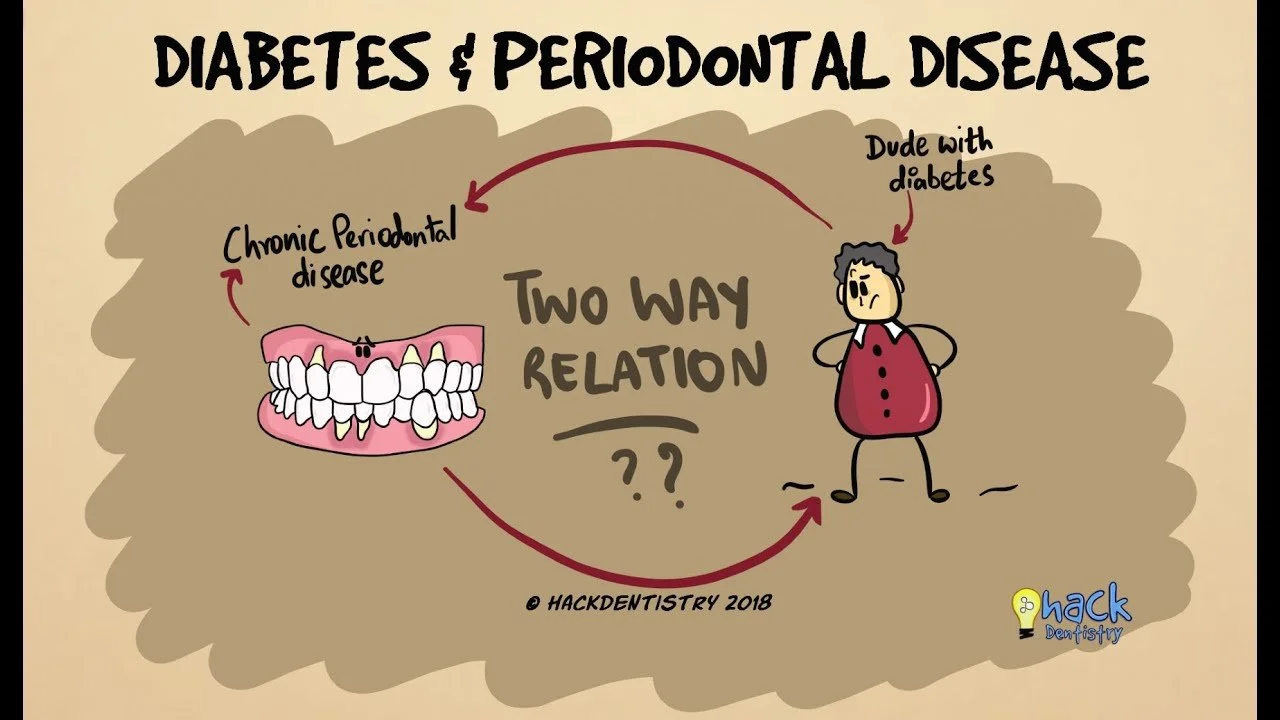
But the connection is a two-way street. A recent analysis of multiple studies found that people with diabetes are about 86% more likely to have gum disease than people without it. Conversely, treating that severe gum disease has been proven to help lower A1C (blood sugar) levels by about 0.5% to 1% on average. To put that in perspective, that is often the same reduction doctors are trying to achieve by prescribing a new medication.
We aren't trying to replace your physician. We are trying to be your partner. Your mouth is the most accessible part of your body, and it is revealing clues about your glucose tolerance every single day. That is why you'll now see questions about family history of diabetes on your dental intake forms, and why our hygienists are trained to look for signs of rapid bone loss around the molars.
Actionable Takeaway:
If your gums are consistently swollen, tender, or bleeding despite good brushing habits, do not dismiss it as "bad genes" or "sensitive gums." Ask your dentist to evaluate your gum pockets thoroughly, and ask your doctor for a fasting glucose or A1C test. Catching insulin resistance early means you can often reverse it with lifestyle changes—before it ever becomes full-blown diabetes.
Concerned about your gum health? Book your appointment today at https://painfreedentistsydney.com.au/ and let us assess your oral health. Call us at (02) 9558 8988 or email info@painfreedentistsydney.com.au to speak with our friendly team.