
If you've been told you need a root canal, you might be feeling anxious. Few dental procedures carry as much anxiety and misinformation as root canal treatment. But here's the truth—modern root canal therapy is a straightforward, virtually painless procedure that can save your natural tooth and relieve severe pain. Let's separate fact from fiction and help you understand what this common treatment actually involves.
What Is a Root Canal?
A root canal is a dental procedure designed to save a tooth that has become severely infected or damaged. Beneath the hard outer layers of your tooth—the enamel and dentin—lies a soft inner tissue called the pulp. This pulp contains nerves, blood vessels, and connective tissue that help your tooth grow and develop during childhood.
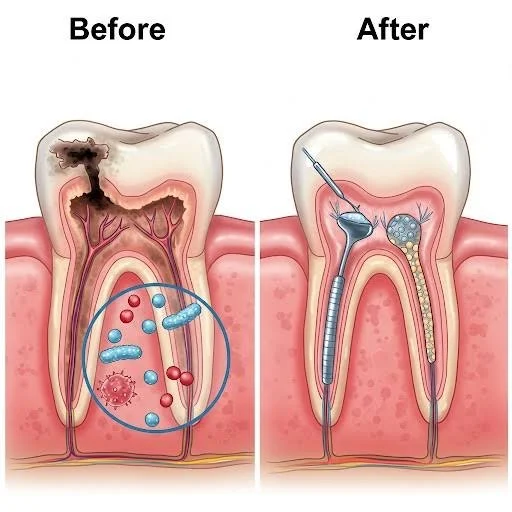
When the pulp becomes infected or inflamed due to deep decay, repeated dental procedures, cracks, chips, or trauma, it needs to be removed to save the tooth. A root canal involves removing this damaged pulp, cleaning and disinfecting the inside of the tooth, and sealing it to prevent further infection.
The term "root canal" actually refers to the natural cavity within the centre of your tooth. The procedure is properly called endodontic treatment, but most people simply call it a root canal.
Signs You Might Need a Root Canal
How do you know if you might need a root canal? Common symptoms include:
Persistent pain – This may be constant or come and go. The pain might be dull, aching, or sharp, and it often worsens when you bite down or apply pressure.
Sensitivity to hot and cold – If your tooth hurts when you drink hot coffee or eat ice cream, and the pain lingers long after the temperature stimulus is removed, this can indicate nerve damage.
Swollen or tender gums – Swelling around the affected tooth, sometimes with a small bump or pimple on the gum, can signal infection.
Tooth discolouration – A tooth that becomes dark or greyish may indicate nerve death.
Cracked or chipped tooth – Damage that exposes the pulp can allow bacteria to enter and cause infection.
Pain when eating – Discomfort when chewing or applying pressure can be a sign.
Prolonged sensitivity – If hot or cold sensitivity lasts more than a few seconds, the pulp may be inflamed or dying.
It's important to note that sometimes there are no symptoms at all, which is why regular dental check-ups are essential.
What Happens During a Root Canal?
Understanding the process can help ease your anxiety. A root canal is typically completed in one or two appointments, depending on the complexity of your case.
Step 1: Anaesthesia and Preparation
Your dentist or endodontist begins by numbing the area with local anaesthetic. This ensures you feel no pain during the procedure. If you have dental anxiety, sedation options may also be available to help you relax.
A rubber dam is placed around the tooth to isolate it and keep it dry and free from saliva during treatment.
Step 2: Access and Cleaning
A small opening is made in the top of your tooth to access the pulp chamber and root canals. Using tiny, specialised instruments called files, the dentist carefully removes the damaged pulp and cleans the inside of the tooth. The canals are shaped and disinfected to eliminate any bacteria.
Step 3: Filling and Sealing
Once the canals are thoroughly cleaned and dried, they are filled with a biocompatible material called gutta-percha. This rubber-like material seals the canals to prevent bacteria from re-entering. The access opening is then temporarily sealed.
Step 4: Restoration
After your root canal treatment is complete, your tooth will need a final restoration—usually a crown or filling—to protect it and restore full function. This is typically done in a separate appointment. A crown is often recommended because the tooth becomes more brittle after the pulp is removed and needs the extra strength and protection.
Is a Root Canal Painful?
This is the most common question patients ask, and the answer might surprise you. Root canal treatment itself is not painful. The procedure is performed under anaesthesia, so you should feel no pain during treatment. In fact, many patients compare the experience to having a standard filling.
The pain associated with root canals comes from the infection and inflammation that makes the treatment necessary. A root canal actually relieves pain by removing the source of the problem.
After the procedure, you may experience some mild tenderness or sensitivity for a few days, particularly if you had significant infection before treatment. This can usually be managed with over-the-counter pain relievers. Most patients return to normal activities the next day.
Root Canal vs. Tooth Extraction
When faced with a severely damaged or infected tooth, you have two main options: root canal treatment or extraction. Here's why saving your natural tooth is almost always the better choice.
Root canal treatment preserves your natural tooth, maintaining your ability to chew and bite normally. It also preserves the natural alignment of surrounding teeth, preventing them from shifting out of position. The procedure is also more cost-effective in the long run, as replacing an extracted tooth with an implant or bridge can be significantly more expensive.
Tooth extraction, by contrast, can lead to bone loss in the jaw, misalignment of adjacent teeth, and challenges with eating and speaking. While dental implants are excellent replacements, nothing functions quite like your natural tooth.
How Long Does a Root Canal Take?
Most root canal treatments take between one and two hours to complete, depending on the complexity of your tooth. Molars typically take longer than front teeth because they have more canals to treat. Many root canals are completed in a single visit, but some cases may require two appointments, particularly if there is significant infection or complex anatomy.
Recovery and Aftercare
Recovery from a root canal is usually straightforward. Here are some tips to ensure a smooth healing process:
Manage discomfort – Over-the-counter pain relievers like ibuprofen or paracetamol can help with mild tenderness. Your dentist may prescribe medication if needed.
Eat carefully – Stick to soft foods and avoid chewing on the treated side until your final restoration is placed.
Keep it clean – Continue brushing and flossing as normal, being gentle around the treated area.
Complete your restoration – Return for your crown or filling as scheduled. Delaying this step can leave your tooth vulnerable to fracture or re-infection.
Attend follow-ups – Regular check-ups allow your dentist to monitor the healing and ensure everything is progressing well.
What Happens if You Don't Get a Root Canal?
Delaying or avoiding root canal treatment can have serious consequences. An untreated infected tooth can lead to:
Severe pain that may worsen over time
Abscess formation, which is a pocket of pus that can cause swelling and further infection
Spread of infection to surrounding tissues, the jawbone, or even other parts of the body
Loss of the tooth, which may require more complex and expensive replacement options
Early intervention is always better. The longer you wait, the more challenging and costly treatment can become.
Root Canal Myths Debunked
Myth: Root canals cause illness
This belief stems from outdated and thoroughly debunked research from nearly a century ago. No credible scientific evidence supports any link between root canals and systemic disease.
Myth: Root canals are painful
As discussed, the procedure itself is performed under anaesthesia and is not painful. Modern techniques have made root canal treatment comfortable and efficient.
Myth: It's better to just pull the tooth
Preserving your natural tooth should always be the priority. Extraction leads to a cascade of issues including bone loss, shifting teeth, and the need for replacement.
Myth: Root canals require many appointments
Most root canals are completed in one or two visits.
Myth: After a root canal, the tooth is dead
While the nerve tissue is removed, the tooth remains functional and can still be used for biting and chewing.
Choosing the Right Provider
When considering root canal treatment, you'll typically see either your general dentist or an endodontist. Endodontists are specialists who focus exclusively on the diagnosis and treatment of tooth pulp and root conditions. They have advanced training and often have access to specialised equipment like dental microscopes for precision treatment.
Your dentist can help determine which provider is best suited for your specific needs.
Frequently Asked Questions
How long does a root canal last?
With proper care and restoration, a root canal-treated tooth can last a lifetime.
Can I drive after a root canal?
Yes, unless you've had sedation, you can drive yourself home after your appointment.
Will I need a crown after a root canal?
Most back teeth require crowns for protection. Front teeth may only need a filling, depending on the case.
What if my root canal fails?
Treatment failure is uncommon but can happen. Retreatment or apicoectomy (surgical removal of the root tip) may be recommended in some cases.
Conclusion
Root canal treatment is a safe, effective, and routine procedure that saves millions of teeth every year. If you're experiencing tooth pain or have been told you need a root canal, don't delay seeking treatment. Modern dentistry has made this procedure comfortable and highly successful, allowing you to preserve your natural smile.
If you have concerns or questions about root canal treatment, speak with your dentist. They can provide personalised information based on your specific situation.
Disclaimer: This article is for informational purposes only and does not constitute medical advice. Always consult with a qualified healthcare provider for diagnosis and treatment of any health condition.