If your jaw feels tight, your teeth are constantly touching, or you wake up with sore facial muscles and headaches, your jaw may be doing more work than you realise.
Temporomandibular disorders (TMD) can involve the jaw muscles, temporomandibular joints, surrounding tissues, or a combination of these. Symptoms can include jaw pain, muscle tension, difficulty opening the mouth, clicking or other jaw noises, facial discomfort, headaches and problems associated with clenching or grinding.
One treatment that has attracted considerable attention is Botox for TMJ, also known as TMJ Botox or masseter Botox.
But what does it actually do, and is it suitable for everyone?
What is TMJ Botox?
Botulinum toxin, commonly known as Botox, is a medication that temporarily reduces muscle activity.
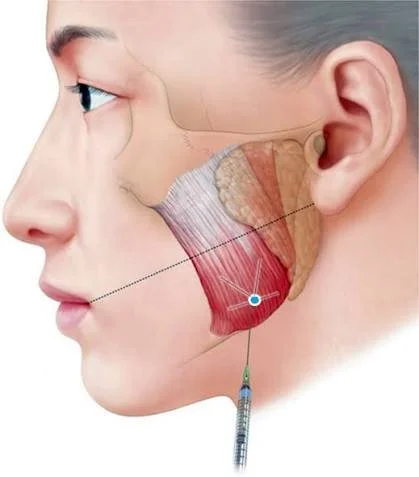
When used for certain patients with muscle-related TMD, injections may be placed into specific chewing muscles, such as the masseter and temporalis muscles.
The goal is not simply to "freeze" the jaw. Rather, reducing excessive muscle activity may help decrease the force generated by overactive muscles and may reduce muscle-related discomfort in selected patients.
Research into Botox for TMD is continuing. A 2024 systematic review and meta-analysis of randomised controlled trials found that the evidence was not strong enough to demonstrate that Botox was consistently better than placebo for pain, jaw opening, bruxism or maximum bite force.
A more recent 2026 systematic review similarly concluded that Botox should not be considered a routine first-line treatment for myogenous TMD, although it may have a role in selected cases where conservative treatment has not provided adequate relief.
How can Botox help an overactive jaw?
The chewing muscles can become overactive for many reasons, including jaw clenching, teeth grinding, stress-related muscle activity and other contributing factors.
When these muscles remain active for long periods, they can become fatigued and uncomfortable.
TMJ Botox may temporarily reduce muscle activity. Depending on the individual patient, this may help with:
Jaw muscle tension
Masseter muscle soreness
Facial muscle fatigue
Clenching-related discomfort
Muscle-related headaches
Excessive chewing-muscle activity
Symptoms associated with myofascial TMD
However, Botox does not correct every cause of TMJ pain.
Masseter Botox vs Temporalis Botox
The masseter muscle is one of the major muscles responsible for closing the jaw. It is particularly active during chewing and clenching.
The temporalis muscle is another important chewing muscle and can also become overactive in people who clench or grind their teeth.
For this reason, a TMJ Botox treatment plan may involve the masseter, temporalis, or both, depending on the patient's symptoms and clinical findings.
Is TMJ Botox right for you?
This is where proper assessment becomes important.
Not all jaw pain is caused by muscle overactivity.
TMD can involve different structures and different mechanisms. A patient with predominantly muscle-related symptoms may require a very different approach from someone with an intra-articular joint problem.
At Pain Free Dentist Sydney, we assess the patient's jaw, muscles, bite, dental condition and symptoms before considering whether Botox is appropriate.
Depending on the individual situation, treatment may involve other approaches such as conservative care, exercises, splint therapy, physiotherapy or other dental treatment.
How long does TMJ Botox last?
Botulinum toxin has a temporary effect. Recent research suggests clinical effects in studies of myogenous TMD have generally been reported over several weeks to a few months, although the duration can vary considerably between patients.
Factors such as the muscles treated, individual muscle activity, dosage and the underlying condition can influence the result.
The important thing: Treat the patient, not just the muscle
TMJ Botox can be an interesting treatment option, but it should not automatically be considered the answer to every case of jaw pain.
A proper diagnosis and individualised treatment plan are essential.
If you experience jaw pain, jaw tension, teeth grinding, clenching, masseter soreness, facial fatigue or headaches, an assessment can help determine whether your symptoms may be muscle-related and whether TMJ Botox is an appropriate option.
TMJ Botox in Sydney Inner West
At Pain Free Dentist Sydney, we provide assessment and treatment for patients experiencing TMJ and jaw-related concerns in the Sydney Inner West, including Dulwich Hill and Hurlstone Park.
Our approach is to understand the factors contributing to your symptoms before recommending treatment.
📞 02 9558 8988
📧 info@painfreedentistsydney.com.au
🌐 painfreedentistsydney.com.au
Frequently Asked Questions
Does Botox cure TMJ?
No. Botox does not cure every type of TMD. Its potential role depends on the underlying cause and whether muscle overactivity is contributing to the symptoms.
Does TMJ Botox help teeth grinding?
It may reduce activity of the chewing muscles, which can be relevant in some patients who clench or grind. However, it does not necessarily eliminate the underlying causes of bruxism.
What muscles are treated with TMJ Botox?
The masseter and temporalis muscles are commonly considered when muscle overactivity is part of the clinical picture.
Is Botox suitable for everyone with jaw pain?
No. A clinical assessment is important because jaw pain can have many different causes.
Can Botox replace a night splint?
Not necessarily. Botox and splint therapy work differently and may have different roles depending on the patient's diagnosis and treatment plan.