Introduction
Wisdom teeth, or third molars, are the last teeth to develop and erupt, typically appearing between the ages of 17 and 25. They are evolutionary leftovers from a time when our ancestors had larger jaws and needed extra teeth to chew tough, raw foods. Today, our jaws are smaller, and many people simply do not have enough room for these late-arriving molars. As a result, wisdom teeth often become impacted, meaning they are trapped beneath the gum tissue or bone, or they erupt only partially, creating a host of potential problems. The question of whether to remove wisdom teeth is one of the most common dilemmas in dentistry, and the answer depends on a variety of factors, including the position of the teeth, your symptoms, and your overall oral health.
What Are Wisdom Teeth and Why Do They Cause Problems?
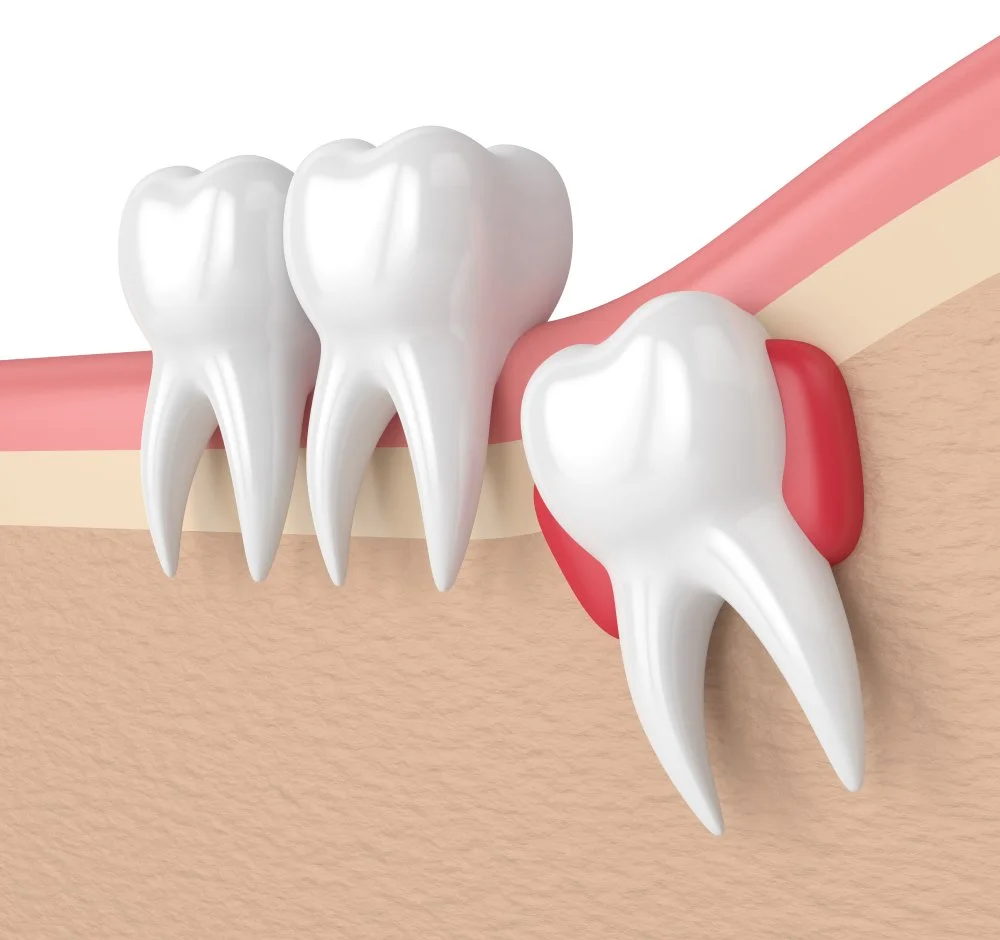
Wisdom teeth are the four teeth located at the very back of your mouth, two on the top and two on the bottom. The problem arises because the modern human jaw is typically too small to accommodate these extra teeth. When there is insufficient space, the wisdom teeth may grow at an angle, leaning into the adjacent molars. They may grow horizontally, sideways, or even backwards. They may remain completely trapped in the jawbone, or they may partially break through the gum tissue.
Partially erupted wisdom teeth are particularly problematic because the opening in the gum tissue provides a direct pathway for bacteria to enter around the tooth. This can lead to a painful condition called pericoronitis, an infection and inflammation of the gum tissue surrounding the tooth. The area can become swollen, painful, and difficult to clean, leading to repeated infections and discomfort. Even fully erupted wisdom teeth can be difficult to clean properly because of their location at the back of the mouth, making them more susceptible to cavities and gum disease.
Signs That Your Wisdom Teeth Need to Be Removed
There are several clear signs that your wisdom teeth are causing problems and should be extracted. The most obvious is pain. A dull, throbbing ache in the back of your jaw that comes and goes is a common sign of impacted or infected wisdom teeth. The pain may radiate to your ear, your temple, or your neck. Swollen, tender, or bleeding gums around the wisdom tooth are also red flags. If you have difficulty opening your mouth fully or chewing food on the affected side, it may indicate an infection.
Another sign is repeated infections. If you have had a sore, swollen gum in the back of your mouth that clears up with antibiotics but keeps returning, it is a sign that the wisdom tooth is not cleanable and is harboring bacteria. Damage to adjacent teeth is another reason for removal. An impacted wisdom tooth can push against the second molar, causing its root to be eroded or making it difficult to clean between the teeth, leading to decay in that molar. Cysts can also form around impacted wisdom teeth, damaging the jawbone and adjacent tooth roots.
When Extraction is Not Necessary
Not all wisdom teeth need to be removed. If your wisdom teeth are fully erupted, are straight, have no signs of decay, and are easy to clean, they can be left in place. Many people live their entire lives with healthy, functional wisdom teeth. If you are considering keeping your wisdom teeth, it is important to maintain excellent oral hygiene and have your dentist monitor them closely during your regular checkups. X-rays will show whether they are developing any problems.
As we age, the roots of wisdom teeth become longer and more curved, and the bone becomes denser. This makes extraction more difficult and increases the risk of complications in older patients. For this reason, many dentists recommend removing wisdom teeth in the late teens or early twenties, when the roots are only about two-thirds formed and the bone is more flexible. The recovery is generally faster and less painful at this age compared to when you are in your thirties or forties.
The Extraction Procedure
The extraction of wisdom teeth is a common outpatient procedure. Depending on the complexity of the case, it may be performed by a general dentist or an oral surgeon. If the teeth are fully erupted, they can often be removed in the dental chair with local anesthesia. For impacted teeth, the surgeon may recommend IV sedation for your comfort, especially if multiple teeth are being removed.
The surgeon will make an incision in the gum tissue to expose the tooth and bone. They may need to remove some bone to access the tooth. The tooth may be cut into smaller pieces for easier removal. Once the tooth is out, the surgical site is cleaned of any debris, and the gum tissue is sutured closed. The entire procedure usually takes about an hour for all four wisdom teeth.
Recovery and Post-Operative Care
The recovery period typically lasts three to five days. During this time, you will need to rest and take it easy. Pain, swelling, and some bleeding are normal. Your surgeon will provide you with pain medication, but many patients find that over-the-counter medications like ibuprofen are sufficient.
You should apply an ice pack to your jaw for the first 24 hours to reduce swelling. After the first day, you may switch to warm compresses to promote healing. You will need to stick to a soft-food diet—things like yogurt, soup, applesauce, and smoothies—for the first few days. Do not use a straw, as the suction can dislodge the blood clot from the extraction site, causing a painful condition called dry socket. Do not smoke or spit forcefully for at least a week. Avoid strenuous physical activity for a few days.
Dry Socket: What It Is and How to Avoid It
Dry socket is the most common complication after wisdom tooth extraction. It occurs when the blood clot that forms in the socket is dislodged or dissolves before the wound has healed. This exposes the underlying bone and nerves to air, food, and fluids, causing severe, throbbing pain that can radiate to your ear and eye. Dry socket is extremely painful and requires treatment by your dentist or surgeon, who will place a medicated dressing in the socket to soothe the pain.
To avoid dry socket, follow your surgeon's instructions carefully. Do not smoke or use tobacco products for at least a week, as smoking impairs blood flow and increases the risk of dry socket. Do not drink through a straw for at least a week. Avoid spitting forcefully. Gently clean the area with the prescribed mouthwash, but do not swish vigorously. If you experience severe pain after a few days of improvement, contact your oral surgeon immediately.
Conclusion
The decision to remove your wisdom teeth is one that should be made in consultation with your dentist or oral surgeon. If your wisdom teeth are causing pain, infection, or damage to adjacent teeth, extraction is usually the best course of action. If they are healthy and properly positioned, they can be left alone with regular monitoring. The timing of extraction is also important; younger patients typically have an easier recovery. Do not wait until your wisdom teeth become a painful emergency. A proactive approach to managing your wisdom teeth can save you a great deal of discomfort and prevent future complications.
Book online at https://painfreedentistsydney.com.au/
Call us at 9558 8988
Email us at info@painfreedentistsydney.com.au