Dental Sedation: Types, Benefits, Safety & What to Expect

What Is Dental Sedation?

Dental sedation, often called sleep dentistry, is a technique used to help patients feel calm and relaxed during dental procedures. It is commonly used for people who experience anxiety, have a strong gag reflex, or require complex dental treatments.

Sedation does not always mean full unconsciousness—most forms keep you awake but deeply relaxed.

Why Is Dental Sedation Used?

Sedation dentistry is recommended for patients who:

  • Experience dental anxiety or phobia

  • Need lengthy or complex procedures

  • Have a sensitive gag reflex

  • Struggle to sit still in the dental chair

  • Require multiple treatments in one visit

  • Have had traumatic dental experiences in the past

It helps improve comfort and allows dentists to complete treatment more efficiently.

Types of Dental Sedation

1. Nitrous Oxide (Laughing Gas)

Nitrous Oxide is a mild sedative inhaled through a mask.

Effects:

  • Calming and relaxing

  • Wears off quickly

  • Patient remains fully conscious

Often used for mild anxiety and shorter procedures.

2. Oral Sedation

Oral sedatives are taken in tablet form before treatment.

Effects:

  • Moderate relaxation

  • Drowsiness

  • Reduced awareness of procedure

Patients remain awake but may not remember much of the appointment.

3. IV Sedation

Intravenous sedation is administered directly into the bloodstream.

Midazolam is often used for deeper sedation.

Effects:

  • Deep relaxation

  • Possible partial memory loss of procedure

  • Patient remains conscious but very drowsy

Commonly used for more complex dental work.

4. General Anaesthesia

In some cases, patients are placed into a fully unconscious state.

This is usually reserved for:

  • Major oral surgery

  • Severe dental phobia

  • Special medical cases

It is performed in a hospital or specialised facility.

Benefits of Dental Sedation

Reduces Anxiety

Helps patients feel calm and comfortable during treatment.

Minimises Pain Perception

Sedation reduces sensitivity and awareness of procedures.

Enables Complex Treatment

Dentists can complete multiple procedures in one visit.

Improves Patient Experience

Especially helpful for patients with dental fear or trauma.

Reduces Gag Reflex

Makes treatment easier for sensitive patients.

Is Dental Sedation Safe?

Yes, dental sedation is generally safe when administered by trained professionals.

Before treatment, your dentist will:

  • Review your medical history

  • Assess medications and health conditions

  • Monitor vital signs during the procedure

Safety protocols are strictly followed to minimise risk.

What Happens During Dental Sedation?

Before Treatment

  • Consultation and health assessment

  • Instructions (fasting may be required for IV sedation)

  • Explanation of sedation type

During Treatment

  • Sedation is administered

  • Patient becomes relaxed and calm

  • Dentist performs procedure while monitoring patient

After Treatment

  • Recovery time varies depending on sedation type

  • Patients may need someone to drive them home

  • Mild grogginess is common

Side Effects of Dental Sedation

Most side effects are mild and temporary:

  • Drowsiness

  • Dry mouth

  • Mild headache

  • Nausea (rare)

  • Temporary memory gaps

Serious complications are rare when properly administered.

Who Is a Good Candidate for Dental Sedation?

You may benefit if you:

  • Have severe dental anxiety

  • Require extensive dental work

  • Have difficulty sitting still

  • Experience strong gag reflex

  • Have low pain tolerance

Your dentist will determine the safest option for you.

Dental Sedation vs Local Anaesthetic

  • Local anaesthetic: numbs a specific area

  • Sedation: relaxes the mind and reduces anxiety

  • Often used together for maximum comfort

Frequently Asked Questions

Will I be asleep during dental sedation?

Not always. Most sedation methods keep you awake but deeply relaxed.

How long does dental sedation last?

It depends on the type—from minutes (nitrous oxide) to several hours (IV sedation recovery).

Can I drive after sedation?

No, you will need someone to drive you home after most sedation types.

Do I remember the procedure?

Some sedation methods may cause partial or full memory loss of the treatment.

Conclusion

Dental sedation is a safe and effective way to make dental treatment more comfortable for anxious patients or complex procedures. With several options available, your dentist can tailor sedation to your needs, ensuring a stress-free experience.

Dental Implants: Complete Guide to Benefits, Procedure, Cost & Recovery

What Are Dental Implants?

Dental implants are a long-term solution for replacing missing teeth. They act as artificial tooth roots that support replacement teeth such as crowns, bridges, or full-arch prosthetics.

Made from biocompatible titanium, implants fuse with the jawbone to create a strong and stable foundation for natural-looking teeth.

They are widely considered the most durable and functional tooth replacement option available today.

How Do Dental Implants Work?

A dental implant replaces both the root and the visible part of a missing tooth.

The system has three main parts:

  • Implant post: titanium screw placed into the jawbone

  • Abutment: connector between implant and crown

  • Crown: custom-made artificial tooth

Over time, the implant integrates with the bone in a process called osseointegration, creating a stable and permanent base.

Types of Dental Implants

Single Dental Implants

Used to replace one missing tooth without affecting surrounding teeth.

Implant-Supported Bridges

Used when multiple adjacent teeth are missing.

Full Arch Implants

Full Arch Tooth Loss can be treated using solutions such as All-on-4 or All-on-6 implant systems.

Benefits of Dental Implants

Natural Look and Feel

Implants are designed to look and function like real teeth.

Long-Term Solution

With proper care, implants can last decades.

Bone Preservation

Implants stimulate the jawbone and help prevent bone loss.

Improved Chewing Function

Patients can eat a wide variety of foods comfortably.

Protects Adjacent Teeth

No need to grind down healthy teeth as with bridges.

High Success Rate

Dental implants have one of the highest success rates in dentistry when placed correctly.

Who Is a Good Candidate for Dental Implants?

You may be suitable if you:

  • Have one or more missing teeth

  • Have healthy gums

  • Have adequate jawbone density

  • Are in good general health

  • Do not smoke heavily or are willing to quit

A dental assessment is required to confirm suitability.

The Dental Implant Procedure

1. Consultation & Planning

  • Dental examination

  • X-rays or 3D CBCT scans

  • Treatment planning

2. Tooth Removal (If Needed)

Any failing or damaged teeth are removed before implant placement.

3. Implant Placement

A titanium post is surgically placed into the jawbone.

4. Healing Phase

Over 3–6 months, the implant fuses with the bone.

5. Crown Placement

A custom crown is attached to restore full function and appearance.

Recovery After Dental Implants

Most patients experience mild discomfort for a few days.

Recovery tips:

  • Eat soft foods initially

  • Maintain good oral hygiene

  • Avoid smoking

  • Follow post-operative instructions

  • Attend follow-up appointments

Healing time varies depending on the complexity of treatment.

How Long Do Dental Implants Last?

  • Implant posts can last 20+ years or more

  • Crowns may need replacement after 10–15 years

  • Longevity depends on oral hygiene and lifestyle factors

Are Dental Implants Painful?

The procedure is typically performed under local anaesthetic or sedation. Most patients report that discomfort is less than expected and manageable with standard pain relief.

Dental Implants vs Other Options

Implants vs Dental Bridges

  • Implants do not damage adjacent teeth

  • Bridges may need replacement sooner

Implants vs Dentures

  • Implants are fixed and stable

  • Dentures are removable and may slip

Risks and Complications

While highly successful, potential risks include:

  • Infection

  • Implant failure

  • Nerve irritation (rare)

  • Sinus complications (upper jaw cases)

Proper planning and experienced clinicians reduce these risks significantly.

Frequently Asked Questions

How much do dental implants cost?

Costs vary depending on complexity, location, and number of implants required.

Can smokers get dental implants?

Yes, but smoking increases the risk of implant failure and delayed healing.

How soon can I eat after implants?

Soft foods are recommended immediately after surgery, with gradual return to normal diet.

Do implants look natural?

Yes, modern crowns are designed to closely match natural teeth.

Conclusion

Dental implants are one of the most effective and long-lasting solutions for replacing missing teeth. They restore function, appearance, and confidence while helping preserve jawbone health.

A professional consultation is essential to determine the best implant option for your individual needs.

Gum Disease: Causes, Symptoms, Treatment & Prevention

What Is Gum Disease?

Gum disease is a common but serious oral health condition that affects the gums and supporting structures of the teeth. It begins with mild inflammation and can progress to severe infection, potentially leading to tooth loss if left untreated.

The early stage of gum disease is called gingivitis, while the advanced stage is known as periodontal disease.

Gingivitis is reversible with proper oral care, while more advanced disease may require professional treatment.

What Causes Gum Disease?

Gum disease is primarily caused by plaque buildup — a sticky film of bacteria that forms on teeth.

Common contributing factors include:

  • Poor oral hygiene

  • Smoking and tobacco use

  • Diabetes and systemic health conditions

  • Hormonal changes (pregnancy, menopause)

  • Genetics

  • Certain medications

  • Dry mouth (reduced saliva flow)

If plaque is not removed regularly, it hardens into tartar, which can only be removed by a dental professional.

Stages of Gum Disease

1. Gingivitis (Early Stage)

At this stage, gums become inflamed due to plaque buildup.

Symptoms include:

  • Red or swollen gums

  • Bleeding when brushing or flossing

  • Mild gum sensitivity

Good oral hygiene and professional cleaning can often reverse this stage.

2. Periodontitis (Advanced Stage)

If untreated, gingivitis can progress into more serious infection.

Periodontal Disease involves destruction of gum tissue and jawbone.

Symptoms include:

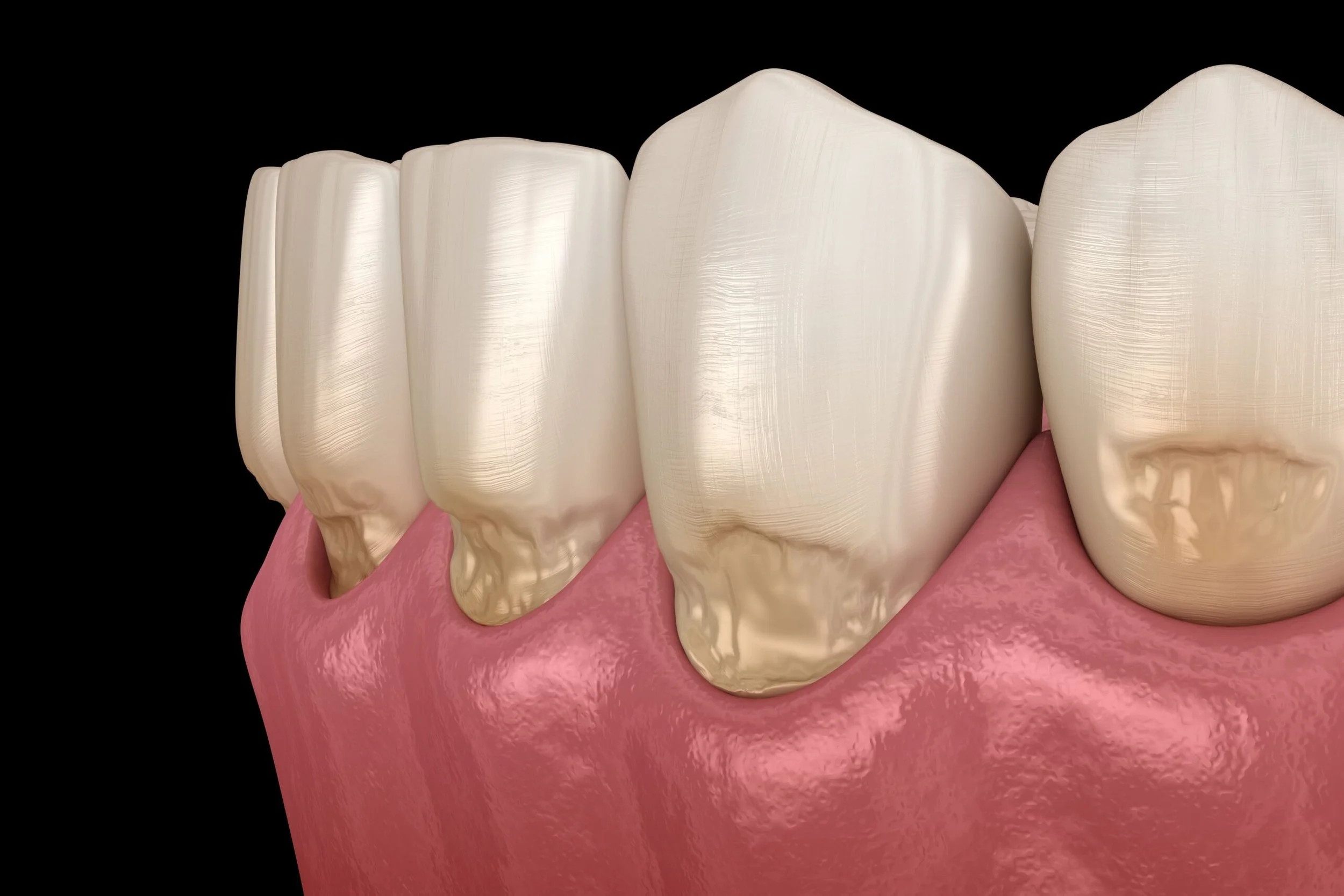
  • Receding gums

  • Loose teeth

  • Persistent bad breath

  • Gum pockets forming around teeth

  • Pain when chewing

This stage requires professional dental treatment to prevent tooth loss.

Symptoms of Gum Disease

Early detection is important. Common signs include:

  • Bleeding gums

  • Swollen or tender gums

  • Bad breath (halitosis)

  • Gum recession

  • Loose or shifting teeth

  • Pain while chewing

  • Changes in bite alignment

Many patients do not experience pain in early stages, which is why regular dental check-ups are essential.

How Gum Disease Is Treated

Treatment depends on severity.

Professional Cleaning

Removal of plaque and tartar above and below the gum line.

Deep Cleaning (Scaling & Root Planing)

Smooths tooth roots to help gums reattach.

Medications

Antibacterial rinses or local antibiotics may be used in some cases.

Surgical Treatment

In advanced cases, procedures may be required to:

  • Reduce gum pockets

  • Regenerate lost bone

  • Restore gum health

Can Gum Disease Be Reversed?

  • Gingivitis: Yes, usually reversible with good oral hygiene and professional cleaning

  • Periodontitis: Not fully reversible, but can be managed and controlled

Early treatment is key to preventing permanent damage.

Risk Factors for Gum Disease

You are more likely to develop gum disease if you:

  • Smoke or use tobacco

  • Have poor oral hygiene habits

  • Have diabetes

  • Experience high stress levels

  • Have a family history of gum disease

  • Do not visit the dentist regularly

How to Prevent Gum Disease

Prevention is the most effective approach.

Daily Oral Care

  • Brush twice daily with fluoride toothpaste

  • Floss or use interdental brushes daily

  • Use antibacterial mouthwash if recommended

Regular Dental Visits

Professional cleanings help remove hardened plaque and detect early signs.

Healthy Lifestyle

  • Quit smoking

  • Maintain a balanced diet

  • Control blood sugar levels if diabetic

Gum Disease and Overall Health

Gum disease is linked to overall health conditions, including:

  • Heart disease

  • Diabetes complications

  • Respiratory conditions

  • Pregnancy complications

This makes gum health an important part of overall wellbeing.

Frequently Asked Questions

Is gum disease common?

Yes, it is one of the most common oral health conditions worldwide.

Can gum disease cause tooth loss?

Yes, advanced periodontal disease can lead to tooth loss if untreated.

Does gum disease hurt?

Early stages are often painless, which is why it can go unnoticed.

How long does treatment take?

It depends on severity, ranging from a single cleaning session to ongoing periodontal therapy.

Conclusion

Gum disease is a progressive condition that can range from mild inflammation to severe infection affecting teeth and bone. Early detection and treatment are essential to prevent long-term damage and tooth loss.

Maintaining good oral hygiene and regular dental visits are the best ways to protect your gums and overall oral health.