
Do you suffer from jaw pain, teeth grinding, headaches or discomfort when chewing? Have your teeth become worn down over the years, making your bite feel different from before?
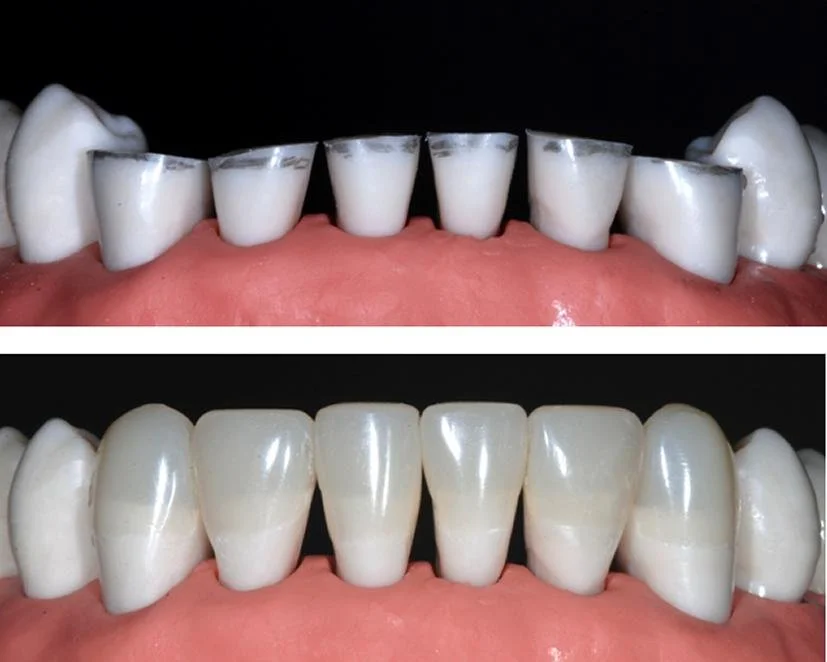
In some carefully selected cases, composite build-ups may form part of a broader treatment plan for temporomandibular joint (TMJ) disorders. By adding tooth-coloured composite resin to selected teeth, a dentist can rebuild lost tooth structure and modify how the teeth contact each other.
However, composite build-ups are not a universal solution for TMJ pain. Their potential benefits depend on the condition of your teeth, your bite, jaw function and the underlying causes of your symptoms.
At Pain Free Dentist Sydney, we consider the relationship between the teeth, jaw joints and chewing muscles when assessing patients with TMJ concerns.
What Are Composite Build-Ups?
Composite build-ups use a tooth-coloured resin material to restore or add to the existing tooth structure.
Unlike crowns, which generally cover a substantial portion of a tooth, composite resin can sometimes be added directly to selected tooth surfaces with relatively limited removal of natural tooth structure.
Depending on the clinical situation, composite build-ups may be used to:
Restore teeth that have been worn down by grinding.
Rebuild damaged or shortened biting surfaces.
Restore missing tooth structure after fractures or erosion.
Modify the way selected teeth contact during biting.
Increase the height of selected teeth when a planned change in the bite is clinically justified.
The procedure is customised to the patient's dental condition. Not every patient needs additional tooth height, and increasing the bite is not automatically beneficial for the jaw joints.
How Can Worn Teeth Affect Your Bite and Jaw Function?
Teeth can become worn for several reasons, including bruxism, acid erosion, dietary factors and changes in dental support.
When substantial tooth wear occurs, the original shape and height of the teeth may change. Some patients may also experience fractured restorations, reduced chewing efficiency or changes in how their teeth meet.
However, tooth wear does not necessarily mean that the jaw joints are damaged or that the bite is causing TMJ disorder.
A comprehensive examination is needed to determine whether the wear is associated with symptoms and whether rebuilding the teeth is appropriate.
1. Restoring Lost Tooth Structure
When teeth have become significantly worn or damaged, composite build-ups may help restore their shape and function.
Rebuilding selected biting surfaces can provide more suitable contact between opposing teeth, depending on the original condition and the treatment plan.
For patients with substantial tooth wear, this may help restore chewing function and protect compromised tooth structure.
The main objective is to restore dental function. Any improvement in TMJ symptoms depends on the individual case and should not be guaranteed.
2. Modifying the Bite When Clinically Indicated
The way your upper and lower teeth meet is known as your occlusion, or bite.
When planning restorative treatment, a dentist may consider whether the existing bite provides appropriate contacts and whether changes are needed to restore damaged or worn teeth.
Composite build-ups can sometimes be used to introduce a planned change in the bite without immediately committing to more extensive restorations.
In selected cases, a staged and reversible or adjustable approach may help assess how a proposed change affects chewing comfort and dental function.
However, deliberately increasing the bite or changing the occlusion solely to treat unexplained TMJ pain is not supported as a universal treatment strategy. Changes to the bite can also cause new discomfort or other complications if poorly indicated or designed.
3. Protecting Worn Teeth From Further Damage
Bruxism, or teeth grinding and clenching, can place considerable forces on teeth and restorations.
Where significant wear or damage is present, composite restorations may help rebuild affected surfaces. However, composite resin can itself chip, fracture or wear under heavy loading.
Depending on the patient's needs, a dentist may also discuss strategies to reduce damaging habits and whether a suitable protective oral appliance is appropriate.
Restoring the teeth does not necessarily stop the underlying grinding or clenching behaviour, so ongoing monitoring may be required.
4. Can Composite Build-Ups Create More Space for the Tongue?
In some treatment plans, changing the height and shape of selected teeth may alter the available space within the mouth or the relationship between the jaws.
This is sometimes considered when a patient has substantial tooth wear and a carefully assessed restorative need.
However, composite build-ups should not be assumed to enlarge the airway, treat obstructive sleep apnoea or resolve tongue restriction. These conditions require their own assessment, and evidence for a particular treatment must be considered carefully.
If a patient has symptoms such as habitual snoring, gasping during sleep or excessive daytime sleepiness, medical or sleep assessment may be appropriate.
5. How Do Composite Build-Ups Fit Into a Comprehensive TMJ Treatment Plan?
TMJ disorders can arise from different causes, including painful chewing muscles, joint conditions, injury, bruxism and other contributing factors.
For this reason, treatment should begin with a proper assessment rather than assuming that rebuilding the teeth will solve the problem.
Depending on the diagnosis, a management plan may involve:
Comprehensive assessment: Reviewing the history of jaw pain, headaches, tooth wear, clenching, joint sounds and jaw movement.
Conservative management: Education, temporary dietary adjustments, appropriate jaw exercises and reducing unnecessary clenching may help some patients.
Oral appliance therapy: A suitable splint may be considered for selected patients, particularly when tooth protection or symptom management is required.
Composite build-ups: These may be considered where lost tooth structure or a specific restorative problem justifies rebuilding selected teeth.
Ongoing review: The dentist monitors comfort, bite contacts, restoration integrity and changes in symptoms.
Not everyone requires all these treatments. The sequence and choice of treatment depend on the clinical findings and the patient's goals.
Why Might a Dentist Use a Staged Approach?
When extensive tooth wear or a complex bite problem is present, making large and permanent changes immediately may not always be the most appropriate option.
In selected cases, a dentist may plan treatment in stages to restore damaged teeth, monitor the response and assess whether further restorative work is necessary.
This approach may allow the dentist and patient to review practical outcomes, including chewing comfort, restoration stability and jaw symptoms, before proceeding with more extensive treatment.
It is important to discuss the expected temporary changes, possible limitations, maintenance requirements, costs and alternatives before starting treatment.
Composite build-ups are not necessarily fully reversible once treatment has altered the original tooth surfaces or established a new bite relationship.
Are Composite Build-Ups Suitable for Everyone With TMJ Pain?
No. Composite build-ups are primarily a restorative treatment and should not be offered simply because a patient has jaw pain.
They may be relevant when a patient has significant tooth wear, fractured teeth, loss of tooth structure or another clear restorative indication.
They may be less appropriate when the teeth are healthy, the bite is stable and there is no clear dental reason to change the occlusion.
Other causes of jaw pain may require different treatment. Persistent or severe symptoms may also warrant medical assessment or referral to an appropriately qualified practitioner.
A careful discussion of benefits, risks and alternatives is particularly important before undertaking extensive restorative treatment.
How Long Do Composite Build-Ups Last?
The lifespan of composite build-ups varies according to the size and location of the restorations, the forces placed on the teeth, oral hygiene and other individual factors.
Patients who grind or clench their teeth may have a greater risk of chipping, fracture or restoration wear.
Regular dental reviews help identify problems early. Repairs or replacement may eventually be needed, and the ongoing maintenance requirements should be considered when planning treatment.
Composite Build-Ups for TMJ Assessment in Sydney's Inner West
At Pain Free Dentist Sydney, we assess patients with jaw discomfort, worn teeth, bruxism and other TMJ-related concerns.
When appropriate, composite build-ups may be discussed as part of a broader restorative plan, particularly when tooth wear or damage affects dental function. We also consider other treatment options and relevant contributing factors before recommending changes to the teeth or bite.
If you are experiencing jaw pain alongside significant tooth wear, contact our team to enquire about a comprehensive TMJ consultation.
Pain Free Dentist Sydney
G1A / Suite 1A, 570 New Canterbury Road, Hurlstone Park NSW 2193
Phone: 02 9558 8988
Email: info@painfreedentistsydney.com.au
Website: painfreedentistsydney.com.au
Disclaimer: This article is for general educational purposes and is not a substitute for individual dental advice. Composite build-ups are not an established universal treatment for TMJ disorders. Suitability, expected benefits, risks and alternatives must be assessed for each patient. Changes to tooth height or bite can have lasting consequences and require careful treatment planning.