
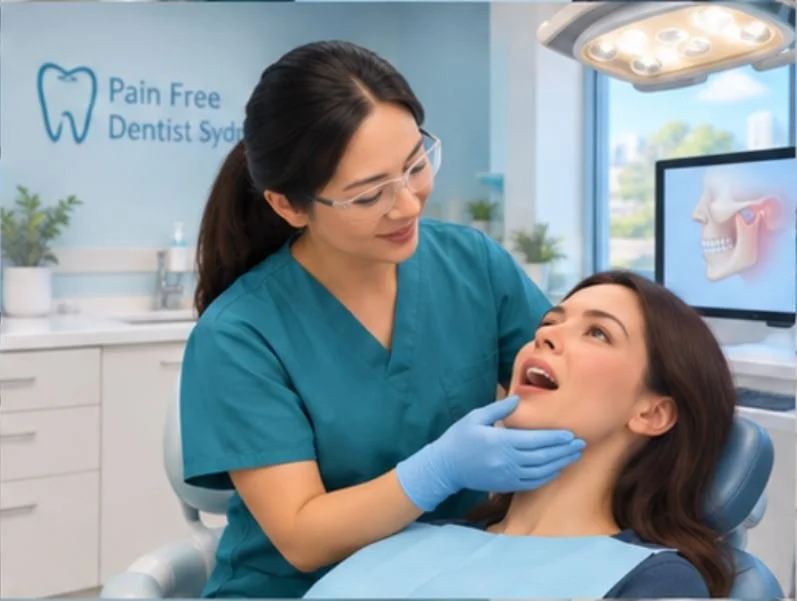
Are you experiencing persistent jaw pain, clicking when you open your mouth, frequent headaches or teeth grinding during sleep? These symptoms may be associated with temporomandibular disorders (TMD), commonly referred to as TMJ disorders.
For some people, jaw problems can interfere with eating, speaking, sleeping and everyday activities. Finding the right dentist to assess your symptoms is an important first step towards understanding the possible causes and exploring appropriate treatment options.
At Pain Free Dentist Sydney, located in Hurlstone Park near Dulwich Hill, we provide TMJ assessments and treatment options for patients from Sydney's Inner West and surrounding suburbs. Led by Dr Lisa Chong, who has over 30 years of clinical experience, our approach considers the teeth, jaw joints, chewing muscles and relevant contributing factors when planning care.
What Is TMJ Disorder?
The temporomandibular joints are located on either side of your face, just in front of your ears. They connect your lower jaw to your skull and allow you to speak, chew and yawn.
TMJ disorders affect the jaw joints, the muscles responsible for chewing or the surrounding structures.
Common symptoms include:
Jaw pain or tenderness near the ears.
Clicking, popping or grinding sounds when moving the jaw.
Difficulty opening the mouth fully.
Jaw locking or restricted movement.
Headaches around the temples.
Facial muscle tension or soreness.
Pain when chewing.
Teeth grinding or clenching.
Not every clicking jaw requires treatment, and these symptoms can have causes other than TMD. A dental assessment can help determine whether your symptoms may be related to the jaw joints, chewing muscles or teeth.
Why Do TMJ Problems Develop?
TMJ disorders can develop for several reasons, and there is rarely one explanation that applies to everyone.
Potential contributing factors include:
Teeth grinding and clenching: Repeated jaw muscle activity may contribute to muscle fatigue, dental wear and pain in some individuals.
Jaw joint problems: Inflammation, joint irritation, injury or changes in the joint structures may contribute to pain and restricted movement.
Muscle tension: Overworked or tender chewing muscles can cause discomfort around the jaw, cheeks and temples.
Stress and sleep disturbances: Stress may contribute to clenching and influence how persistent pain is experienced.
Dental damage and tooth wear: Significant wear or damaged teeth may be relevant when assessing chewing function and planning restorative care.
Previous injury or other health conditions: Trauma, arthritis and other conditions may contribute to jaw symptoms.
Understanding which factors are relevant to your particular situation helps guide a more appropriate treatment plan.
Can TMJ Disorder Cause Headaches and Neck Pain?
Some people with painful TMD experience headaches, particularly around the temples, as well as tenderness in the chewing muscles.
Neck discomfort can also occur alongside TMJ disorders. The head, neck and jaw work together during everyday movement, and pain in these areas may overlap.
However, headaches and neck pain can arise from many different conditions. A TMJ dentist should consider whether the jaw is contributing rather than assuming that all symptoms originate from it.
If your symptoms are persistent, severe or accompanied by other concerning signs, medical assessment may also be necessary.
How Does a TMJ Dentist Assess Your Condition?
A comprehensive TMJ consultation aims to understand your symptoms, assess jaw function and identify possible contributing factors.
Depending on your presentation, an assessment may involve:
1. Reviewing your history
Your dentist may ask about when the pain started, what makes it worse, whether you grind your teeth and how the symptoms affect your daily activities.
2. Examining your jaw joints and muscles
This may include assessing jaw opening, movement, joint sounds and tenderness in the chewing muscles.
3. Checking your teeth and bite
Tooth wear, fractures, damaged restorations and other dental problems may be relevant to your overall assessment.
4. Considering further investigations
Dental X-rays, panoramic imaging or CBCT scans may be appropriate in selected cases when the findings are likely to help answer a clinical question. Advanced imaging is not necessary for every patient.
5. Developing an individualised treatment plan
Your dentist can explain the findings, discuss available options and outline the potential benefits, limitations, costs and risks of recommended treatment.
What TMJ Treatment Options Are Available?
Treatment depends on the type of disorder, symptom severity and contributing factors. Many patients begin with conservative management before considering more involved procedures.
Conservative TMJ management
Education, reducing unnecessary clenching, temporarily avoiding foods that aggravate symptoms and selected jaw exercises may help some patients.
TMJ splint therapy
An appropriately selected oral appliance may help manage symptoms or protect teeth from grinding-related damage in suitable cases. The design, wearing instructions and follow-up requirements depend on the patient's condition.
Composite build-ups for worn teeth
Where significant tooth wear or damage is present, composite restorations may help rebuild tooth structure. These are restorative procedures, not a universal treatment for TMJ disorders, and changes to the bite require careful planning.
Muscle relaxant injections
In selected cases, injections such as botulinum toxin may be discussed for particular jaw muscle symptoms. Their suitability, potential benefits, risks and limitations should be explained, and they are not appropriate for everyone.
Further assessment or referral
Some patients may benefit from physiotherapy, medical assessment or referral to another appropriately qualified practitioner, depending on their symptoms and diagnosis.
There is no single treatment that works for every TMJ condition. Extensive or irreversible changes to the teeth or bite should not be undertaken without a clear clinical justification and discussion of alternatives.
Why Choose Pain Free Dentist Sydney for TMJ Assessment?
At Pain Free Dentist Sydney, our approach recognises that jaw discomfort can involve more than one structure.
Dr Lisa Chong has over 30 years of clinical experience, including experience in TMJ therapy and restorative dentistry. We assess the teeth, jaw joints and chewing muscles alongside relevant aspects of your dental and medical history.
Our clinic also offers a range of dental services and comfort-focused options for patients who experience dental anxiety.
We aim to help you understand your condition, explore suitable treatment choices and make informed decisions about your care.
Serving Hurlstone Park, Dulwich Hill and the Inner West
Our clinic is conveniently located on New Canterbury Road in Hurlstone Park, near Dulwich Hill. We welcome enquiries from patients across Sydney's Inner West, including Marrickville, Ashfield, Summer Hill, Petersham, Earlwood, Canterbury, Lewisham and surrounding suburbs.
If you have ongoing jaw pain, headaches, clicking, restricted movement or concerns about teeth grinding, a TMJ assessment may help clarify your next steps.
Book a TMJ Consultation in Inner West Sydney
You do not have to ignore persistent jaw discomfort or assume that you must simply live with it. The first step is understanding what may be contributing to your symptoms.
Contact Pain Free Dentist Sydney to enquire about a TMJ consultation and discuss the assessment options available for your individual needs.
Pain Free Dentist Sydney
Address: Suite G1A, 570 New Canterbury Road, Hurlstone Park NSW 2193
Phone: 02 9558 8988
Disclaimer: This article is for general educational purposes and does not replace an individual dental or medical assessment. Treatment recommendations depend on clinical findings, and outcomes vary between patients.