Have you ever woken up with a headache, felt tension around your jaw and neck, struggled to open your mouth comfortably, or noticed that your teeth are becoming increasingly worn?
You may think these symptoms are unrelated. However, in some patients, they may be associated with temporomandibular disorders (TMD), commonly referred to as TMJ disorders.
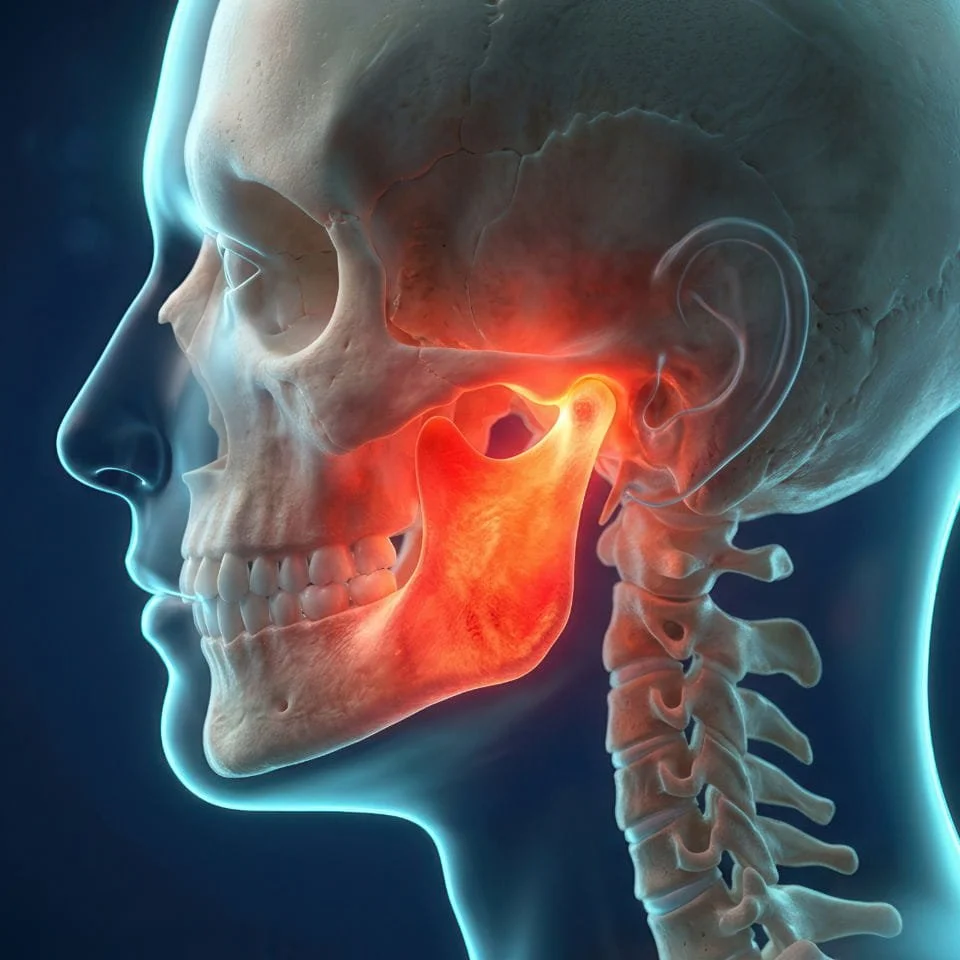
The temporomandibular joints (TMJs) connect your lower jaw to your skull. They are among the most frequently used joints in your body, allowing you to speak, chew, swallow, yawn and express yourself. When the jaw joints, surrounding muscles or supporting structures become dysfunctional, the effects can extend well beyond the mouth.
For some people, TMJ disorder is a mild and temporary inconvenience. For others, persistent jaw pain, headaches, muscle tension and restricted jaw movement can significantly affect their daily routine, sleep, work, relationships and overall quality of life.
At Pain Free Dentist Sydney, we believe it is important to look beyond the symptoms and understand how jaw dysfunction may be affecting the person as a whole.
What Is TMJ Disorder?
TMJ refers to the temporomandibular joint itself, while TMD (temporomandibular disorder) refers to a group of conditions affecting the jaw joints, chewing muscles and associated structures.
TMD may involve the joint, the surrounding muscles or a combination of both. Symptoms can vary significantly between individuals.
Common symptoms may include:
Jaw pain or tenderness
Pain in front of the ears
Clicking, popping or grating sounds
Difficulty opening the mouth fully
Jaw locking or catching
Pain when chewing
Headaches, particularly around the temples
Facial pain or muscle fatigue
Neck and shoulder tension
Tooth sensitivity or increased tooth wear associated with clenching or grinding
Ear symptoms such as fullness or ringing in some patients
Sleep disturbance associated with pain or discomfort
Not everyone with clicking jaw joints has a disorder requiring treatment. Clicking without pain or functional limitation is common. However, when symptoms are painful, persistent or interfere with daily activities, an appropriate assessment may be worthwhile.
1. TMJ Disorder Can Make Eating Difficult
Eating is something most people take for granted until it becomes uncomfortable.
Patients with TMJ dysfunction may experience pain when chewing, particularly when eating foods that require greater jaw effort. Foods such as steak, crusty bread, nuts, chewy foods or even sandwiches may become uncomfortable.
Some patients develop a preference for softer foods because chewing causes jaw fatigue or pain.
Over time, this can affect food choices, nutritional variety and the enjoyment of meals. Eating out with friends, attending family dinners or enjoying a favourite meal may become something a patient avoids.
When chewing becomes painful, the impact is not just physical. It can affect social participation and the enjoyment of everyday life.
2. Chronic Headaches and Facial Pain
TMJ disorders can be associated with headaches, particularly pain around the temples, forehead or areas surrounding the jaw.
The muscles responsible for chewing are closely connected with the surrounding facial and head structures. When these muscles become overworked, irritated or sensitised, some patients may experience referred pain.
Patients may describe:
A tight band-like sensation around the head
Pressure around the temples
Headaches upon waking
Facial aching
Pain behind the eyes
Tension that builds throughout the day
Headaches that worsen during periods of clenching
Not every headache originates from the jaw. Migraines, tension-type headaches, cervical disorders and other medical conditions may produce similar symptoms. A proper assessment is important to determine whether jaw dysfunction may be contributing.
3. Neck, Shoulder and Muscle Tension
The jaw does not function in isolation.
The muscles of the jaw, head and neck work together to coordinate movement and stabilise the head. Some patients with TMD report accompanying neck discomfort, shoulder tension or muscular fatigue.
People who spend long hours at a desk, work under significant pressure, maintain prolonged postures or habitually clench their teeth may notice that tension builds throughout the day.
They may describe feeling unable to relax their jaw, shoulders or neck.
In some cases, jaw pain and neck pain may coexist and influence each other. This does not mean every neck or shoulder problem originates from the TMJ, but assessing the broader muscular and functional picture may be helpful.
4. Teeth Grinding, Clenching and Dental Damage
Many people clench or grind their teeth without realising it.
Bruxism may occur during sleep or while awake, particularly during periods of concentration, stress or emotional tension.
Repeated excessive loading may contribute to:
Flattened or worn teeth
Cracked teeth
Fractured fillings or restorations
Tooth sensitivity
Muscle soreness
Jaw fatigue
Headaches
Increased strain on the jaw joints
Some patients wake up feeling as though they have been chewing all night. Others notice that their teeth are becoming shorter, chipped or increasingly sensitive.
Dental examination may reveal signs of wear, cracks, restoration damage or other changes that warrant further investigation.
However, tooth wear alone does not establish that a patient has TMD, and grinding can have multiple contributing factors.
5. TMJ Disorder Can Affect Your Sleep
Pain and muscle tension can make it difficult to fall asleep comfortably or stay asleep.
Some patients wake up with jaw soreness, headaches or facial muscle fatigue. Others find that their symptoms become worse after a poor night's sleep.
Sleep quality and pain can influence each other. Poor sleep may increase sensitivity to pain, while persistent discomfort may interrupt sleep and contribute to daytime fatigue.
If you are waking up feeling tired, tense or sore, it may be worth discussing your symptoms with your dentist or doctor.
Sleep-related breathing disorders, including obstructive sleep apnoea, may also coexist with other jaw or oral health concerns. However, TMJ disorder does not automatically mean a patient has sleep apnoea, and these conditions require their own assessment.
6. Difficulty Speaking, Yawning and Opening Your Mouth
The jaw joints allow a wide range of movement that is essential for everyday activities.
When jaw movement becomes restricted or painful, simple tasks such as speaking for long periods, yawning, laughing or opening your mouth for dental treatment can become uncomfortable.
Some patients experience jaw locking, where the mouth becomes temporarily difficult to open or close normally.
Others notice that their jaw movement feels uneven, stiff or restricted, particularly in the morning.
This can be frustrating, especially when the patient cannot predict when symptoms will occur.
7. The Emotional and Psychological Impact of Chronic Jaw Pain
Living with ongoing pain can be exhausting.
When discomfort is persistent, patients may become frustrated, anxious or emotionally drained. They may worry about whether the pain will worsen, whether they will be able to eat normally, or whether their symptoms will ever improve.
Chronic pain can also affect concentration, productivity, relationships and enjoyment of life.
Patients may withdraw from social activities, avoid eating with others, struggle at work or feel that their symptoms are not understood because they appear perfectly normal on the outside.
The relationship between stress, sleep, pain and muscle activity can be complex. Stress may aggravate symptoms in some patients, while persistent pain itself can increase emotional distress.
This is why TMJ care should not focus solely on the jaw joint. Understanding a patient's lifestyle, sleep, habits, muscular symptoms, medical history and functional limitations may help develop a more appropriate treatment plan.
8. Why Is TMJ Disorder So Complex?
There is no single cause of TMJ dysfunction.
Factors that may contribute include:
Jaw clenching and teeth grinding
Previous trauma to the jaw, head or neck
Joint inflammation or degenerative changes
Muscle overactivity or dysfunction
Stress and emotional factors
Sleep disturbances
Certain systemic conditions
Individual anatomical and functional factors
In many patients, symptoms are multifactorial. One contributing factor may not fully explain the entire clinical picture.
A thorough assessment may include examining jaw movement, joint sounds, muscle tenderness, bite function, tooth wear, dental history, medical history and, when clinically indicated, diagnostic imaging.
9. Can TMJ Disorder Be Treated?
Treatment depends on the specific diagnosis, symptoms, severity and contributing factors.
Many patients improve with conservative approaches, which may include:
Education and awareness of jaw clenching habits
Avoiding excessive chewing or aggravating movements
Temporarily modifying food consistency during painful periods
Appropriate jaw exercises and physiotherapy
Relaxation strategies
Improving sleep habits
Managing contributing muscular tension
Dental splints where clinically indicated
Medical management when appropriate
Some patients may benefit from a multidisciplinary approach involving dentists, physiotherapists, medical practitioners and other healthcare professionals depending on their symptoms.
More complex cases may require additional investigation and individually tailored management.
It is important to understand that there is no universal TMJ treatment. What works for one patient may not be appropriate for another.
10. Why Treating the Person Matters, Not Just the Jaw
At Pain Free Dentist Sydney, our approach is to understand how jaw dysfunction may be affecting your overall wellbeing.
We consider the patient's symptoms, jaw function, teeth, muscles, bite, medical history and relevant contributing factors rather than focusing on a single symptom in isolation.
Our aim is to help patients understand their condition and explore appropriate options to improve comfort, function and quality of life.
If you have been experiencing persistent jaw pain, headaches, difficulty chewing, teeth grinding, jaw locking or associated muscular tension, you do not have to simply accept these symptoms as part of everyday life.
A comprehensive TMJ assessment may help identify the nature of your symptoms and guide an appropriate management plan.
TMJ Treatment in Sydney
If jaw pain, headaches, teeth grinding or muscle tension are affecting your ability to eat, sleep, work or enjoy life, consider arranging an assessment.
At Pain Free Dentist Sydney, we provide assessment and management of temporomandibular disorders with a focus on understanding the individual patient and their functional needs.
Your quality of life matters. Your pain deserves to be understood.
Contact Pain Free Dentist Sydney to arrange a TMJ consultation and take the first step towards understanding your jaw symptoms.
Pain Free Dentist Sydney
Hurlstone Park, Sydney NSW
Website: https://painfreedentistsydney.com.au
Phone: 02 9558 8988