
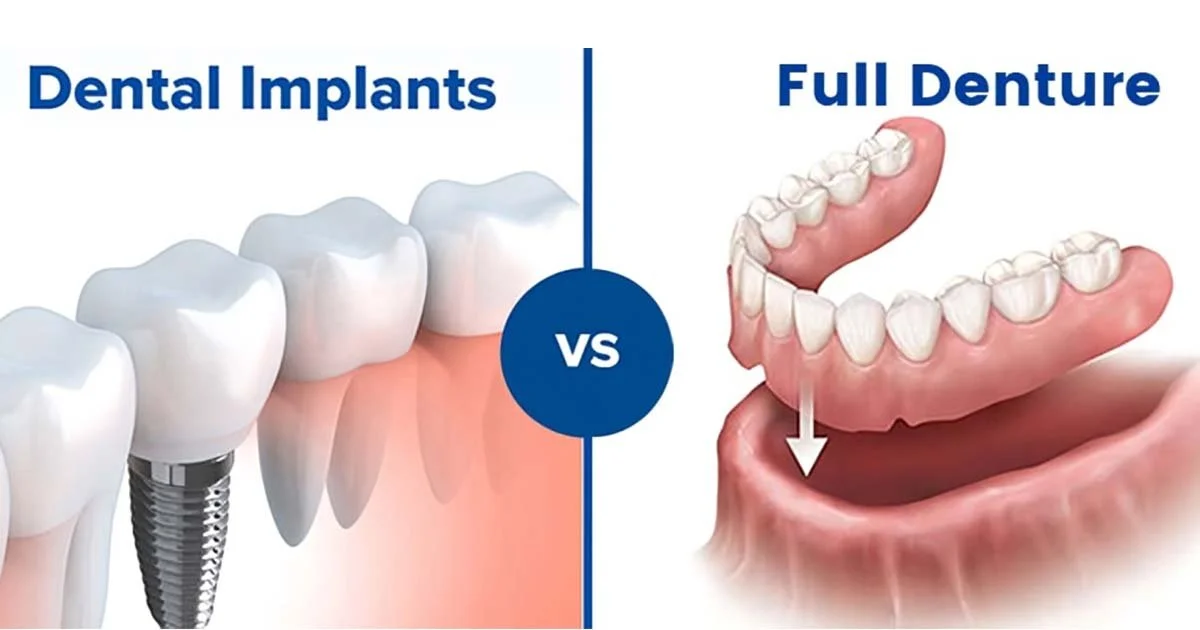
Are you missing most or all of your teeth? Do you struggle with loose dentures, difficulty chewing or feeling confident when you smile? Modern dental implant treatments may offer a more stable alternative to conventional removable dentures.
All-on-4 and All-on-6 dental implants are treatment approaches designed to replace a full arch of missing teeth using a fixed prosthesis supported by dental implants. Both options can restore chewing function and improve the appearance of your smile, but the most suitable approach depends on your oral health, bone structure and individual treatment needs.
At Pain Free Dentist Sydney in Dulwich Hill, we help patients understand their full-arch dental implant options so they can make informed decisions about their oral health.
What Are All-on-4 Dental Implants?
All-on-4 is a full-arch tooth replacement technique that typically uses four dental implants to support a fixed set of replacement teeth.
The implants are positioned strategically within the jawbone. In appropriate cases, angled placement of some implants can help make use of available bone and reduce the need for additional grafting procedures.
Potential benefits include:
Replacing an entire arch of missing or failing teeth
Providing a fixed alternative to removable dentures
Improving chewing ability and smile appearance
Using fewer implants to support a full-arch prosthesis
Potentially reducing the need for bone grafting in selected cases
Some patients may be suitable for temporary fixed teeth on the day of surgery or soon afterwards. However, immediate loading is not appropriate for everyone and depends on factors such as implant stability, bone quality and the treatment plan.
What Are All-on-6 Dental Implants?
All-on-6 is a full-arch restoration approach that uses six dental implants to support a fixed prosthesis.
The additional implants may provide more support and distribute chewing forces across more implant sites. This can be beneficial in selected patients, depending on the anatomy of the jaw, bite forces and the design of the replacement teeth.
Potential benefits include:
Additional implant support for a full arch
More opportunities to distribute functional forces
Flexibility in planning the restoration for certain anatomical situations
A fixed replacement for missing or severely compromised teeth
However, more implants do not automatically mean a better outcome. The ideal number and position of implants should be determined through a comprehensive clinical assessment.
All-on-4 vs All-on-6: What Is the Difference?
The main difference is the number of implants supporting the full-arch prosthesis. Other factors, including implant positioning, bone quality, prosthesis design and bite forces, are equally important.
All-on-4 may be considered when four strategically positioned implants can provide suitable support and the available bone allows a predictable treatment plan.
All-on-6 may be considered when additional implant support is beneficial and the patient's bone anatomy and restorative requirements make six implants appropriate.
Neither option is universally superior. A careful assessment helps determine which approach offers the most appropriate balance of function, stability, surgical requirements and long-term maintenance.
Am I Suitable for Full-Arch Dental Implants?
Full-arch implant treatment may be considered if you:
Have lost most or all teeth in the upper or lower jaw
Have multiple teeth that are severely damaged or cannot be predictably restored
Find conventional dentures uncomfortable or unstable
Want to explore a fixed alternative to removable dentures
Have sufficient bone, or may be suitable for a plan that addresses bone deficiencies
Your general health, gum condition, oral hygiene, smoking status, medications and ability to attend follow-up appointments can all affect treatment planning and healing.
A detailed assessment may include a clinical examination, dental imaging and, where indicated, a CBCT scan to evaluate bone volume and important anatomical structures.
Can You Get New Teeth on the Same Day?
In some cases, a temporary fixed bridge can be attached to dental implants on the day of surgery or shortly afterwards. This is often described as immediate loading.
However, same-day teeth are not guaranteed. The implants must achieve appropriate primary stability, and the bite and overall clinical circumstances must support early loading.
Some patients need a healing period before their replacement teeth can be attached. During healing, the implants integrate with the surrounding bone in a process called osseointegration.
Your dentist will explain the expected timeline and whether temporary or delayed restoration is more appropriate for you.
What Does the All-on-4 or All-on-6 Procedure Involve?
Although each treatment plan is different, full-arch implant treatment commonly involves several stages.
1. Consultation and planning
Your dentist evaluates your teeth, gums, jawbone, bite and medical history. Imaging and digital planning may be used to assess implant positioning.
2. Preparation and implant surgery
Depending on your condition, remaining teeth may need to be removed, and other procedures may be required. The implants are then placed according to the planned surgical approach.
3. Temporary teeth and healing
If suitable, temporary fixed teeth may be provided. Otherwise, an alternative temporary restoration may be recommended while the implants heal.
4. Final restoration
Once healing and implant stability have been assessed, the final prosthesis can be fitted and adjusted.
5. Ongoing maintenance
Regular professional reviews, careful cleaning and maintenance of the prosthesis are essential. Implant-supported teeth are not maintenance-free, and complications such as gum inflammation, prosthetic wear or screw loosening can occur.
Can All-on-4 or All-on-6 Be Performed Under IV Sedation?
For patients who experience dental anxiety or require extensive treatment, IV sedation may be an option where clinically appropriate and suitable sedation arrangements are available.
Sedation can help reduce anxiety and awareness of the procedure, but it is not the same as general anaesthesia and does not replace local anaesthesia. Your suitability, monitoring requirements and recovery arrangements must be assessed before surgery.
Restore Your Smile with a Personalised Implant Plan
Choosing between All-on-4 and All-on-6 is not simply a matter of choosing four or six implants. The right approach depends on your anatomy, oral health, bite, restorative goals and long-term maintenance needs.
At Pain Free Dentist Sydney in Dulwich Hill, we can assess your situation and discuss whether full-arch dental implants may be suitable for you.
Take the first step towards a more confident smile.
Contact Pain Free Dentist Sydney to arrange a consultation and explore your full-arch dental implant options.
Pain Free Dentist Sydney
Dulwich Hill, NSW
Phone: 02 9558 8988
Email: info@painfreedentistsydney.com.au
Website: https://painfreedentistsydney.com.au/
Dental implant treatment involves surgery and potential risks, including infection, implant failure, nerve or sinus complications, and the need for further treatment. Suitability, expected outcomes and treatment timelines vary between individuals and require an individual clinical assessment.