
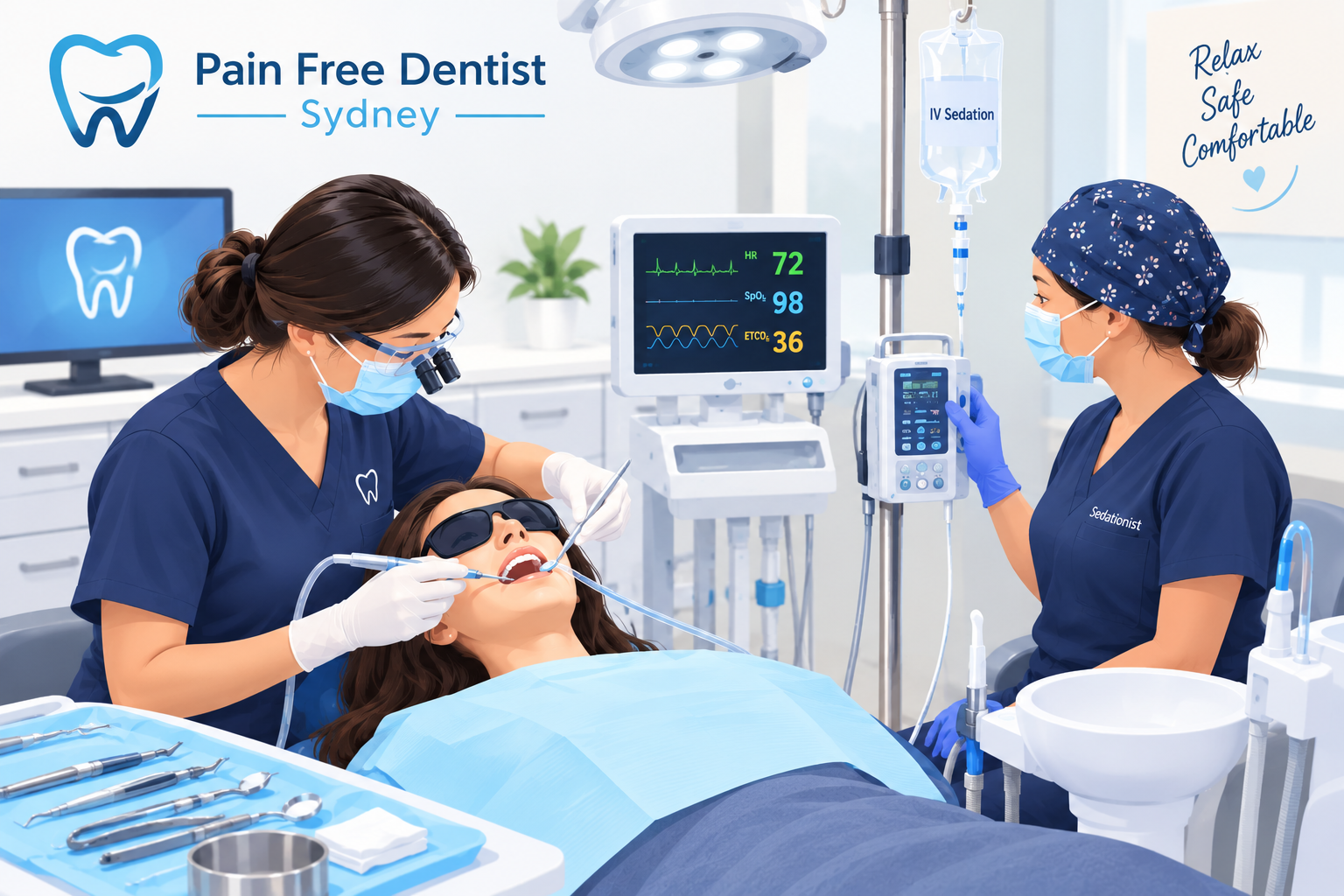
Does the thought of visiting the dentist make you feel nervous? Perhaps you have postponed treatment because of dental anxiety, a strong gag reflex, a fear of needles or an unpleasant experience in the past. You are not alone, and there are ways to make dental treatment more comfortable.
Dental sedation can help selected patients feel calmer during dental procedures. At Pain Free Dentist Sydney in Dulwich Hill, we understand that every patient has different needs, concerns and comfort levels. Our goal is to help you feel informed, supported and comfortable throughout your dental care.
What Is Dental Sedation?
Dental sedation involves using medication to help patients relax during dental treatment. Depending on the type of sedation, you may remain fully awake but feel calmer, or experience a deeper level of sedation with reduced awareness of the procedure.
Sedation may be considered for patients who experience dental anxiety, have difficulty tolerating lengthy procedures, have a strong gag reflex or require complex dental treatment.
It is important to understand that sedation is not the same as general anaesthesia, and it does not necessarily eliminate pain. Local anaesthesia is often used alongside sedation to numb the area being treated.
What Types of Dental Sedation Are Available?
The appropriate option depends on your medical history, anxiety level, treatment requirements and overall health.
1. Nitrous Oxide Sedation
Nitrous oxide, sometimes called laughing gas, is inhaled through a small nasal mask. It can help reduce anxiety and promote relaxation while allowing many patients to remain awake and responsive.
Its effects generally wear off relatively quickly after administration stops, although suitability and recovery instructions should always be discussed with your treating dental professional.
2. Oral Sedation
Oral sedation involves taking prescribed medication before a dental appointment. It may help reduce anxiety, but its effects can vary considerably between individuals.
Depending on the medication, you may feel drowsy and experience impaired coordination or memory. You may need an accompanying adult and must follow specific instructions about driving and other activities.
3. Intravenous (IV) Dental Sedation
IV sedation involves administering sedative medication through a vein. It can provide a more controlled level of sedation and may be appropriate for selected patients undergoing longer or more complex dental procedures.
During IV sedation, trained professionals monitor your condition, including breathing and circulation, according to the level of sedation and applicable clinical requirements.
IV sedation may be considered for procedures such as dental implant surgery, wisdom tooth removal and other treatments where anxiety or the complexity of the procedure makes additional support beneficial.
Availability and suitability depend on individual assessment and the arrangements for appropriately qualified sedation providers.
Is Dental Sedation Completely Pain-Free?
Sedation can help reduce fear and distress, but it does not automatically prevent pain. Local anaesthesia is usually required to numb the treatment area, and additional pain management may be appropriate depending on the procedure.
At Pain Free Dentist Sydney, we can discuss your concerns and explain how sedation and local anaesthesia may be used together to improve your treatment experience.
Our approach is to listen to your concerns, explain your options and ensure you understand the proposed treatment before making a decision.
Who May Benefit from Dental Sedation?
Dental sedation may be worth discussing if you:
Feel very anxious about dental appointments.
Have avoided necessary dental treatment because of fear.
Have a strong gag reflex that makes treatment difficult.
Need extensive dental work or a lengthy procedure.
Have had a difficult dental experience in the past.
Find it challenging to remain comfortable during treatment.
Not everyone is suitable for every type of sedation. Your medical conditions, medications, allergies, previous anaesthetic experiences and other risk factors must be reviewed before a decision is made.
What Happens Before and After Dental Sedation?
Before treatment, you will receive instructions tailored to your planned procedure and sedation method. These may cover fasting, regular medications, transport arrangements and whether you need a responsible adult to accompany you.
During sedation, your condition will be monitored at a level appropriate to the technique used.
Afterwards, you may need time to recover. Depending on the medication and depth of sedation, you may be instructed not to drive, operate machinery, drink alcohol or make important decisions for a specified period. Follow your treating team's discharge instructions carefully.
Don't Let Dental Anxiety Stop You from Getting the Care You Need
Avoiding dental visits can allow problems such as tooth decay, gum disease and damaged teeth to worsen. Seeking advice early may provide more treatment options and help prevent problems from becoming more complicated.
You deserve dental care that takes your concerns seriously. Whether you need a routine procedure, wisdom tooth removal or dental implant surgery, discussing your anxiety with your dentist is an important first step.
Looking for dental sedation in Dulwich Hill, Sydney?
Contact Pain Free Dentist Sydney to discuss your concerns and find out whether sedation may be appropriate for your dental treatment.
Pain Free Dentist Sydney
Dulwich Hill, NSW
Phone: 02 9558 8988
Email: info@painfreedentistsydney.com.au
Website: https://painfreedentistsydney.com.au/
Dental sedation carries risks and is not suitable for everyone. The appropriate technique, monitoring requirements and recovery arrangements will depend on your health and the planned procedure. An individual assessment is required before treatment.