
Do you wake up with a sore jaw, experience frequent headaches, or find yourself clenching your teeth throughout the day? These symptoms may be associated with temporomandibular disorders (TMD), which affect the jaw joints and the muscles responsible for chewing.
For some patients, Botox for TMJ problems may be an option to help manage muscle-related jaw pain, excessive clenching and teeth grinding. At Pain Free Dentist Sydney in Dulwich Hill, we assess your symptoms and jaw function to determine whether this treatment may be suitable for you.
What Is TMJ Dysfunction?
The temporomandibular joints (TMJs) connect your lower jaw to your skull. They work together with the surrounding muscles, ligaments and other structures to allow you to speak, chew and yawn.
When these joints or muscles become painful or dysfunctional, you may experience symptoms such as:
Jaw pain or tenderness when chewing
Clicking or popping sounds when opening your mouth
Teeth clenching and grinding, also known as bruxism
Tension headaches or pain around the temples
Facial muscle soreness
Restricted jaw movement or difficulty opening your mouth
Discomfort that may extend towards the neck
TMJ symptoms can have several contributing factors, including muscle overactivity, joint irritation, stress, previous injury and sleep-related bruxism. Identifying the underlying cause is an important first step towards appropriate treatment.
How Does Botox Help with TMJ Problems?
Botox is a brand name for botulinum toxin, a prescription medicine that temporarily reduces activity in selected muscles.
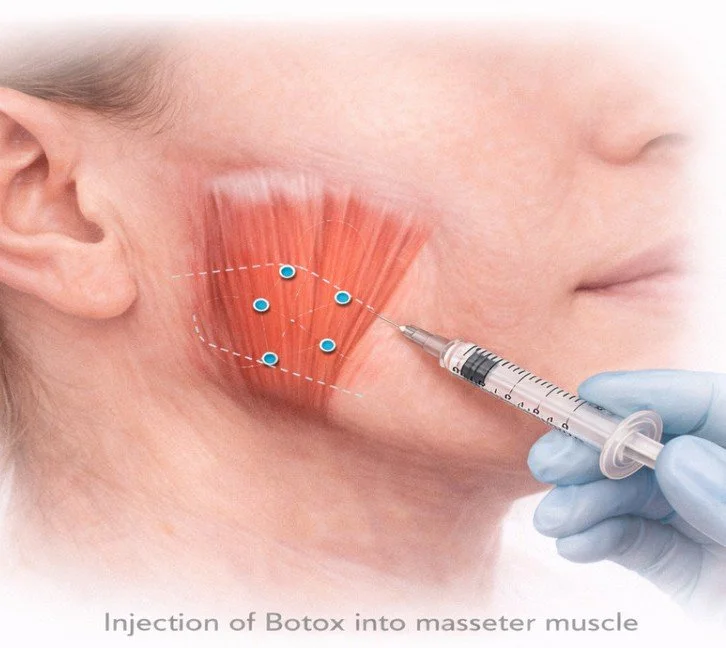
When used for certain TMJ-related conditions, botulinum toxin may be injected into specific chewing muscles, such as the masseter and, where appropriate, the temporalis muscles. These muscles help close the jaw and can become overactive in people who clench their teeth.
By temporarily reducing muscle activity, treatment may help some patients experience:
Reduced muscle tension and tenderness
Improvement in muscle-related jaw pain
Less discomfort associated with excessive clenching
Relief from some tension-type headaches associated with jaw muscle overactivity
However, results vary between individuals. Evidence for botulinum toxin in TMD remains mixed, and it does not address every cause of jaw pain. It is not a cure for all TMJ disorders and does not necessarily stop teeth grinding during sleep.
Is Botox Suitable for Everyone with TMJ Pain?
No. Botox is generally considered only after an appropriate assessment, particularly when muscle overactivity appears to contribute to the symptoms.
If your pain originates primarily from the jaw joint, arthritis, disc displacement or another condition, Botox may not be the most appropriate treatment.
A dental assessment can help evaluate your jaw movement, muscle tenderness, bite, teeth grinding history and other relevant factors. Where indicated, additional investigations or referral to another healthcare professional may be recommended.
Botox vs Other TMJ Treatments
Botox is one of several possible approaches to managing TMJ-related symptoms. Depending on your diagnosis, treatment may include:
Occlusal splint therapy: A custom-made dental appliance may help protect the teeth and manage selected symptoms.
Jaw exercises and physiotherapy: Appropriate exercises and manual therapy may improve jaw movement and muscle function.
Habit awareness: Learning to recognise daytime clenching and keeping the jaw relaxed can help reduce unnecessary muscle activity.
Lifestyle adjustments: Stress management, avoiding excessive gum chewing and temporarily modifying foods that aggravate symptoms may be beneficial.
Medication or other treatment: This may be considered according to your individual diagnosis and medical history.
A personalised plan may involve one or more approaches rather than relying on injections alone.
What Should You Know Before Having TMJ Botox?
Botulinum toxin injections can cause temporary discomfort, bruising or swelling. Other potential effects include unwanted chewing weakness, changes in smile symmetry and, in some cases, muscle thinning. The effects are temporary but may last for several months.
Repeated injections may affect muscle size and function, and the long-term effects on jaw muscles and bone are still being investigated. Treatment should therefore be carefully considered, with appropriate informed consent and follow-up.
Your dentist should discuss the expected benefits, limitations, alternatives and potential risks before you decide whether to proceed.
Looking for TMJ Treatment in Dulwich Hill?
Persistent jaw pain, headaches and teeth grinding can affect your sleep, concentration and everyday comfort. You do not have to guess which treatment is right for you.
At Pain Free Dentist Sydney in Dulwich Hill, we provide individualised assessments for TMJ dysfunction and discuss suitable management options, including whether Botox may have a role in your care.
Book a TMJ consultation to discuss your symptoms and explore a treatment plan tailored to your needs.
Pain Free Dentist Sydney
Dulwich Hill, NSW
Phone: 02 9558 8988
Email: info@painfreedentistsydney.com.au
Website: https://painfreedentistsydney.com.au/
Important: Botox treatment for TMJ-related symptoms may be an off-label use, depending on the product and indication. Suitability, benefits and risks should be discussed with an appropriately qualified practitioner. Treatment outcomes cannot be guaranteed.