
Have you ever bitten into food and felt a sudden, sharp pain in one tooth, only for the discomfort to disappear moments later? Perhaps your tooth feels sensitive to cold drinks, but your dental X-rays appear normal.
These symptoms may be associated with a condition called cracked tooth syndrome.
A cracked tooth can be difficult to identify because the fracture may be extremely small and not easily visible during a routine examination. Without appropriate assessment, the discomfort may continue or the crack may progress.
At Pain Free Dentist Sydney, we understand how frustrating unexplained tooth pain can be. Recognising the warning signs of a cracked tooth can help you seek timely dental care and understand the treatment options available.
What Is Cracked Tooth Syndrome?
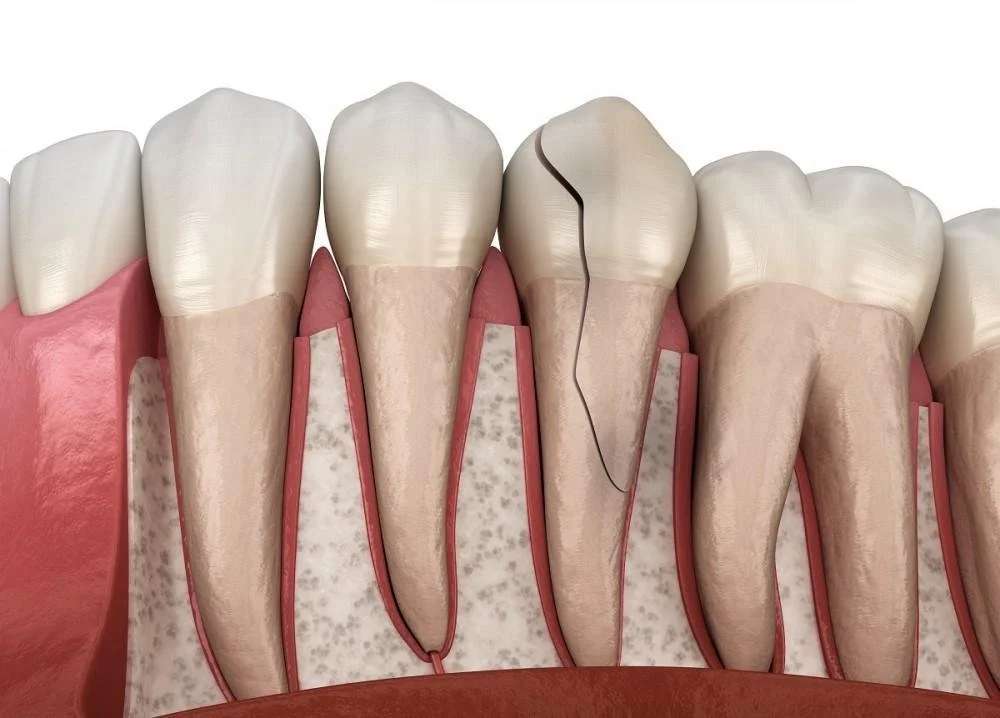
Cracked tooth syndrome occurs when a tooth develops a crack that causes symptoms but does not necessarily separate into two distinct pieces.
The crack may extend through the enamel and into the underlying dentine. In some cases, it can approach or involve the dental pulp, the soft tissue containing the tooth's nerves and blood vessels.
Cracked tooth syndrome most commonly affects back teeth, particularly molars, because they withstand substantial chewing forces.
Unlike a completely broken tooth, a cracked tooth may still appear intact. This is one reason the condition can be challenging to diagnose.
Early assessment is important because the appropriate treatment depends on the location, depth and direction of the crack.
What Are the Symptoms of a Cracked Tooth?
Cracked tooth symptoms can vary considerably. Some people experience intermittent discomfort, while others develop persistent pain or sensitivity.
Common warning signs include:
Sharp pain when biting: Discomfort may occur when chewing certain foods or applying pressure to the affected tooth.
Pain when releasing your bite: Some cracks cause a sudden, sharp sensation as you release pressure after biting.
Sensitivity to cold: Cold drinks or foods may trigger a brief or lingering sensation.
Pain when chewing: Symptoms may be inconsistent and difficult to reproduce.
Unexplained toothache: The tooth may ache occasionally without an obvious cause.
Discomfort around an existing filling: Teeth with large restorations may be more vulnerable to cracking.
Intermittent symptoms: Pain may disappear for days or weeks before returning.
Not every cracked tooth causes all these symptoms. Similar discomfort can also occur with tooth decay, a damaged filling, inflamed dental pulp or other dental conditions.
If you experience persistent or recurring pain when biting, arrange a dental assessment rather than assuming the problem will resolve on its own.
What Causes Cracked Tooth Syndrome?
Teeth are strong, but repeated stress can cause cracks to develop over time.
Several factors may contribute to cracked tooth syndrome.
1. Teeth Grinding and Jaw Clenching
Bruxism, which involves grinding or clenching the teeth, can expose teeth to repeated forces.
Over time, these forces may contribute to tooth wear, fractures or damage to existing restorations. People who clench or grind heavily may have an increased risk of certain dental fractures.
However, not every person who grinds their teeth develops cracked tooth syndrome.
2. Large Fillings
A tooth with a large filling may have less natural tooth structure remaining to support normal chewing forces.
Depending on the extent of the restoration and the condition of the tooth, this can increase its susceptibility to fracture.
3. Biting Hard Foods
Biting into hard foods, ice, hard lollies or unpopped popcorn kernels can place substantial stress on the teeth.
A sudden force may initiate a crack or worsen an existing one.
4. Previous Dental Treatment
Teeth that have undergone extensive dental treatment may have weakened areas or reduced structural support.
For example, a tooth with substantial decay or a large restoration may be more vulnerable to cracking.
5. Age-Related Tooth Changes
Cracked teeth are more common in adults as teeth accumulate years of chewing forces, restorations and wear.
However, cracks can occur at any age.
Why Is Cracked Tooth Syndrome Difficult to Diagnose?
One of the challenges with cracked tooth syndrome is that a crack may be too small to see clearly, even with magnification.
Dental X-rays are useful for assessing many dental problems, but fine cracks often do not appear on conventional radiographs.
Your dentist may use several methods to investigate the cause of your symptoms, including:
A detailed history of when the pain occurs
Examination of the tooth and existing restorations
Magnification and appropriate lighting
Bite testing to identify the tooth or area causing discomfort
Cold testing or other pulp vitality tests
Periodontal probing to check for localised gum defects
Dental X-rays to assess surrounding structures and other possible causes
CBCT imaging may be useful in selected complex cases, but it does not reliably detect every fine crack.
Sometimes, the diagnosis remains uncertain initially and requires further monitoring or specialist assessment.
A careful examination helps distinguish a cracked tooth from other conditions that can cause similar symptoms.
Can a Cracked Tooth Heal on Its Own?
Unlike skin or bone, a crack through the hard structure of a tooth does not generally heal by growing new tooth tissue across the fracture.
However, not every crack requires extensive treatment. Some superficial cracks are limited to the enamel and may not cause significant problems.
A deeper crack can extend further into the tooth under repeated chewing forces. If it reaches the pulp, inflammation or infection may develop. If it extends below the gumline or separates the tooth into distinct segments, the tooth may become difficult or impossible to save.
The most appropriate treatment depends on the depth, direction and extent of the crack.
Early assessment may help identify treatment options before additional damage occurs.
How Is Cracked Tooth Syndrome Treated?
Treatment depends on the location of the crack, whether the pulp is affected and whether the tooth can be restored predictably.
1. Monitoring Minor Cracks
Some superficial cracks or craze lines affect only the outer enamel and may not require restorative treatment.
Your dentist can assess whether the crack is merely cosmetic or whether symptoms suggest a deeper problem.
2. Dental Bonding or a Filling
For selected limited fractures, a bonded restoration may help restore the affected area.
However, a simple filling may not provide enough protection for a tooth with a deeper structural crack.
3. Dental Crown or Cuspal Coverage
A crown or another restoration that covers and protects the weakened cusps may be recommended when the tooth has a more substantial crack.
By holding the remaining tooth structure together under chewing forces, appropriate coverage may help reduce movement across the crack.
The design of the restoration depends on the remaining tooth structure and the clinical findings.
4. Root Canal Treatment
If the crack has caused irreversible inflammation or infection of the dental pulp, root canal treatment may be necessary.
This involves removing the affected pulp, cleaning and sealing the root canal system, and restoring the tooth appropriately.
Root canal treatment does not repair the crack itself. The tooth must still be assessed for structural restorability, and protective coverage is often required.
5. Tooth Extraction
Unfortunately, some cracks extend too far below the gumline or into the root, making the tooth unsuitable for predictable restoration.
In these circumstances, extraction may be the most appropriate option.
Your dentist can discuss replacement options, such as a dental implant, bridge or removable denture, if a tooth cannot be saved.
Can a Cracked Tooth Cause Infection?
A crack can create a pathway for bacteria to reach the dental pulp. If the pulp becomes irreversibly inflamed or infected, an abscess may develop.
Possible warning signs include worsening toothache, swelling, tenderness when biting or a gum swelling near the affected tooth.
Facial swelling, fever or rapidly worsening symptoms require urgent dental assessment. If you develop difficulty breathing or swallowing, seek emergency medical care.
Do not wait for severe pain before arranging an examination, as some dental infections can progress even when symptoms are initially mild.
Can Teeth Grinding Cause Cracked Tooth Syndrome?
Teeth grinding and clenching may contribute to the forces that damage teeth, particularly when a tooth is already weakened by a large filling, decay or previous fracture.
If you have cracked a tooth and also experience jaw tension, worn teeth or morning jaw discomfort, your dentist may assess whether bruxism is contributing to the problem.
Depending on the findings, management may include repairing the damaged tooth, considering a suitable protective splint and addressing other relevant factors.
A splint can help protect teeth from some grinding forces, but it cannot guarantee that a crack will not develop or progress. It also does not replace the need to restore a structurally compromised tooth.
How Can You Reduce the Risk of a Cracked Tooth?
Although not every tooth fracture can be prevented, several measures may help reduce avoidable damage.
Avoid chewing ice or excessively hard objects.
Seek treatment for decay and damaged restorations.
Have persistent biting pain assessed early.
Discuss possible grinding or clenching with your dentist.
Follow recommendations for protecting weakened teeth.
Attend regular dental examinations.
If you have a large restoration or a tooth that has already cracked, ask your dentist whether additional protection is appropriate.
Frequently Asked Questions About Cracked Tooth Syndrome
Can a cracked tooth hurt only when I bite down?
Yes. Pain during biting or when releasing your bite is a recognised symptom of cracked tooth syndrome. However, other dental conditions can cause similar symptoms, so an examination is needed to identify the cause.
Can a cracked tooth be missed on an X-ray?
Yes. Fine cracks often do not appear on conventional dental X-rays. Your dentist may need to combine clinical examination, bite testing and other diagnostic methods.
Does every cracked tooth need a crown?
No. Treatment depends on the extent and location of the crack. Minor enamel cracks may need no restoration, while more significant structural cracks may require cuspal coverage or a crown.
Can a cracked tooth be saved without a root canal?
Sometimes. If the pulp remains healthy and the crack is suitable for restoration, a protective restoration may be enough. If the pulp is irreversibly inflamed or infected, root canal treatment may be required.
How urgent is a cracked tooth?
Recurring pain when biting should be assessed promptly, even if it disappears between meals. Seek urgent care if you develop severe pain, swelling or signs of infection.
Experiencing Tooth Pain When Biting? Book a Dental Assessment in Sydney
Cracked tooth syndrome can be difficult to identify without a thorough examination. If you have sharp pain when chewing, unexplained tooth sensitivity or discomfort that repeatedly comes and goes, early assessment may help clarify the cause and available treatment options.
At Pain Free Dentist Sydney, we aim to provide clear explanations and individualised dental care to help patients make informed decisions about their oral health.
Contact Pain Free Dentist Sydney to arrange an appointment.
📍 Suite 1A, 570 New Canterbury Road, Hurlstone Park NSW 2193
📞 Phone: 02 9558 8988
🌐 Website: https://painfreedentistsydney.com.au
Disclaimer: This article is for general educational purposes only and does not replace an individual dental examination or professional advice.