Do you experience persistent jaw pain, headaches, facial tension or difficulty relaxing your jaw? Do you find yourself clenching your teeth during the day or grinding them while you sleep?
For some people, these symptoms may be associated with temporomandibular disorders (TMD), which affect the jaw joints and the muscles responsible for chewing.
One treatment option that may be considered in selected cases is Botox for TMJ-related muscle pain and jaw clenching.
Botox has become an increasingly discussed option for people experiencing excessive jaw muscle activity. However, it is important to understand what it can and cannot do, who may benefit, and why a proper dental assessment should come before treatment.
What Is TMJ and What Is TMD?
The temporomandibular joints (TMJ) are the two joints connecting your lower jaw to your skull. They allow you to open and close your mouth, chew, speak and yawn.
Temporomandibular disorders (TMD) are conditions affecting these joints, the surrounding muscles or related structures.
Common symptoms include:
Jaw pain or tenderness
Jaw clicking or popping
Jaw locking or restricted opening
Facial muscle tension
Headaches, particularly around the temples
Pain when chewing
Ear-area discomfort
Neck and shoulder tension that may occur alongside jaw symptoms
Teeth grinding and clenching
TMD can have several contributing factors. These may include muscle overactivity, joint conditions, bruxism, sleep disturbances, stress and other health influences. Not every patient with jaw pain has the same underlying problem, which is why individual assessment is important.
What Is Botox and How Does It Work for TMJ?
Botox is a brand of botulinum toxin type A. When administered into selected muscles, it temporarily reduces the release of a chemical messenger involved in muscle contraction.
For patients with significant jaw muscle overactivity, injections may reduce the strength of contraction in targeted muscles.
The muscles commonly considered include:
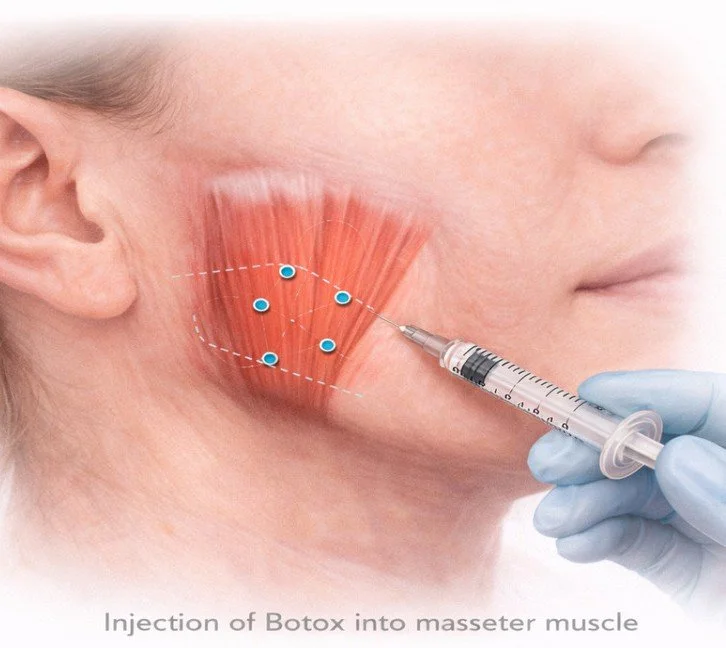
Masseter muscles: These are the large muscles at the sides of your jaw. They are heavily involved in chewing and may become enlarged or overactive in people who frequently clench their teeth.
Temporalis muscles: These muscles sit at the sides of the head and assist with jaw movement. They may be associated with temple tenderness and tension-type symptoms in some patients.
By reducing excessive activity in selected muscles, Botox may help some patients experience less muscle tension and discomfort.
However, Botox does not reposition the jaw joint, repair damaged joint structures or eliminate every cause of TMJ-related pain.
Can Botox Help with Teeth Grinding and Jaw Clenching?
Botox may be considered for selected patients with persistent jaw muscle overactivity associated with bruxism.
Some patients may experience:
Reduced forceful jaw clenching
Less muscle tightness
Improvement in jaw muscle discomfort
Reduced tenderness around the masseter muscles
Improvement in some associated headache symptoms
However, results vary between individuals. Botox does not necessarily stop the grinding habit itself, particularly during sleep, and it does not protect the teeth from wear in the same way that an appropriately prescribed dental splint may.
It is important to distinguish between reducing muscle force and treating the underlying reasons for bruxism.
Who May Be Suitable for Botox for TMJ?
Botox may be considered when a patient has persistent symptoms associated with excessive jaw muscle activity, particularly when conservative approaches have not provided sufficient relief.
A dental assessment should consider:
The location and nature of the jaw pain
Whether symptoms are primarily muscular or joint-related
The degree of jaw muscle activity and tenderness
Evidence of teeth grinding or clenching
Existing tooth wear or fractured dental restorations
Jaw opening, movement and joint function
Medical history and current medications
Previous treatment and response
Botox is not automatically suitable for everyone with TMJ clicking, jaw locking or headaches. For example, a problem involving the joint disc or other joint structures may require a different management approach.
What Happens During Botox Treatment?
Treatment begins with a consultation and assessment to determine whether the symptoms are likely to involve the muscles being considered for injection.
If Botox is appropriate, the clinician identifies the relevant muscles and discusses the proposed injection sites, expected benefits, limitations and potential risks.
The injections are administered into selected muscles using a fine needle.
The effects are not immediate. Muscle activity generally begins to reduce over several days, with the full effect developing over approximately one to two weeks. The duration varies, but the effect is temporary and commonly lasts around three to four months.
Further treatment should only be considered after reviewing the patient's response and ongoing needs.
Are There Any Risks or Side Effects?
Botox is a medical treatment and should not be regarded as a risk-free cosmetic procedure.
Possible side effects include:
Temporary injection-site discomfort or bruising
Localised swelling
Temporary weakness or fatigue when chewing
Changes in smile symmetry
Unwanted weakness in nearby muscles
Headache
Changes in muscle function
Repeated treatment of the masseter muscles may contribute to muscle thinning and changes in the jawline. There are also concerns about possible effects on the jaw bone with repeated or prolonged treatment, although the clinical significance and long-term effects remain under investigation.
Rarely, botulinum toxin can spread beyond the intended area and cause more serious effects, including swallowing or breathing difficulties. Patients should seek urgent medical attention if these symptoms occur.
A thorough discussion of individual risks is essential before proceeding.
Does Botox Replace a TMJ Splint?
No. Botox and an occlusal splint serve different purposes.
An appropriately designed occlusal splint may help protect the teeth from excessive grinding forces and reduce damage to dental surfaces.
Botox may reduce the strength of contraction in selected jaw muscles.
Depending on the patient's symptoms and dental findings, these approaches may sometimes be considered as part of a broader management plan. Neither treatment is suitable for every patient, and a splint should be monitored to ensure it remains appropriate.
Why Is a Comprehensive TMJ Assessment Important?
Jaw pain is not always caused by excessive muscle activity. Some patients have joint-related conditions, while others experience a combination of muscle, joint, dental and wider health factors.
Treating the muscles alone may not address the underlying problem.
A comprehensive assessment may include reviewing your symptoms, examining your jaw movement, assessing muscle tenderness, checking your bite and evaluating signs of tooth wear. Imaging may be considered when clinically indicated.
Where necessary, management may involve dental splint therapy, physiotherapy, jaw exercises, sleep assessment or referral to an appropriate medical or dental specialist.
The goal is not simply to reduce muscle activity. It is to understand the factors contributing to your symptoms and develop a suitable treatment plan.
Botox for TMJ in Dulwich Hill, Sydney
At Pain Free Dentist Sydney – Dr Lisa Chong Clinic, we understand how persistent jaw pain, clenching and teeth grinding can affect your daily activities, sleep and quality of life.
Dr Lisa Chong provides assessments for patients experiencing TMJ-related symptoms, bruxism, jaw muscle tension and excessive teeth clenching.
Botox may be discussed where clinically appropriate, following an assessment of jaw muscle activity and consideration of other possible causes of your symptoms.
Every patient is different. Our approach is to understand your concerns, explain the available options and help you make an informed decision about your care.
If you are experiencing jaw pain, headaches, teeth grinding or persistent jaw tension, contact our clinic to arrange an assessment.
Pain Free Dentist Sydney – Dr Lisa Chong Clinic
Dulwich Hill, NSW
Phone: 02 9558 8988
Email: info@painfreedentistsydney.com.au
Website: https://painfreedentistsydney.com.au