Pain Free Dentist Sydney | Dulwich Hill
Have you ever stopped yourself from smiling because of a missing tooth? Perhaps you find it difficult to chew certain foods, feel uncomfortable speaking, or worry that people notice the gap when you smile.
Losing a tooth can affect much more than your appearance. It can change the way you eat, speak and feel about yourself.
The good news is that modern dentistry offers a long-lasting way to replace missing teeth while restoring much of their natural appearance and function.
Dental implants are one of the most advanced options for replacing missing teeth. They are designed to provide a stable foundation for replacement teeth, helping you regain confidence in your smile and enjoy everyday activities more comfortably.
At Pain Free Dentist Sydney, we understand that every missing tooth tells a different story. Whether you have lost one tooth, several teeth or are struggling with loose dentures, dental implants may be worth considering.
What Exactly Is a Dental Implant?
Think of a dental implant as an artificial tooth root.
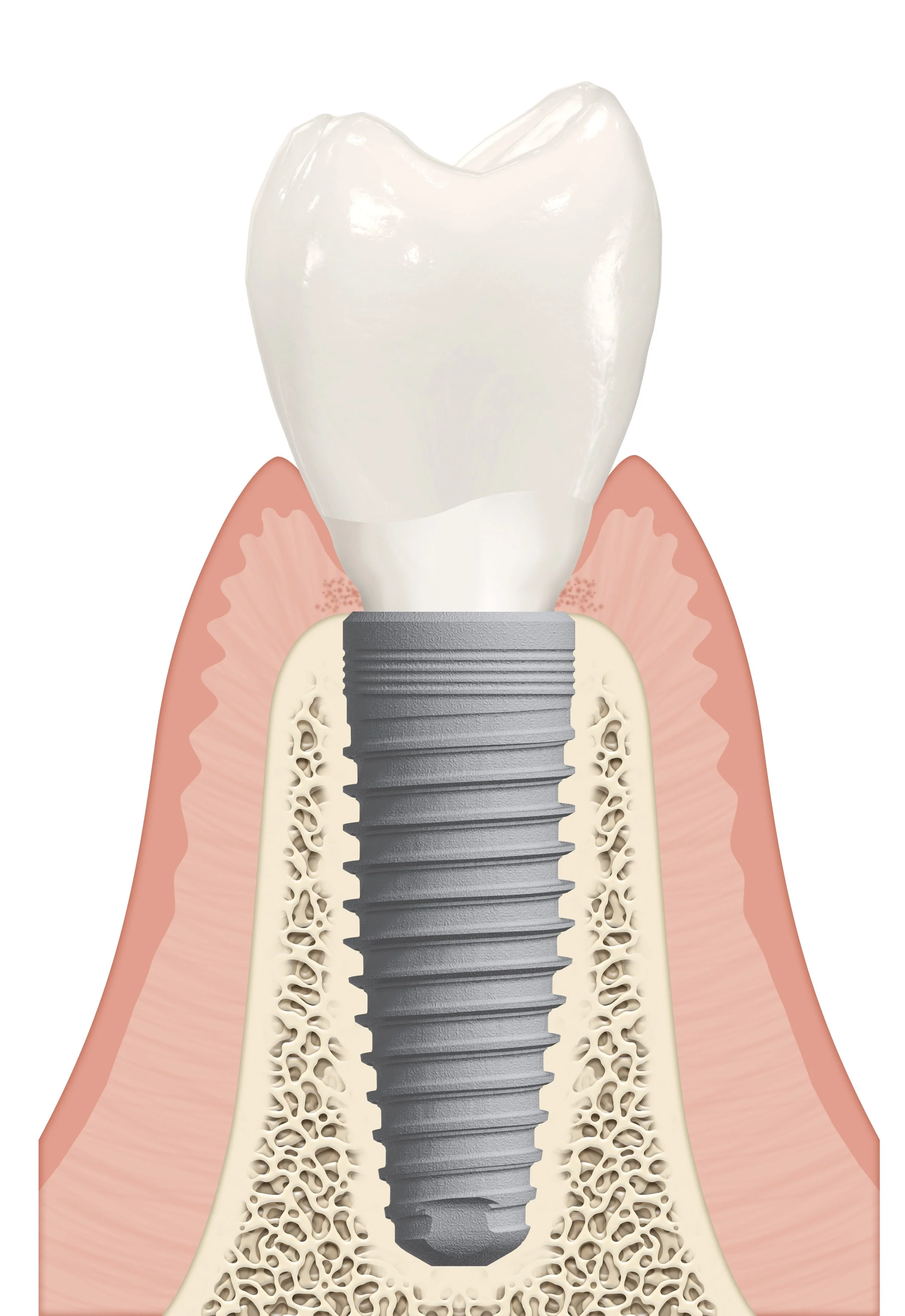
A dental implant is a small, usually titanium, post that is surgically placed into the jawbone to support a replacement tooth.
Once the implant integrates with the surrounding bone, it provides a stable foundation for a dental crown, bridge or full-arch prosthesis.
A typical dental implant restoration consists of three components:
1. The Implant Fixture
This is the small titanium component placed into the jawbone. Over time, the surrounding bone bonds with the implant through a biological process known as osseointegration.
2. The Abutment
This connects the implant fixture to the replacement tooth.
3. The Dental Crown
This is the visible replacement tooth, carefully designed to complement your existing teeth in shape, colour and appearance.
The result is a replacement tooth that looks and functions much like a natural tooth.
Why Choose Dental Implants Instead of Dentures or Bridges?
When a tooth is lost, patients often consider several replacement options. These may include removable dentures, conventional dental bridges or dental implants.
So, what makes implants different?
Unlike a conventional dental bridge, an implant does not usually require the neighbouring teeth to be prepared to support the replacement tooth.
Unlike removable dentures, an implant-supported tooth is fixed in place and does not need to be taken out for everyday use.
Dental implants also help transmit functional forces to the jawbone, which can help reduce the bone loss associated with missing teeth.
However, implants are not suitable for everyone. The best option depends on your bone condition, gum health, bite, medical history and individual expectations.
What Happens If You Leave a Missing Tooth Untreated?
Many people assume that losing a tooth is simply a cosmetic problem, particularly if the missing tooth is towards the back of the mouth.
However, a missing tooth can gradually affect the surrounding teeth and oral structures.
Here are some changes that may occur:
Neighbouring teeth may drift: Teeth beside the gap can gradually tilt or move into the empty space.
Opposing teeth may over-erupt: The tooth opposite the missing tooth may move further out of its normal position.
Jawbone shrinkage: Without the stimulation provided by a natural tooth root, the jawbone in the missing-tooth area can gradually lose volume.
Changes to chewing: You may begin favouring one side of your mouth, placing additional strain on other teeth.
Bite changes: Multiple missing teeth can affect how your upper and lower teeth meet.
Replacing missing teeth is not always urgent, but early assessment can help identify changes before they become more complicated.
Am I Suitable for Dental Implants?
One of the most common questions patients ask is whether they have enough bone for dental implants.
The answer depends on several factors.
Before implant treatment, a comprehensive assessment is necessary. This may include a clinical examination, dental X-rays and a CBCT scan to assess the available bone, anatomical structures and implant positioning.
Factors considered include:
The amount and quality of available jawbone.
The health of your gums.
Your existing bite and tooth alignment.
Your general medical health.
Smoking habits.
Teeth grinding or clenching.
Your oral hygiene and ability to maintain the implants.
Even patients who have experienced bone loss may still have options. Depending on the individual case, bone grafting or other surgical techniques may help prepare the area for implant placement.
The important thing is not to assume that you are unsuitable before having a proper assessment.
What If I Have Lost All My Teeth?
Dental implants are not only used to replace individual missing teeth.
For patients who have lost most or all of their teeth, implant-supported full-arch treatment may provide an alternative to conventional removable dentures.
Two commonly discussed approaches are All-on-4 and All-on-6 dental implants.
All-on-4 Dental Implants
All-on-4 treatment uses four strategically positioned implants to support a full arch of replacement teeth in suitable patients.
The technique often involves angling the posterior implants to make use of available bone and potentially reduce the need for extensive bone grafting.
All-on-6 Dental Implants
All-on-6 treatment uses six implants to support a full arch of replacement teeth.
The additional implants may provide more support and distribute biting forces across a greater number of implant sites, depending on the patient's anatomy and treatment design.
Neither approach is automatically better for everyone. Implant number, positioning, bone quality, bite forces and long-term maintenance requirements must all be considered.
Does Dental Implant Surgery Hurt?
It is understandable to feel nervous about implant surgery, particularly if you have never undergone oral surgery before.
Implant placement is generally performed under local anaesthesia, which numbs the treatment area.
Some patients experience pressure or vibration during the procedure, but should not experience sharp pain when adequately anaesthetised.
After surgery, it is normal to experience some swelling, tenderness or bruising. These symptoms usually improve as healing progresses.
For patients who experience significant dental anxiety or require more extensive implant surgery, IV sedation may also be an option where clinically appropriate.
At Pain Free Dentist Sydney, we understand that patient comfort is an important part of treatment planning.
How Long Does Dental Implant Treatment Take?
Dental implant treatment is a process rather than a single appointment.
Following implant placement, the implant needs time to integrate with the surrounding jawbone. This process is called osseointegration.
The healing period varies depending on the patient's bone quality, implant location, surgical complexity and whether additional procedures such as bone grafting are required.
Once sufficient healing has occurred, the restorative stage can begin. This involves connecting the appropriate components and fitting the final crown, bridge or full-arch prosthesis.
Some carefully selected patients may qualify for immediate provisional teeth, but this is not suitable for every case.
A well-planned implant treatment should prioritise long-term stability rather than rushing the process.
How Do You Look After Dental Implants?
Dental implants require ongoing care, just like natural teeth.
Although the implant itself cannot develop tooth decay, the surrounding gum and bone can still become inflamed or infected.
One important condition is peri-implantitis, which involves inflammation around an implant and may result in progressive bone loss if left untreated.
To protect your implants:
Brush twice daily using an appropriate toothbrush.
Clean between your teeth and around implants every day.
Use suitable interdental brushes where recommended.
Attend regular professional dental maintenance appointments.
Avoid smoking.
Have your bite and implant restorations checked periodically.
Seek assessment if you notice bleeding, swelling, discomfort or looseness.
Dental implants can provide excellent long-term function, but their success depends on proper planning, good oral hygiene and ongoing maintenance.
Restore Your Smile with Dental Implants at Pain Free Dentist Sydney
Missing teeth should not mean giving up the foods you enjoy or hiding your smile.
Modern implant dentistry offers a range of solutions, from replacing a single missing tooth to restoring an entire arch of teeth.
At Pain Free Dentist Sydney, Dulwich Hill, Dr Lisa Chong provides individualised dental assessments and treatment planning for patients considering dental implants.
We understand that every patient has different needs. Some may require a single implant, while others may need multiple implants, bone grafting or full-arch rehabilitation such as All-on-4 or All-on-6.
Our approach is to assess your oral health, understand your expectations and discuss the most appropriate treatment options for your circumstances.
Your smile deserves a solution that is carefully planned, comfortable and designed with your long-term oral health in mind.
Book Your Dental Implant Consultation
If you are missing one or more teeth and would like to explore your options, contact our team.
Pain Free Dentist Sydney – Dulwich Hill
Address: G1A, 570 New Canterbury Road, Hurlstone Park NSW 2193
Phone: 02 9558 8988
Email: info@painfreedentistsydney.com.au
Website: https://painfreedentistsydney.com.au