Pain Free Dentist Sydney | Dulwich Hill
Losing your teeth can change the way you eat, speak, smile and interact with other people. For some, it happens gradually as teeth become loose due to gum disease. For others, it may follow years of dental problems, accidents or extensive tooth decay.
Whatever the reason, missing teeth can affect your confidence and quality of life.
One of the most common questions patients ask is: Should I get dentures, or are dental implants a better option?
Both treatments can replace missing teeth, but they work very differently. Understanding their advantages and limitations can help you make a more informed decision about your oral health.
Let's explore the differences.
What Are Dentures?
Dentures are removable appliances designed to replace missing teeth and restore your ability to chew and speak.
There are two main types:
Full dentures replace all the teeth in the upper or lower jaw.
Partial dentures replace several missing teeth while using the remaining natural teeth for support.
Dentures have helped millions of people restore their smiles. They can be particularly useful for patients who have lost many teeth or who are not suitable for implant surgery.
However, conventional dentures sit on the gums and rely on the underlying tissues for support. This means they may move during eating or speaking, particularly when the jawbone changes shape over time.
Some patients also experience sore spots, difficulty chewing harder foods or concerns about their dentures becoming loose.
What Are Dental Implants?
Dental implants are designed to replace missing tooth roots.
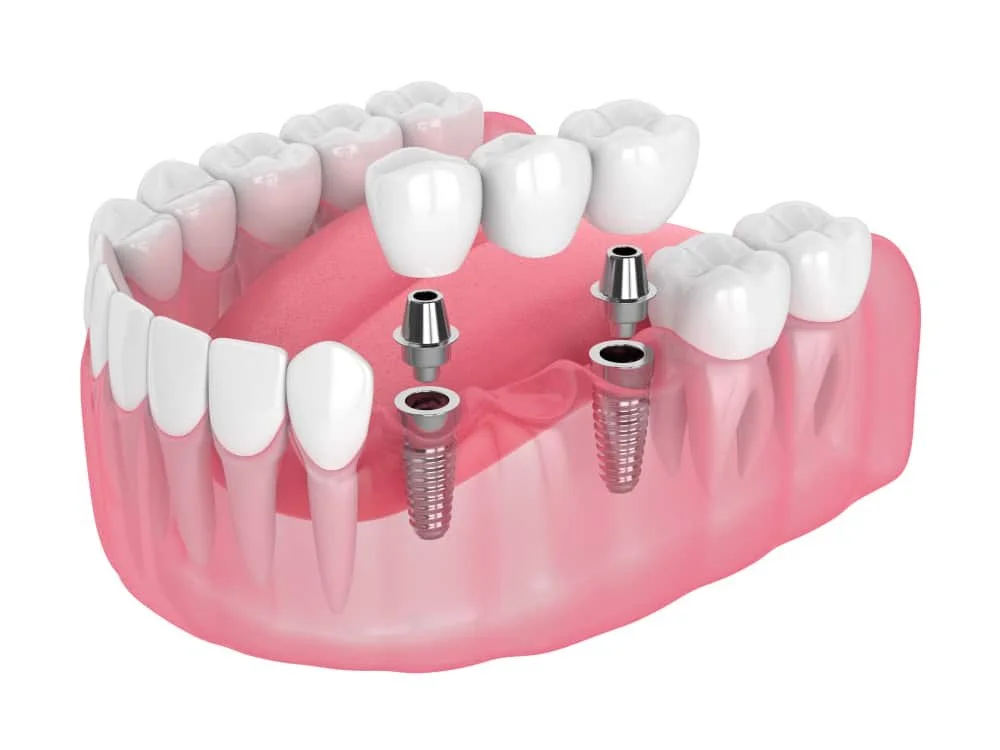
A small titanium implant is placed into the jawbone, where it gradually integrates with the surrounding bone. Once healing has occurred, it can support a replacement crown, bridge or full-arch set of teeth.
Unlike conventional removable dentures, implant-supported teeth can be fixed in place.
For many patients, this provides a more stable and natural-feeling replacement.
Dental implants can be used to replace:
A single missing tooth.
Several missing teeth.
An entire upper or lower arch.
Loose dentures that need additional support.
Dental Implants vs Dentures: What Is the Difference?
The biggest difference is how each option is supported.
Conventional dentures rest on the gums, whereas dental implants are anchored into the jawbone.
This difference can influence comfort, chewing function, stability and long-term maintenance.
1. Stability When Eating and Speaking
Have you ever worried that your dentures might move while eating or speaking?
This is a common concern among denture wearers.
Conventional dentures can sometimes become unstable, particularly in patients who have experienced significant jawbone shrinkage.
Dental implants provide a more secure foundation because they are anchored into the jawbone.
Implant-supported teeth can therefore offer improved stability and confidence when eating and speaking.
2. Preserving the Jawbone
One important issue following tooth loss is gradual bone resorption.
Your natural tooth roots help stimulate the jawbone during everyday chewing. When teeth are lost, the bone in that area no longer receives the same stimulation and may gradually shrink.
Conventional dentures replace the visible teeth but do not replace the tooth roots.
Dental implants can help maintain bone around the implant by transmitting functional forces to the surrounding jawbone.
However, implants do not prevent all bone loss, and regular maintenance remains essential.
3. Comfort and Confidence
Dentures can take time to get used to.
Some patients experience difficulty adjusting to the feeling of a removable appliance, while others struggle with movement, food trapping or irritation of the gums.
Implant-supported teeth may provide a more natural-feeling alternative because they are more securely supported.
For patients who have struggled with loose dentures for years, this can make a meaningful difference to their everyday lives.
4. Maintenance and Cleaning
Conventional removable dentures need to be taken out for cleaning and generally removed at night, following your dentist's instructions.
Fixed implant-supported teeth remain in place and require daily brushing and specialised cleaning around the implant areas.
Both options require regular professional dental reviews.
It is important to remember that dental implants are not maintenance-free. The surrounding gums and bone need to remain healthy to protect the implants long term.
What If I Have Been Wearing Dentures for Many Years?
You may be surprised to learn that wearing dentures for many years does not automatically mean you cannot have dental implants.
However, prolonged tooth loss can result in significant jawbone shrinkage.
When there is insufficient bone available, additional procedures such as bone grafting may sometimes be considered.
A CBCT scan can help assess the amount of available bone and identify important anatomical structures before implant placement.
Depending on your circumstances, different implant treatment options may be available.
These may include individual dental implants, implant-supported bridges or full-arch solutions such as All-on-4 and All-on-6.
What Are All-on-4 and All-on-6 Dental Implants?
For patients who have lost most or all of their teeth, replacing every missing tooth individually is not always necessary.
Full-arch implant rehabilitation offers another approach.
All-on-4 dental implants use four strategically positioned implants to support a full arch of replacement teeth in suitable patients.
All-on-6 dental implants use six implants to support a full arch, potentially providing additional support and distributing functional forces across more implant sites.
The most appropriate approach depends on bone quality, jaw anatomy, bite forces, medical history and restorative requirements.
For some patients, these treatments can provide an alternative to conventional removable full dentures.
Are Dental Implants Suitable for Everyone?
Although dental implants offer many advantages, they are not suitable for every patient.
Before recommending implant treatment, your dentist needs to assess:
Your jawbone volume and quality.
Your gum health.
Your existing bite and tooth alignment.
Your general medical history and medications.
Smoking habits.
Teeth grinding or clenching.
Your ability to maintain good oral hygiene.
Patients with certain medical conditions, uncontrolled gum disease or inadequate bone may require additional assessment or treatment before implant surgery.
A proper consultation is essential to determine which option is most appropriate.
So, Which Should You Choose?
There is no single answer for everyone.
Dentures may be appropriate for patients seeking a removable solution, those who are unsuitable for surgery or those who prefer a less invasive treatment approach.
Dental implants may be worth considering if you want a fixed replacement, improved stability and support for the jawbone.
In some cases, a combination of both approaches is possible, such as implant-retained dentures that attach to implants but can still be removed for cleaning.
The most important thing is to choose a treatment that suits your oral health, lifestyle and long-term expectations.
Take the First Step Towards Restoring Your Smile
At Pain Free Dentist Sydney, Dulwich Hill, Dr Lisa Chong understands that losing teeth can affect much more than your appearance.
Whether you are struggling with loose dentures, missing several teeth or considering a complete smile restoration, we can assess your dental condition and discuss suitable treatment options.
We provide individualised treatment planning for patients considering single dental implants, implant-supported bridges, All-on-4 and All-on-6 rehabilitation.
If you feel nervous about dental procedures, we can also discuss appropriate comfort options, including IV sedation where clinically suitable.
You do not have to settle for a smile that makes you feel uncomfortable. There may be more options available than you realise.
Book a Dental Consultation
Pain Free Dentist Sydney – Dulwich Hill
Address: G1A, 570 New Canterbury Road, Hurlstone Park NSW 2193
Phone: 02 9558 8988
Email: info@painfreedentistsydney.com.au
Website: https://painfreedentistsydney.com.au