Pain Free Dentist Sydney | Dulwich Hill
Do you wake up with a sore jaw? Experience frequent headaches, clicking sounds when opening your mouth, or tightness around your temples? Perhaps you have noticed that your jaw sometimes locks, making it difficult to open your mouth fully.
You may have been treating your headaches, visiting a physiotherapist for neck pain or taking pain relief for facial tension without realising that your jaw could be contributing to the problem.
The connection between your jaw, muscles, teeth, head and neck is more complicated than many people realise.
You could be experiencing symptoms associated with temporomandibular joint disorder (TMD), commonly referred to as TMJ disorder.
At Pain Free Dentist Sydney, we understand that jaw problems can affect much more than your ability to chew. They can interfere with sleep, concentration, eating and everyday comfort.
Let's explore what TMJ disorder is, why it happens and what can be done to help.
What Is TMJ Disorder?
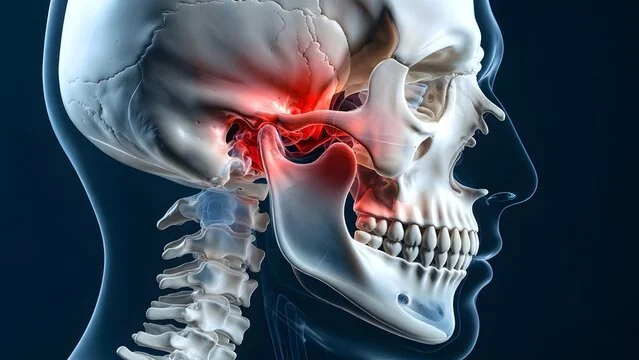
The temporomandibular joints (TMJs) are the two joints located just in front of your ears. They connect your lower jaw (mandible) to your skull.
These joints are remarkable structures. Every time you talk, yawn, chew or swallow, they work together with surrounding muscles, ligaments and other structures to produce smooth jaw movement.
However, when these structures become irritated, overloaded or dysfunctional, symptoms can develop.
The term temporomandibular disorder (TMD) describes a group of conditions affecting the jaw joints, chewing muscles and associated structures.
It is not simply a problem with the jawbone. The muscles, joint disc, bite, nervous system and surrounding structures may all play a role.
7 Warning Signs You May Have TMJ Disorder
TMJ disorder does not always present as obvious jaw pain. Some patients experience symptoms in areas they would never associate with their jaw.
Here are some common warning signs.
1. Jaw Clicking or Popping
Do you hear a clicking or popping sound when opening or closing your mouth?
This may be associated with movement of the small disc inside the jaw joint. However, clicking without pain or functional problems is common and does not necessarily require treatment.
2. Jaw Pain or Facial Tension
You may experience aching around your cheeks, temples, ears or jaw muscles.
The discomfort may become more noticeable when chewing, talking for extended periods or waking up in the morning.
3. Frequent Headaches
The temporalis muscles, located around your temples, help control jaw movement.
When these muscles become overworked or sensitive, they may contribute to headaches around the temples and sides of the head.
Some patients with TMD also experience headaches that overlap with other headache conditions.
4. Jaw Locking or Restricted Mouth Opening
Have you ever tried to open your mouth but felt that your jaw would not move properly?
Some patients experience intermittent locking, difficulty opening fully or discomfort when attempting to open wider.
This may be associated with joint disc displacement, joint inflammation or other mechanical problems.
5. Neck and Shoulder Pain
Your jaw does not function in isolation.
The muscles and structures of the head and neck work together during everyday movement. Some patients with TMD also experience neck discomfort, muscle tenderness and shoulder tension.
However, neck and shoulder pain can have many causes, so it is important not to assume that all such symptoms originate from the jaw.
6. Teeth Grinding and Clenching
Do you find yourself clenching your teeth during the day or waking up with tired jaw muscles?
Bruxism, which includes grinding and clenching, can place additional loading on the teeth, chewing muscles and jaw joints.
Over time, this may contribute to tooth wear, muscle discomfort and TMD symptoms in susceptible individuals.
7. Ear Discomfort or Facial Pain
Some patients report discomfort around the ears, a feeling of pressure or pain near the jaw joint.
Because the TMJ is located close to the ear, symptoms can sometimes be difficult to distinguish from other conditions.
Persistent ear symptoms should be properly assessed rather than automatically attributed to TMJ disorder.
What Causes TMJ Disorder?
There is rarely just one cause.
TMD is considered multifactorial, meaning several contributing factors may interact to produce symptoms.
Some common contributors include:
Teeth grinding and clenching: Repeated muscle activity can increase loading on the jaw muscles and joints.
Stress and anxiety: Emotional stress may increase daytime clenching, muscle tension and pain sensitivity.
Previous trauma: Accidents, whiplash injuries or direct trauma to the jaw may contribute to symptoms.
Muscle dysfunction: Overworked or sensitive chewing muscles can produce facial pain and headaches.
Joint disc problems: Changes in the position or movement of the joint disc may contribute to clicking, restricted movement or locking.
Arthritis and joint degeneration: Inflammatory or degenerative changes can affect joint function.
Sleep-related factors: Sleep disturbances and sleep bruxism may interact with pain and muscle symptoms.
Importantly, TMD should not automatically be blamed on an uneven bite or misaligned teeth. A careful assessment is needed to identify the factors relevant to each patient.
Can TMJ Disorder Affect Your Teeth?
Absolutely.
One often overlooked aspect of TMD is the relationship between jaw function and dental health.
Repeated clenching and grinding can gradually wear down the enamel, flatten the biting surfaces and sometimes cause teeth to chip or fracture.
In more severe cases, patients may experience:
Significant loss of tooth structure.
Flattened or shortened teeth.
Cracked or fractured restorations.
Tooth sensitivity.
Changes in the way the upper and lower teeth meet.
Difficulty achieving a comfortable bite.
When teeth become severely worn, restoring their structure may sometimes form part of a broader treatment plan.
However, rebuilding worn teeth without understanding the underlying jaw and muscle problems may not address the patient's overall functional concerns.
This is why assessing the relationship between the teeth, muscles and jaw joints is important.
How Is TMJ Disorder Diagnosed?
There is no single test that diagnoses every type of TMD.
A proper assessment begins with understanding your symptoms and how they affect your daily life.
At Pain Free Dentist Sydney, the assessment may include:
1. Medical and Dental History
We discuss your symptoms, previous injuries, headaches, grinding habits, dental history and any previous treatment.
2. Jaw Movement Assessment
We assess how far you can open your mouth, whether movement is restricted and whether your jaw deviates during opening.
3. Muscle Examination
The chewing muscles around your jaw and temples are assessed for tenderness, tightness and discomfort.
4. Joint Examination
We assess the jaw joints for tenderness, clicking, popping and other movement abnormalities.
5. Dental and Bite Assessment
We examine tooth wear, existing restorations and the way your upper and lower teeth meet.
6. Imaging Where Necessary
Depending on the clinical findings, imaging may be recommended.
CBCT scans can help assess the bony structures of the jaw joints, while MRI may be useful when more detailed assessment of the joint disc and soft tissues is required.
The appropriate investigation depends on the symptoms and suspected condition.
What Treatments Are Available for TMJ Disorder?
The most important principle in managing TMD is that treatment should be individualised.
There is no single splint, medication or dental procedure that works for everyone.
Depending on the underlying problem, treatment may include:
1. TMJ Splint Therapy
A carefully designed occlusal splint may help manage certain forms of TMD and protect teeth from grinding-related damage.
The splint needs to be assessed and adjusted according to the patient's symptoms, bite and response to treatment.
It is not simply a matter of purchasing a generic night guard.
2. Physiotherapy
Physiotherapy may help improve jaw mobility, reduce muscular discomfort and address associated neck and movement problems.
Some patients benefit from treatment directed at the jaw, cervical spine and surrounding muscles.
3. Myofascial Release
For patients with significant muscular tenderness and tension, appropriate soft-tissue therapy may help reduce discomfort and improve movement.
4. Managing Bruxism
Identifying daytime clenching, improving awareness of jaw habits and addressing contributing sleep or stress factors can form an important part of treatment.
5. Restoring Severely Worn Teeth
In selected cases, patients with substantial tooth wear may require restorative treatment to rebuild lost tooth structure.
This must be carefully planned alongside the patient's jaw function, muscle comfort and bite stability.
6. Botox for Selected Patients
Botulinum toxin injections may be considered in selected cases of persistent muscle-related jaw pain or excessive muscle activity.
However, it is not a first-line treatment for every TMD patient, and potential benefits and risks need to be discussed.
Why Treating Only the Jaw May Not Be Enough
One important aspect of TMD management is recognising that the jaw is connected to a much larger functional system.
A patient may have jaw muscle pain together with neck stiffness, poor sleep, frequent headaches and daytime clenching.
Treating only one symptom may not address all the factors contributing to their discomfort.
For some patients, a coordinated approach involving a dentist, physiotherapist, medical practitioner and other appropriate healthcare professionals may be beneficial.
The goal is to understand the contributing factors rather than simply treating the symptoms in isolation.
Living With TMJ Pain? You Don't Have to Ignore It.
If you experience persistent jaw pain, headaches, restricted opening or teeth grinding, it is worth having your symptoms properly assessed.
At Pain Free Dentist Sydney, Dulwich Hill, Dr Lisa Chong has a particular interest in temporomandibular disorders, bruxism, jaw function and the relationship between dental occlusion and muscular discomfort.
Dr Chong has undertaken further training in the field of orofacial pain and occlusion, including training with Dr Jeffrey Okeson through CFFOO.
Every patient is different. Some may require a splint, others may benefit from physiotherapy or muscular treatment, while patients with severe tooth wear may need a more comprehensive restorative assessment.
Our approach is to understand the bigger picture before recommending treatment.
If your jaw clicks, locks, aches or feels constantly tense, don't simply accept it as something you have to live with. Find out what may be contributing to your symptoms.
Book a TMJ Consultation
If you are experiencing jaw pain, headaches, facial tension or teeth grinding, contact our clinic to arrange an assessment.
Pain Free Dentist Sydney – Dulwich Hill
Address: G1A, 570 New Canterbury Road, Hurlstone Park NSW 2193
Phone: 02 9558 8988
Email: info@painfreedentistsydney.com.au
Website: https://painfreedentistsydney.com.au