Do you wake up with a tight jaw, experience frequent headaches or find yourself clenching your teeth throughout the day?
Persistent jaw discomfort can affect everyday activities, including eating, speaking, sleeping and concentrating. For some individuals, these symptoms are associated with overactivity of the muscles responsible for chewing.
One treatment that has attracted increasing interest is Botox for TMJ pain.
Botulinum toxin type A, commonly known as Botox, works by temporarily reducing muscle activity. When appropriately selected and administered, it may help reduce excessive contraction of certain jaw muscles and provide relief for some patients experiencing persistent muscular jaw pain.
At Pain Free Dentist Sydney in Dulwich Hill, we take an individualised approach to assessing TMJ dysfunction, muscle activity and teeth grinding before considering whether Botox may be an appropriate treatment option.
What Is TMJ Dysfunction?
The temporomandibular joints (TMJ) are located on either side of your face, connecting the lower jaw to the skull.
These joints work together with surrounding muscles, ligaments and other structures to allow you to open and close your mouth, chew and speak.
Temporomandibular disorders (TMD) refer to a group of conditions affecting the jaw joints and associated muscles.
Common symptoms include:
Jaw pain and muscle tightness.
Teeth clenching and grinding (bruxism).
Frequent headaches, particularly around the temples.
Facial muscle tenderness.
Pain around the ears.
Clicking or popping sounds when opening the mouth.
Difficulty opening the mouth fully.
Jaw fatigue when chewing.
Morning jaw stiffness.
TMJ dysfunction is multifactorial. Symptoms may be influenced by muscle overactivity, joint conditions, previous injuries, stress, sleep disturbances and other contributing factors.
Identifying the source of discomfort is essential before deciding on an appropriate treatment approach.
What Is Botox and How Does It Work for TMJ Pain?
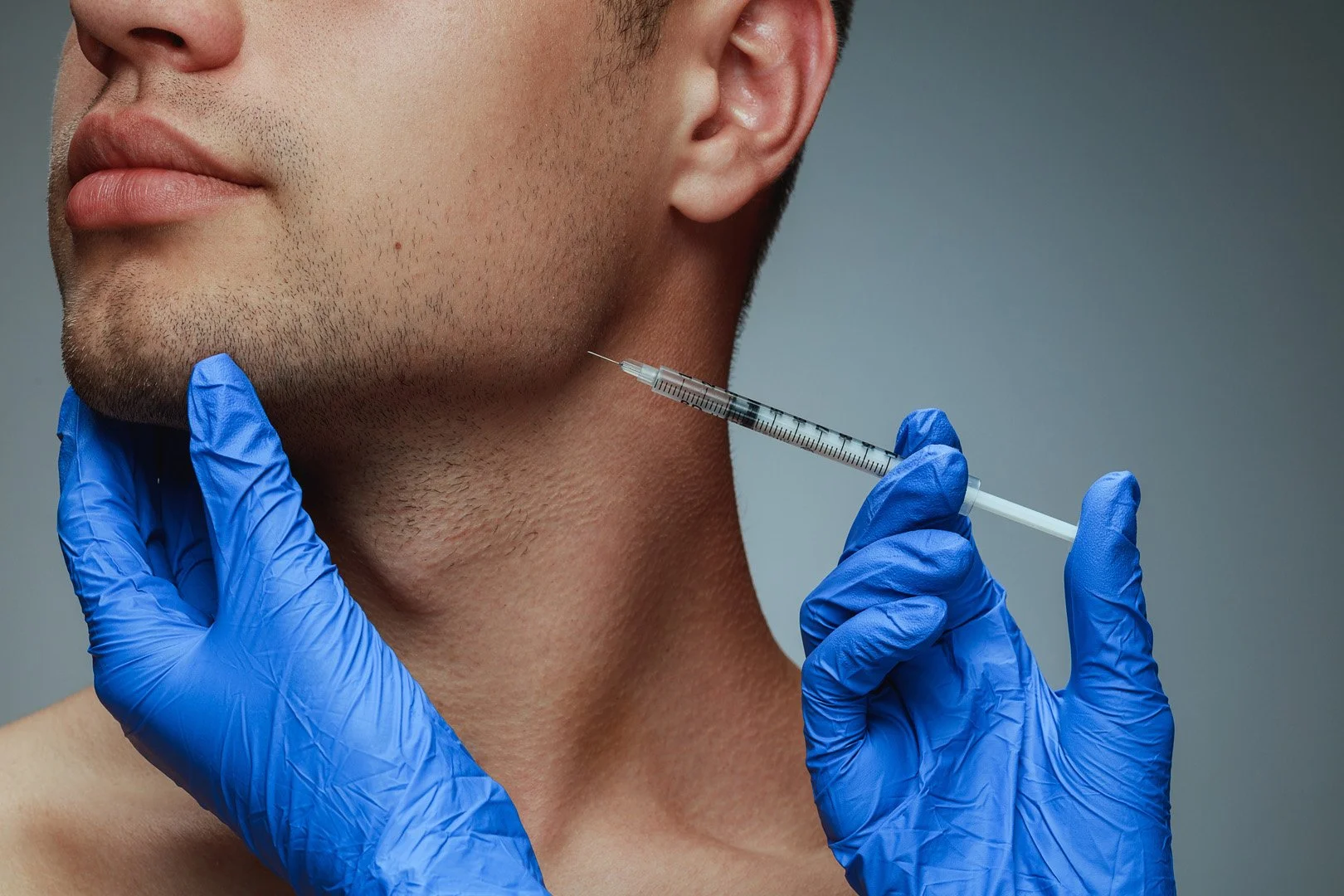
Botox is a brand name for botulinum toxin type A, a prescription medicine that temporarily reduces communication between nerves and targeted muscles.
When injected into selected muscles, it reduces the release of acetylcholine, a chemical messenger involved in muscle contraction.
This temporarily reduces the strength of muscle contraction.
In patients with selected muscular TMJ conditions, reducing excessive activity in certain chewing muscles may help decrease muscular tension and discomfort.
The muscles commonly assessed include:
1. Masseter Muscles
The masseter muscles are located on either side of the jaw. They are among the strongest muscles involved in chewing.
Excessive activity may be associated with:
Jaw clenching.
Teeth grinding.
Jaw muscle tenderness.
Facial muscle fatigue.
Enlargement of the masseter muscles.
2. Temporalis Muscles
The temporalis muscles are located on the sides of the head, around the temples.
They assist with jaw elevation and contribute to chewing and clenching.
Excessive muscle activity may be associated with temple tenderness, headaches and muscular discomfort.
The muscles selected for treatment depend on the patient's clinical presentation and individual muscle activity assessment.
5 Potential Benefits of Botox for TMJ Pain
Botox may be considered for selected patients with persistent muscular symptoms.
Potential benefits include:
1. Reducing Excessive Jaw Muscle Activity
Botox temporarily reduces the contraction strength of targeted muscles, which may help patients experiencing excessive muscular activity.
2. Relieving Jaw Muscle Tension
Some patients experience persistent tightness around the masseter and temporalis muscles. Reducing muscle activity may help alleviate discomfort in appropriately selected cases.
3. Helping Manage Muscular Facial Pain
Overactive chewing muscles may contribute to facial tenderness and discomfort. Botox may provide symptomatic relief for some patients with muscular TMD.
4. Addressing Masseter Muscle Enlargement
Repeated clenching and muscle overactivity may contribute to enlarged masseter muscles. Botox can temporarily reduce muscle bulk in some patients.
5. Supporting a Broader TMJ Management Plan
For selected patients, Botox may be considered as an additional intervention alongside other approaches to managing jaw muscle dysfunction.
It is important to understand that Botox does not correct every underlying cause of TMJ dysfunction, and treatment outcomes vary between individuals.
Is Botox Suitable for Teeth Grinding (Bruxism)?
Teeth grinding and clenching can place considerable forces on the teeth, jaw muscles and temporomandibular joints.
Some patients grind their teeth during sleep, while others clench their jaws unconsciously during the day.
Signs of bruxism may include:
Flattened or worn tooth surfaces.
Cracked or fractured teeth.
Morning headaches.
Jaw muscle tenderness.
Increased masseter muscle bulk.
Tooth sensitivity.
Jaw fatigue.
Botox may reduce the intensity of muscular contractions in selected patients. However, it does not necessarily eliminate the underlying tendency to grind or clench.
It also does not replace the need to assess tooth wear, bite relationships, sleep quality and other contributing factors.
A comprehensive management plan may include behavioural strategies, appropriate dental appliances, muscle management and assessment of associated sleep disorders.
What Happens During a Botox Assessment for TMJ Pain?
Botox treatment should never be based solely on a patient's report of jaw pain.
A proper clinical assessment is important to determine whether the symptoms are predominantly muscular, joint-related or associated with other conditions.
At Pain Free Dentist Sydney, the assessment may include:
1. Medical and Dental History
We discuss your symptoms, previous dental treatment, medical history, medication use, teeth grinding habits and previous TMJ management.
2. Jaw Movement Assessment
We assess mouth opening, jaw movement, deviation, clicking and any discomfort experienced during movement.
3. Muscle Palpation
The masseter and temporalis muscles are examined to identify tenderness, muscle tightness and areas of discomfort.
4. Muscle Activity Assessment
We assess the activity and function of the relevant chewing muscles to help determine whether excessive muscular activity may be contributing to your symptoms.
5. Individualised Treatment Planning
Following the assessment, suitable treatment options are discussed. Botox may be considered when clinically appropriate, taking into account potential benefits, limitations and risks.
How Long Does Botox for TMJ Pain Last?
The effects of botulinum toxin are temporary.
Patients may begin noticing changes in muscle activity within several days, with the effect generally developing over approximately one to two weeks.
The duration varies depending on the individual, muscles treated, formulation and treatment response.
Some patients experience effects for several months before muscle activity gradually returns.
Repeat treatment should not be automatic. The need for further injections should be reassessed according to symptoms, clinical findings, previous response and potential cumulative risks.
Are There Risks or Side Effects of Botox for TMJ?
Although Botox is widely used in medical and dental settings, it is not without risks.
Possible side effects include:
Temporary bruising or swelling at injection sites.
Localised tenderness.
Temporary chewing weakness.
Muscle fatigue.
Facial asymmetry.
Changes in smile appearance.
Headache.
Difficulty chewing certain foods.
Unwanted spread of the medication, potentially causing swallowing or other muscle difficulties.
There are also concerns about changes in muscle bulk and possible effects on the underlying jawbone, particularly with repeated treatment.
Research into long-term effects on mandibular bone remains incomplete, and the clinical significance of these changes is not fully established.
For this reason, Botox should be considered carefully rather than used routinely for every patient with TMJ pain.
Botox vs Dental Splint Therapy: What Is the Difference?
Botox and dental splint therapy have different purposes.
A dental splint is an oral appliance designed for specific clinical indications, such as protecting teeth from excessive loading or managing selected jaw conditions.
Botox temporarily reduces activity in targeted muscles.
In some patients, these approaches may be considered as part of a broader management plan, but neither is appropriate for everyone.
The choice depends on the underlying diagnosis, symptoms, bite relationship, muscle activity and individual treatment goals.
Is Botox a Permanent Solution for TMJ Pain?
No. Botox provides temporary reduction in the activity of targeted muscles.
It does not permanently correct jaw joint disorders, bite relationships, sleep-related bruxism or other underlying contributing factors.
Patients with persistent TMJ symptoms may benefit from a broader management approach that considers:
Jaw muscle activity.
Teeth grinding and clenching.
Bite relationships.
Jaw joint function.
Sleep quality and possible sleep apnoea.
Neck and cervical muscle function.
Stress and behavioural factors.
Understanding these factors is important for achieving a more comprehensive approach to managing chronic jaw discomfort.
Why a Comprehensive TMJ Approach Matters
TMJ dysfunction is not simply a problem involving the jaw joint.
The chewing muscles, surrounding facial structures, cervical muscles, sleep patterns and nervous system can all influence the patient's symptoms.
For some patients, reducing excessive muscle activity may be helpful. Others may require physiotherapy, jaw exercises, behavioural management or appropriate dental treatment.
Botox should be viewed as a possible additional treatment for selected patients rather than a replacement for comprehensive TMJ assessment and conservative management.
Botox for TMJ Pain at Pain Free Dentist Sydney – Dulwich Hill
At Pain Free Dentist Sydney, Dr Lisa Chong takes an individualised approach to assessing patients experiencing TMJ pain, bruxism and excessive jaw muscle activity.
We believe that understanding the underlying cause of muscle discomfort is important before considering injectable treatment.
Our approach includes assessing jaw function, muscle activity, teeth grinding patterns and relevant contributing factors.
Where appropriate, Botox may be discussed as an additional treatment option following a comprehensive assessment.
Our priority is to help patients understand their condition and make informed decisions about their available treatment options.
Frequently Asked Questions About Botox for TMJ Pain
1. Does Botox stop teeth grinding?
Botox may reduce the strength of jaw muscle contractions, potentially reducing the intensity of grinding. However, it does not necessarily stop the underlying bruxism activity.
2. Can Botox help with TMJ headaches?
For some patients whose headaches are associated with excessive activity and tenderness of the temporalis muscles, Botox may provide symptomatic relief. However, headaches have many possible causes and require appropriate assessment.
3. Is Botox painful?
Botox is administered using small injections. Patients may experience brief discomfort, tenderness or minor bruising around the injection sites.
4. Can Botox damage the jawbone?
Research has raised concerns about potential changes in mandibular bone following reduced chewing muscle activity, particularly with repeated injections. The extent and long-term clinical significance remain uncertain.
5. Can Botox be combined with a dental splint?
In selected cases, both may be considered as part of an individualised management plan. The combination should be clinically assessed, as Botox is not a substitute for appropriate dental appliance therapy.
6. Is Botox suitable for everyone with TMJ pain?
No. Botox is not a first-line treatment for all TMJ disorders. It may be considered in carefully selected patients with persistent muscular symptoms after appropriate assessment and consideration of conservative treatments.
Book a TMJ Consultation in Dulwich Hill, Sydney
If you experience persistent jaw tightness, teeth grinding, facial muscle pain or recurring headaches, a comprehensive TMJ assessment may help identify the factors contributing to your symptoms.
At Pain Free Dentist Sydney, we take the time to assess your jaw function and muscle activity before discussing suitable treatment options.
Pain Free Dentist Sydney – Dulwich Hill
Phone: 02 9558 8988
Email: info@painfreedentistsydney.com.au
Website: https://painfreedentistsydney.com.au
Contact our clinic to arrange a TMJ consultation with Dr Lisa Chong.