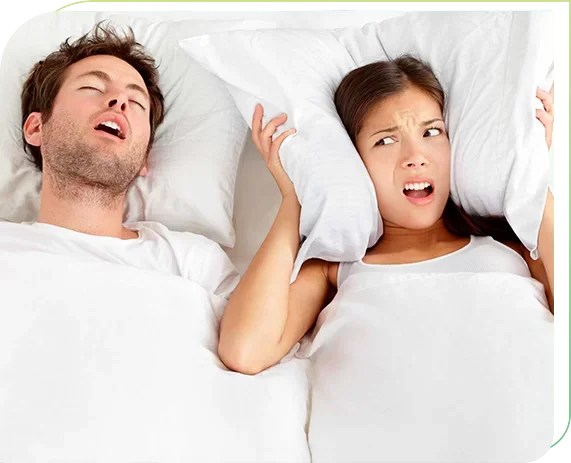
Do you wake up with a sore jaw, headaches, tight facial muscles or feel tired even after a full night's sleep?
You may think these symptoms are simply caused by teeth grinding or temporomandibular joint (TMJ) dysfunction. However, there may be another factor worth investigating: obstructive sleep apnoea (OSA).
Sleep apnoea and TMJ dysfunction are two different conditions, but research suggests that they may coexist more frequently than previously recognised.
Understanding the relationship between breathing during sleep, jaw muscle activity and oral function is important when investigating persistent jaw discomfort, headaches and poor sleep quality.
At Pain Free Dentist Sydney in Dulwich Hill, we believe that assessing jaw symptoms should involve looking beyond the teeth and considering the patient's broader oral and functional health.
What Is Obstructive Sleep Apnoea?
Obstructive sleep apnoea (OSA) is a sleep-related breathing disorder that occurs when the upper airway repeatedly becomes partially or completely obstructed during sleep.
These interruptions reduce or temporarily stop airflow, causing oxygen levels to fluctuate and repeatedly disrupting normal sleep.
The brain may briefly activate the body to restore breathing, even though the individual may not fully wake up or remember these episodes.
Common symptoms of obstructive sleep apnoea include:
Loud and persistent snoring.
Pauses in breathing during sleep.
Gasping or choking sensations at night.
Waking up with a dry mouth.
Morning headaches.
Excessive daytime tiredness.
Difficulty concentrating.
Unrefreshing sleep.
Frequent nighttime waking.
Untreated sleep apnoea can have significant health implications and should be properly investigated.
What Is TMJ Dysfunction?
The temporomandibular joints connect your lower jaw to your skull. These joints work together with surrounding muscles, ligaments and other structures to allow you to speak, chew and open and close your mouth.
TMJ dysfunction, also known as temporomandibular disorder (TMD), describes a group of conditions affecting the jaw joints and associated muscles.
Common symptoms include:
Jaw pain or tightness.
Clicking or popping sounds when opening the mouth.
Difficulty opening the mouth fully.
Pain around the ears.
Temple headaches.
Facial muscle tenderness.
Pain when chewing.
Teeth clenching or grinding.
Morning jaw stiffness.
Some patients experience symptoms predominantly during the morning, while others have discomfort throughout the day.
How Are Sleep Apnoea and TMJ Dysfunction Connected?
The relationship between sleep apnoea and TMJ dysfunction is complex.
A 2024 systematic review and meta-analysis published in the Journal of Oral Rehabilitation found a significant association between obstructive sleep apnoea and temporomandibular disorders. The researchers recommended including sleep apnoea screening as part of TMJ assessment.
However, an association does not establish that one condition directly causes the other.
There are several possible areas of interaction worth understanding.
1. Sleep Disruption and Jaw Muscle Activity
When breathing is repeatedly interrupted during sleep, the body experiences brief episodes of sleep arousal.
These disruptions may influence the nervous system and muscle activity during sleep.
Some individuals with sleep-disordered breathing also experience episodes of jaw muscle activity, including clenching and grinding.
Although sleep bruxism and OSA can occur together, research has not established a consistent direct cause-and-effect relationship.
2. Teeth Grinding and Jaw Muscle Tension
Bruxism involves repetitive or sustained jaw muscle activity, including clenching and grinding.
Over time, excessive loading may contribute to:
Muscle fatigue.
Tooth wear.
Jaw tenderness.
Morning headaches.
Facial muscle discomfort.
Increased sensitivity around the TMJ.
For patients who already have TMJ dysfunction, additional muscle loading may contribute to their symptoms.
It is important to remember that not everyone with sleep apnoea grinds their teeth, and not everyone who grinds their teeth has sleep apnoea.
3. Poor Sleep Quality and Increased Pain Sensitivity
Sleep plays an important role in the body's recovery and regulation of pain.
Repeated sleep interruptions may affect how the nervous system processes pain and may increase sensitivity to existing discomfort.
Patients experiencing both poor sleep and chronic TMJ pain may find that their symptoms become more difficult to manage.
This is one reason why assessing sleep quality can be valuable when investigating persistent facial and jaw pain.
4. Jaw Position and Upper Airway Anatomy
The position and anatomy of the lower jaw can influence the available space within the upper airway.
For some individuals, a retruded lower jaw or certain craniofacial characteristics may contribute to a narrower airway.
Other anatomical factors, including tongue size, tonsils, soft palate anatomy and nasal obstruction, can also influence airway function.
This does not mean that every person with a recessed jaw has sleep apnoea or that TMJ misalignment causes airway obstruction.
However, considering jaw anatomy alongside breathing and sleep symptoms can provide useful clinical information.
5. The Relationship Between Snoring, Clenching and Morning Headaches
Some patients experience several symptoms together:
Loud snoring.
Nighttime teeth grinding.
Morning headaches.
Jaw stiffness.
Neck muscle tension.
Daytime fatigue.
These symptoms may overlap because sleep quality, muscle activity and pain processing interact.
Rather than treating each symptom in isolation, it may be helpful to investigate whether an underlying sleep disorder is also present.
Can Treating TMJ Dysfunction Improve Sleep Apnoea?
TMJ treatment and sleep apnoea treatment address different clinical problems.
TMJ management may focus on reducing jaw discomfort, improving jaw function, managing excessive muscle loading and addressing contributing factors.
Sleep apnoea treatment aims to improve airflow during sleep and reduce breathing interruptions.
Depending on the patient's diagnosis, sleep apnoea management may include:
Continuous positive airway pressure (CPAP).
A professionally prescribed mandibular advancement device.
Positional therapy.
Lifestyle modifications.
Other treatments recommended by a sleep physician.
Treating TMJ dysfunction alone should not be expected to resolve obstructive sleep apnoea.
Similarly, improving sleep apnoea does not necessarily eliminate existing jaw muscle pain.
Both conditions may need to be assessed and managed independently, with coordination between the relevant healthcare professionals.
Can a Dental Splint Help?
Dental splints are commonly used in the management of selected TMJ conditions and to protect teeth from the effects of clenching and grinding.
However, a conventional occlusal splint is not the same as a sleep apnoea appliance.
A conventional splint generally aims to protect the teeth and manage certain aspects of jaw loading.
A mandibular advancement device (MAD), on the other hand, is specifically designed to position the lower jaw forward to help maintain upper airway patency during sleep.
These appliances have different purposes and should not be used interchangeably.
For patients with suspected or diagnosed sleep apnoea, appliance selection requires particular care. The Australian Dental Association recommends medical assessment for diagnosis and monitoring of sleep-disordered breathing treatment. It also emphasises monitoring TMJ function and dental changes during long-term oral appliance therapy.
A conventional splint should not be assumed to treat sleep apnoea and should be considered carefully when OSA is suspected.
Why a Multidisciplinary Approach Matters
Sleep apnoea and TMJ dysfunction can involve several overlapping anatomical and functional factors.
For this reason, a coordinated approach may be beneficial when patients present with persistent jaw pain alongside symptoms of sleep-disordered breathing.
Depending on the patient's circumstances, assessment may involve:
Dentist: To assess jaw function, teeth grinding, bite relationships, oral structures and TMJ symptoms.
Sleep Physician: To investigate suspected sleep apnoea, arrange appropriate sleep testing and establish a diagnosis.
Physiotherapist: To assess cervical spine function, neck muscle tension and associated musculoskeletal problems.
Myofunctional Therapist: Where appropriate, to assess tongue posture, oral muscle coordination and functional swallowing patterns.
The objective is to understand how the different factors may be interacting rather than assuming that one treatment will resolve every symptom.
When Should You Consider a TMJ and Sleep Assessment?
You may benefit from further assessment if you experience:
Persistent morning jaw pain or stiffness.
Frequent headaches upon waking.
Teeth grinding or clenching during sleep.
Loud snoring.
Witnessed breathing pauses during sleep.
Excessive daytime fatigue.
Difficulty opening your mouth.
Ongoing facial muscle tension.
Poor sleep despite spending sufficient time in bed.
If someone has noticed that you stop breathing during sleep, or you frequently wake up gasping, it is important to seek medical assessment for possible sleep apnoea.
A sleep study may be required to establish the diagnosis.
TMJ Assessment at Pain Free Dentist Sydney – Dulwich Hill
At Pain Free Dentist Sydney, Dr Lisa Chong takes a comprehensive approach to assessing patients experiencing TMJ dysfunction, jaw muscle tension and teeth grinding.
We recognise that jaw discomfort can be multifactorial and that sleep quality and breathing concerns may be important considerations in some patients.
Our assessment may consider:
Jaw opening and movement.
TMJ joint function.
Masticatory muscle tenderness.
Teeth grinding and clenching.
Bite relationships.
Oral anatomy and tongue function.
Sleep-related symptoms and relevant medical history.
Where sleep apnoea is suspected, medical assessment and appropriate sleep testing are important before determining a suitable management approach.
Our aim is to understand the contributing factors and develop an individualised management plan based on each patient's clinical needs.
Frequently Asked Questions
1. Can sleep apnoea cause TMJ pain?
Research has identified an association between OSA and TMJ disorders, but it has not established that sleep apnoea directly causes TMJ pain. Sleep disruption, jaw muscle activity and other contributing factors may overlap.
2. Can teeth grinding be a sign of sleep apnoea?
Teeth grinding may occur in people with sleep apnoea, but it is not a reliable diagnostic sign. Patients who grind their teeth and also experience snoring, breathing pauses or daytime fatigue may benefit from sleep assessment.
3. Can a TMJ splint make sleep apnoea worse?
The effect depends on the type and design of the appliance and the individual patient. Some conventional occlusal splints may influence breathing indices in certain patients. If sleep apnoea is suspected or diagnosed, appliance selection should be carefully reviewed.
4. Can a mandibular advancement device help both TMJ and sleep apnoea?
A mandibular advancement device is designed to help manage obstructive sleep apnoea by positioning the lower jaw forward. However, some patients may experience jaw discomfort or changes in their bite. Careful selection, adjustment and ongoing monitoring are important.
5. Should I see a dentist or sleep physician first?
If you suspect sleep apnoea, a medical practitioner or sleep physician should assess you for diagnosis. A dentist can assess your jaw function and discuss appropriate dental appliance options in coordination with your medical care.
Looking Beyond Jaw Pain: Understand the Bigger Picture
Persistent jaw pain, morning headaches, teeth grinding and poor sleep should not always be considered separate problems.
Although TMJ dysfunction and obstructive sleep apnoea are different conditions, recognising their possible association can help patients receive more comprehensive assessment and appropriate treatment.
At Pain Free Dentist Sydney, we believe that understanding the relationship between the jaw, muscles, oral function and sleep is an important part of patient-centred dental care.
Pain Free Dentist Sydney – Dulwich Hill
Phone: 02 9558 8988
Email: info@painfreedentistsydney.com.au
Website: https://painfreedentistsydney.com.au
Contact our clinic to arrange a TMJ assessment with Dr Lisa Chong.