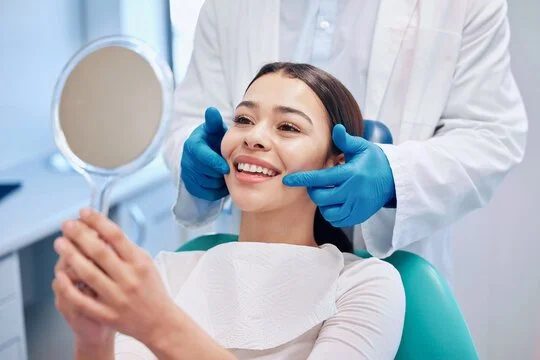
A bright, healthy-looking smile can make a wonderful difference to your confidence. However, over time, teeth can gradually become yellow, stained or discoloured due to ageing, dietary habits, smoking and other lifestyle factors.
Even people who brush and floss regularly may notice that their teeth are not as white as they once were.
Fortunately, modern dentistry offers several teeth whitening options that can help improve the appearance of discoloured teeth.
But how does teeth whitening work? Is professional whitening better than over-the-counter products? Can whitening damage your enamel? And why do some teeth become yellow even when you maintain good oral hygiene?
At Pain Free Dentist Sydney in Dulwich Hill, we believe that understanding the cause of tooth discolouration is the first step towards achieving a brighter and healthier-looking smile.
1. Why Do Teeth Become Yellow or Discoloured?
Tooth discolouration can occur for several reasons. Not all staining is the same, and identifying the underlying cause helps determine the most appropriate treatment.
Common causes include:
Coffee and tea
Coffee and tea contain pigments called tannins that can attach to the tooth surface and contribute to gradual staining.
Red wine and coloured foods
Certain foods and drinks contain strong pigments that may accumulate on the enamel over time.
Smoking and tobacco use
Nicotine and tar can contribute to yellow or brown tooth stains, particularly in people who smoke regularly.
Ageing
As we get older, the outer enamel layer gradually becomes thinner, allowing the naturally yellowish dentine underneath to become more visible.
Poor oral hygiene
Inadequate brushing and flossing can allow plaque and calculus to accumulate, contributing to surface discolouration.
Dental trauma
An injury to a tooth can affect the dental pulp and sometimes cause the tooth to become darker over time.
Certain medications
Some medications, particularly certain antibiotics taken during tooth development, can cause intrinsic tooth discolouration.
Understanding whether staining is external or internal is important because different types of discolouration respond differently to whitening treatments.
2. What Is Professional Teeth Whitening?
Professional teeth whitening is a dental procedure designed to lighten the natural colour of teeth using carefully selected whitening agents.
Most professional whitening systems use hydrogen peroxide or carbamide peroxide.
These ingredients penetrate the tooth structure and help break down coloured compounds responsible for discolouration.
Unlike ordinary toothpaste, which mainly removes surface deposits, whitening agents can help lighten deeper staining within the tooth.
The suitability of whitening depends on the condition of the teeth, the type of staining and the patient's dental history.
3. What Are the Different Types of Teeth Whitening?
There are several approaches to teeth whitening, each with different benefits and considerations.
Professional In-Chair Teeth Whitening
In-chair whitening is performed under dental supervision.
The dentist first examines the teeth and gums to determine whether whitening is appropriate.
A professional whitening system is then applied according to the manufacturer's instructions, with appropriate protection for the surrounding soft tissues.
Potential advantages include:
Professional assessment before treatment.
Controlled application of whitening products.
Treatment tailored to the patient's needs.
Reduced risk of inappropriate product use.
The opportunity to discuss sensitivity and other concerns.
The degree of whitening varies depending on the original tooth colour, staining and individual response.
Dentist-Supervised Take-Home Whitening
Take-home whitening involves using custom-made dental trays and a professionally recommended whitening gel.
The trays are designed to fit the patient's teeth and help distribute the whitening agent appropriately.
Patients use the trays according to the dentist's instructions over a prescribed period.
Advantages include:
Gradual whitening.
Convenient treatment at home.
Custom-fitted trays.
Professional guidance and monitoring.
Flexibility in managing treatment according to sensitivity.
Some patients prefer this approach because they can gradually monitor changes in tooth colour.
Over-the-Counter Whitening Products
Many supermarkets and pharmacies sell whitening toothpastes, strips and other products.
These products vary in their ingredients and whitening effectiveness.
Some mainly remove external surface stains, while others contain whitening ingredients designed to lighten teeth.
However, they may not be suitable for everyone, particularly patients with gum recession, exposed dentine, existing dental restorations or significant tooth sensitivity.
It is advisable to have your teeth assessed before starting a whitening treatment.
4. Does Teeth Whitening Damage Enamel?
When appropriately selected and used according to professional guidance, established peroxide-based whitening treatments are generally considered safe for natural teeth.
However, inappropriate use, excessive application or unsuitable products can cause problems.
Possible side effects include:
Temporary tooth sensitivity.
Gum irritation.
Soft tissue discomfort.
Increased sensitivity to cold.
Uneven whitening.
Using whitening products more frequently or for longer than recommended does not necessarily produce better results.
Professional assessment helps identify potential risks and determine whether whitening is suitable.
5. Why Do Some People Experience Tooth Sensitivity After Whitening?
Tooth sensitivity is one of the most common temporary side effects of teeth whitening.
Some patients experience short-lived sensitivity to cold air, cold drinks or temperature changes.
This can occur because peroxide-based whitening agents penetrate the tooth structure and may temporarily affect the sensory response of the tooth.
Patients with existing sensitivity may be more susceptible.
Sensitivity can also be associated with:
Gum recession.
Exposed tooth roots.
Enamel erosion.
Cracked teeth.
Untreated dental decay.
Existing dental restorations.
If you already experience tooth sensitivity, it is important to identify the cause before undergoing whitening.
Your dentist may recommend desensitising products, modifications to the whitening protocol or postponing treatment until the underlying issue has been addressed.
6. Can Dental Crowns, Veneers and Fillings Be Whitened?
This is an important consideration that many patients overlook.
Teeth whitening products work on natural tooth structure. They do not change the colour of existing dental restorations in the same way.
This means whitening will generally not lighten:
Porcelain crowns.
Ceramic veneers.
Composite fillings.
Dental bridges.
Dentures.
If you whiten your natural teeth, existing restorations may become more noticeable because their colour remains unchanged.
For patients considering both whitening and cosmetic dental treatment, it is important to plan the sequence carefully.
In many cases, whitening is performed before replacing visible restorations so that the new dental work can be matched to the desired tooth shade.
7. How Long Does Teeth Whitening Last?
The longevity of whitening results varies between individuals.
Factors influencing how long teeth remain bright include:
Coffee and tea consumption.
Red wine and other strongly coloured foods.
Smoking and tobacco use.
Oral hygiene habits.
Natural tooth structure.
The original type of discolouration.
Maintaining good oral hygiene and attending regular professional dental cleans can help reduce the accumulation of external stains.
Some patients may benefit from occasional dentist-supervised maintenance whitening, depending on their individual circumstances.
8. Can Everyone Have Their Teeth Whitened?
Not everyone is immediately suitable for teeth whitening.
Before recommending treatment, a dentist should assess the health of the teeth and gums.
Whitening may need to be postponed if a patient has:
Untreated dental decay.
Active gum disease.
Cracked or damaged teeth.
Significant tooth sensitivity.
Exposed roots.
Dental infections.
Existing oral conditions requiring treatment.
Whitening is also generally not recommended for children, and special considerations apply during pregnancy and breastfeeding.
A professional examination helps determine whether treatment is appropriate and whether any dental problems should be addressed first.
9. How Can You Maintain Your White Smile?
After whitening, maintaining good oral hygiene and being mindful of lifestyle habits can help preserve the results.
We recommend:
Brush twice daily: Use a soft-bristled toothbrush and fluoride toothpaste.
Clean between your teeth: Daily flossing or interdental cleaning helps remove plaque and food debris.
Limit staining drinks: Be mindful of frequent coffee, tea and red wine consumption.
Avoid smoking: Tobacco contributes to tooth discolouration and increases the risk of gum disease and oral cancer.
Drink water regularly: Water helps rinse away food debris and supports normal saliva function.
Attend regular dental cleans: Professional cleaning helps remove surface stains and hardened deposits.
Avoid excessive whitening: Repeated whitening without appropriate assessment may increase sensitivity and irritate the gums.
10. Is Teeth Whitening Better Than Veneers?
Teeth whitening and porcelain veneers serve different purposes.
Whitening is designed to improve the colour of natural teeth without permanently changing their shape.
Veneers are thin restorations placed over the front surfaces of teeth to improve their appearance.
Veneers may be considered for patients with more complex cosmetic concerns, such as:
Severe intrinsic discolouration.
Irregular tooth shapes.
Small gaps between teeth.
Certain enamel defects.
Worn or uneven front teeth.
However, veneers involve a different treatment process and may require alteration of natural tooth structure.
For patients whose main concern is tooth colour, professional whitening may be a more conservative starting point.
The most appropriate option depends on the condition of your teeth and your cosmetic goals.
Achieve a Brighter Smile with Professional Dental Advice
A whiter smile is not simply about choosing the strongest whitening product. It is about understanding why your teeth have become discoloured and selecting an appropriate treatment that protects your natural teeth.
Professional assessment helps identify underlying dental problems, minimise the risk of sensitivity and achieve a more predictable cosmetic result.
At Pain Free Dentist Sydney, Dulwich Hill, Dr Lisa Chong takes an individualised approach to dental care, helping patients understand their options for improving their smile while maintaining good oral health.
Whether you are concerned about yellow teeth, coffee stains, smoking-related discolouration or simply want a brighter smile, we welcome you to arrange a dental consultation.
Your natural smile deserves the right care.
Book a Dental Consultation
Pain Free Dentist Sydney – Dr Lisa Chong
Phone: 02 9558 8988
Email: info@painfreedentistsydney.com.au
Website: https://painfreedentistsydney.com.au