Smoking vs Oral Health: What You Need to Know
Smoking is one of the most damaging lifestyle habits for oral health. While many people associate tobacco use with lung disease and heart problems, its impact on the mouth is often underestimated.
From stained teeth and persistent bad breath to gum disease and tooth loss, smoking significantly increases the risk of long-term dental problems and can reduce the success of dental treatments such as implants and surgery.
This article explains how smoking affects your teeth and gums, and why quitting is one of the most important steps for improving oral health.
How Smoking Affects Oral Health
Tobacco smoke contains thousands of chemicals, many of which directly harm oral tissues. Smoking reduces blood flow to the gums, weakens the immune system, and creates an environment where harmful bacteria can thrive.
Over time, these effects lead to visible and hidden damage inside the mouth.
1. Gum Disease and Smoking
One of the most serious oral health risks associated with smoking is gum disease, also known as periodontal disease.
Periodontal Disease occurs when bacteria build up around the teeth and gums, causing inflammation, infection, and tissue destruction.
Why smokers are at higher risk:
Reduced blood flow to gum tissue
Weakened immune response
Slower healing
Masked symptoms (less bleeding, making disease harder to detect)
Smokers are significantly more likely to develop advanced gum disease, which can lead to gum recession and tooth loss if untreated.
2. Tooth Staining and Discoloration
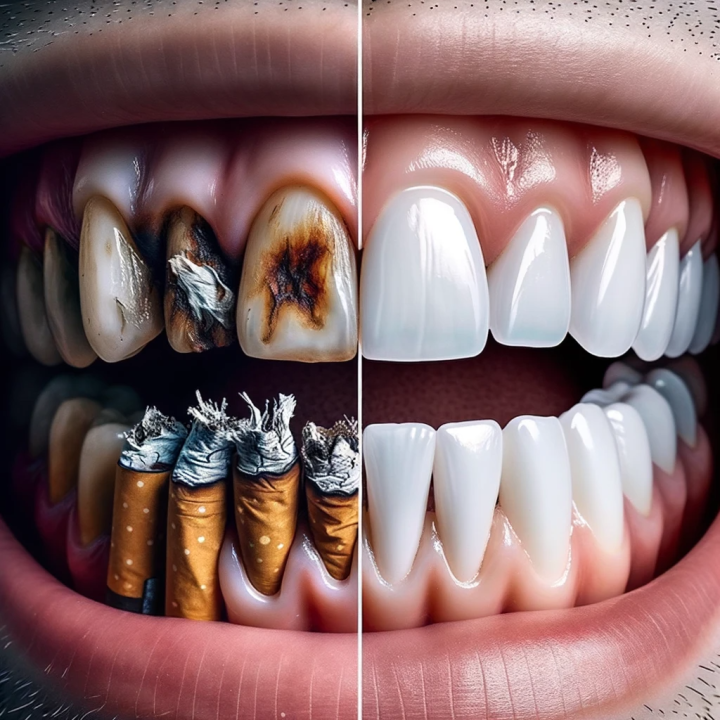
Nicotine and tar in cigarettes cause deep staining of teeth. Over time, teeth may turn yellow, brown, or even black in severe cases.
Unlike surface stains from food or drinks, smoking stains often penetrate deeper into enamel, making them harder to remove with regular brushing alone.
Professional whitening treatments may be needed, but results are often less predictable in heavy smokers.
3. Bad Breath (Halitosis)
Smoking is a major cause of chronic bad breath.
This happens due to:
Dry mouth caused by reduced saliva flow
Bacterial buildup
Chemical residue from tobacco
Gum infections
Even with good oral hygiene, smokers often experience persistent halitosis that can affect confidence and social interactions.
4. Delayed Healing After Dental Treatment
Smoking slows the body’s natural healing process. This is especially important after dental procedures such as:
Tooth extractions
Dental implant surgery
Gum surgery
Bone grafting
Nicotine restricts blood flow, reducing oxygen delivery to tissues. This increases the risk of:
Infection
Implant failure
Dry socket after extractions
Poor surgical outcomes
For this reason, many dentists strongly recommend stopping smoking before and after dental procedures.
5. Increased Risk of Tooth Loss
Because smoking accelerates gum disease and bone loss, it significantly increases the likelihood of tooth loss over time.
As supporting bone structures weaken, teeth become loose and may eventually fall out or require extraction.
In severe cases, smokers may require full-mouth rehabilitation, including dentures or full-arch implant solutions.
6. Reduced Success of Dental Implants
Dental implants rely on a process called osseointegration, where the implant fuses with the jawbone.
Smoking interferes with this process by:
Reducing blood flow to bone tissue
Increasing infection risk
Slowing healing response
As a result, smokers have a higher risk of implant failure compared to non-smokers.
7. Oral Cancer Risk
Smoking is one of the major risk factors for oral cancer. It increases the likelihood of abnormal cell changes in the mouth, lips, tongue, and throat.
Early signs may include:
Persistent mouth ulcers
Lumps or thickened tissue
Unexplained bleeding
Difficulty swallowing
Regular dental check-ups are essential for early detection.
Smoking and Overall Dental Costs
Smoking not only affects oral health but also increases long-term dental expenses due to:
More frequent gum treatments
Higher risk of tooth replacement needs
Increased restorative work (crowns, bridges, implants)
Ongoing maintenance and hygiene visits
Preventing damage is significantly more cost-effective than treating advanced disease.
Can Quitting Smoking Improve Oral Health?
Yes. Quitting smoking has immediate and long-term benefits for your mouth.
Short-term improvements:
Better breath
Improved gum health
Reduced staining progression
Long-term improvements:
Lower risk of gum disease
Improved healing after dental procedures
Reduced risk of tooth loss
Improved implant success rates
Even after years of smoking, quitting can still significantly improve oral health outcomes.
Dental Care Tips for Smokers
If you currently smoke, these steps can help reduce oral health risks:
Brush twice daily with fluoride toothpaste
Floss or use interdental brushes daily
Visit your dentist regularly (every 6 months or more often if advised)
Consider professional cleanings to remove plaque and tartar
Stay hydrated to reduce dry mouth
Discuss smoking cessation support with your healthcare provider
Frequently Asked Questions
Does smoking always cause gum disease?
Not always, but it significantly increases the risk and severity of gum disease.
Can dental cleanings remove smoking stains?
They can reduce surface stains, but deeper discolouration may require whitening treatments.
Can smokers get dental implants?
Yes, but the risk of complications and implant failure is higher compared to non-smokers.
How soon does oral health improve after quitting smoking?
Some improvements can be seen within weeks, especially in gum health and breath freshness.
Conclusion
Smoking has a profound negative impact on oral health, affecting teeth, gums, breath, healing ability, and long-term dental stability. It significantly increases the risk of gum disease, tooth loss, and complications with dental treatments.
The good news is that quitting smoking can dramatically improve oral health at any stage, helping protect your smile and overall wellbeing for the future.